




The Sun’s Violent Outbursts
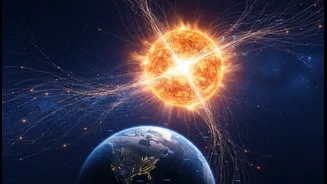
Our Sun isn't always the serene star it appears to be. It has a dynamic and sometimes violent temperament, driven by powerful magnetic fields. Two major types of solar events pose a significant threat to our technology: solar flares and coronal mass ejections
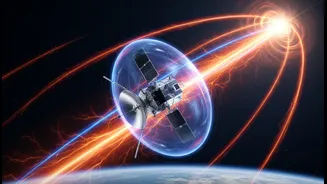
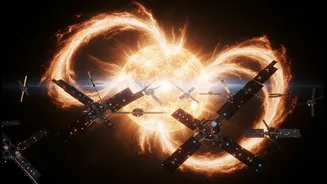
(CMEs). A solar flare is an intense burst of radiation that reaches Earth in about eight minutes. A CME is a much larger eruption, a massive cloud of charged plasma and magnetic fields that travels slower, typically taking one to three days to reach our planet. When these waves of energy and particles slam into Earth's magnetic field, they can trigger geomagnetic storms. These storms can wreak havoc on satellites by damaging their electronic circuits, degrading solar panels, and even causing them to lose altitude due to increased atmospheric drag.
Our Watchful Eyes in Space
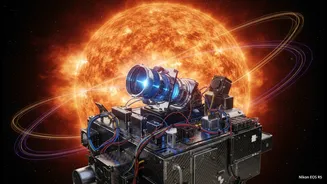
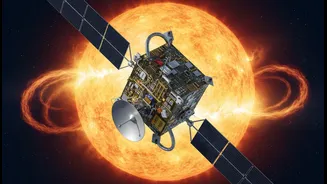
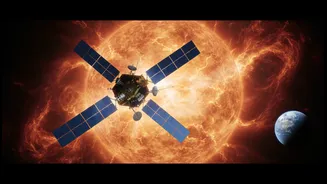
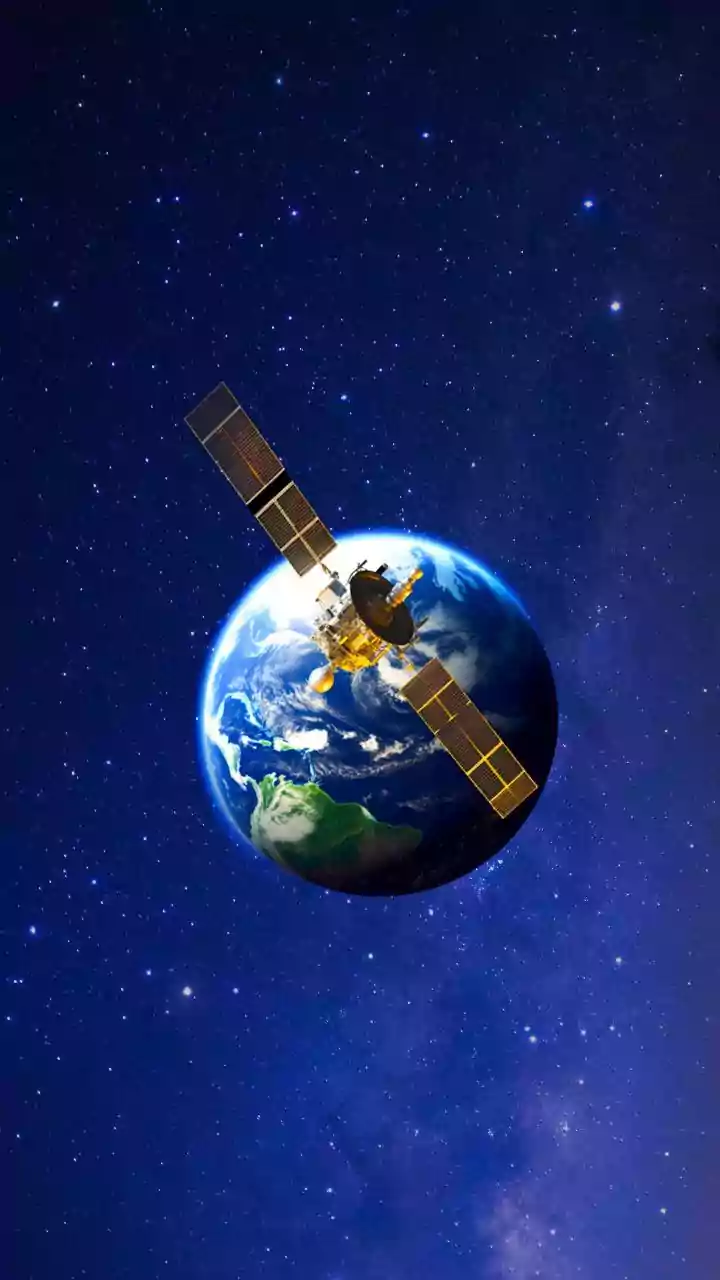
To protect against these invisible threats, we have deployed a fleet of robotic sentinels. Space-based observatories like NOAA’s Geostationary Operational Environmental Satellites (GOES) and the Deep Space Climate Observatory (DSCOVR) constantly monitor the Sun. They are positioned at a unique point in space called Lagrange Point 1 (L1), about 1.5 million kilometres from Earth, which provides an uninterrupted view of solar activity. India has significantly bolstered this global effort with its own solar observatory, Aditya-L1, which was launched in September 2023. Positioned at L1, Aditya-L1's suite of instruments, including the Solar Ultraviolet Imaging Telescope (SUIT), provides unprecedented details about solar flares and their origins, contributing vital data to the global space weather prediction network.
From Data to Actionable Alerts
Observing a solar eruption is only the first step. That raw data must be quickly analyzed and turned into a usable forecast. This is the job of agencies like the Space Weather Prediction Center (SWPC) in the US and other similar centres around the world. Forecasters use imagery and data from observatories like Aditya-L1 and GOES to analyze the size, intensity, and trajectory of solar flares and CMEs. By modelling the path of a CME, they can predict if it will hit Earth and estimate its arrival time and potential severity. This information is then packaged into alerts, watches, and warnings that are sent out to satellite operators, aviation authorities, power grid managers, and other affected industries.
A Race Against Digital Disruption
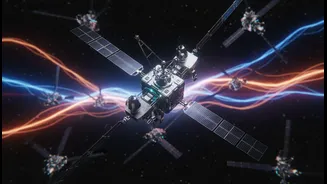
Once an alert is issued for a significant geomagnetic storm, it triggers a high-stakes race against time for satellite operators. The advance warning, which can range from minutes for radiation storms to a few days for CMEs, is critical. Armed with this information, satellite teams can take protective measures. A common strategy is to place the satellite into a 'safe mode'. This involves temporarily shutting down non-essential and sensitive electronic systems to prevent them from getting fried by high-energy particles or electrical charging. Operators might also reorient the satellite to present a smaller profile to the incoming storm or adjust its orbit to compensate for the increased atmospheric drag that could otherwise cause it to fall from the sky.
Why This Cosmic Forecast Matters to You
This complex system of observation and response is largely invisible, but it underpins much of modern life in India and around the world. The satellites being protected are not just for scientific research; they are essential for the services you use every day. They enable GPS navigation for your maps and ride-sharing apps, provide the backbone for digital payments and banking transactions, broadcast television signals, and facilitate long-distance communication. Without these early warnings, a severe solar storm could cause widespread and long-lasting disruptions, damaging an infrastructure worth billions and impacting everything from finance to farming.