

A Watery Clue in a Planet Nursery
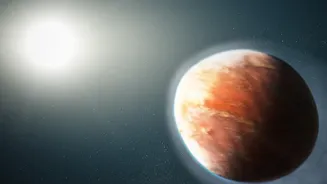
Scientists have announced the first detection of water in the terrestrial, planet-forming region of a star system that already hosts at least two young planets. The discovery was made in the inner dust and gas disk of PDS 70, a young star located 370
light-years from Earth. This isn't just any water detection; it’s water vapor found less than 160 million kilometers from the star—the very zone where rocky, Earth-like planets are thought to be assembling. For context, Earth orbits our Sun at a distance of about 150 million kilometers. This finding provides the strongest evidence to date that the raw materials for habitable worlds are present right where they need to be, at the right time.
How Webb's Infrared Eyes See the Invisible
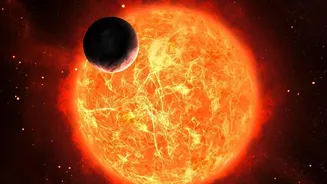
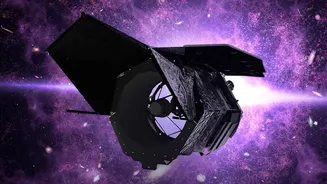
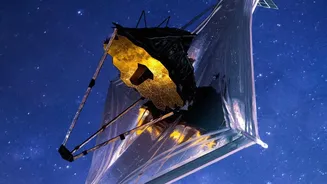
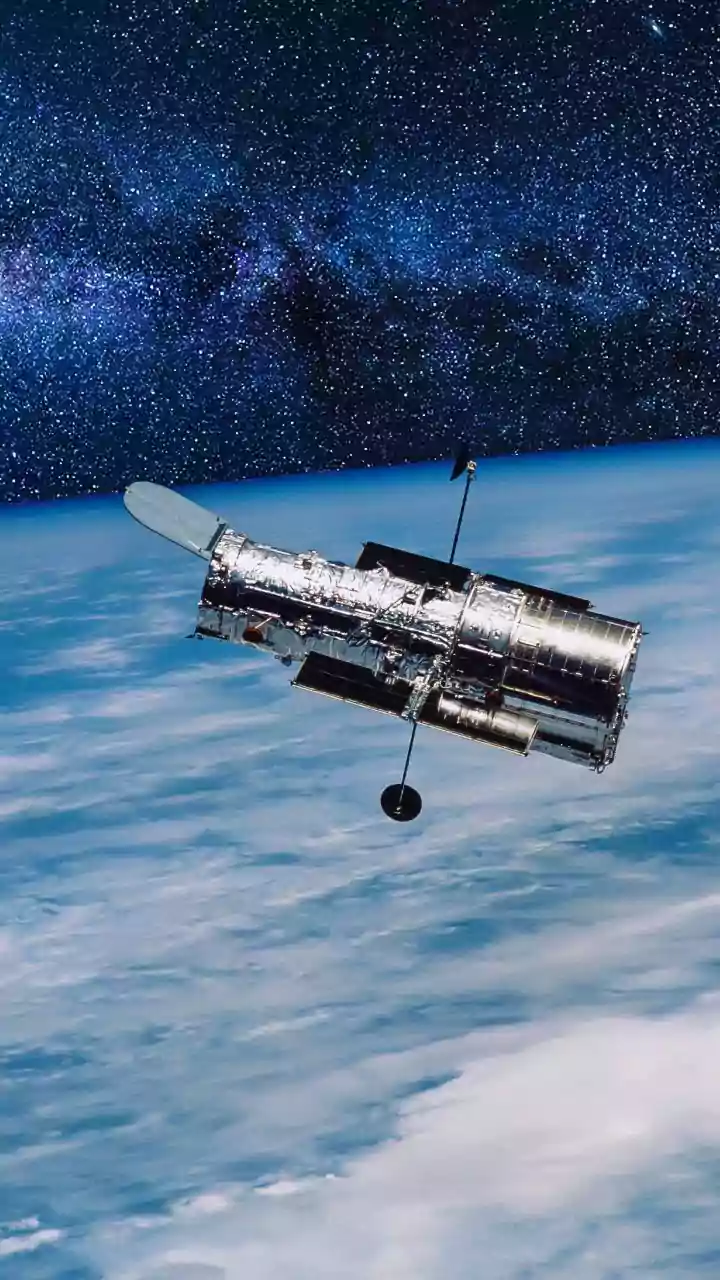
So, how does the Webb telescope see something like water from across such a vast expanse of space? The answer lies in a technique called transmission spectroscopy. When a planet passes in front of its host star from our perspective—an event called a transit—a tiny fraction of the starlight filters through the planet's atmosphere. Webb’s highly sensitive Near-Infrared Spectrograph (NIRSpec) and Mid-Infrared Instrument (MIRI) can capture this filtered light and split it into a spectrum, like a rainbow. Different molecules absorb light at very specific wavelengths, leaving a unique chemical 'fingerprint'. Water vapor, for example, creates a distinctive pattern in the infrared part of the spectrum. By analyzing which colours of light are missing, astronomers can definitively identify the gases present.
A Crucial Step for Rocky Worlds
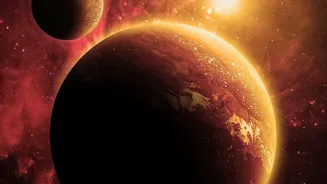
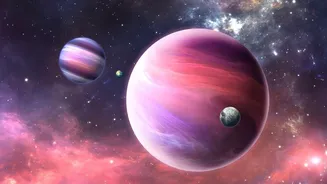
While water has been found on gaseous giant exoplanets before, detecting it in the formation zone of rocky planets is a monumental step forward. The discovery in the PDS 70 system is particularly exciting because it's a direct observation of water in a protoplanetary disk where planets are still forming. This suggests that rocky planets could be born 'wet,' incorporating water from the very beginning. This differs from theories suggesting Earth’s water was delivered later by comets and asteroids. Previous telescopes couldn't make this kind of measurement with such precision, highlighting the revolutionary capability of JWST. As one lead researcher noted, they had never been able to probe for water so close to a star in a system already known to be assembling planets.
Not Habitable Yet, But a Hopeful Sign
It’s important to clarify that this discovery does not mean life has been found. The PDS 70 system is a dynamic and volatile nursery for planets, not a stable, mature system. However, the presence of water in this primordial soup is a profoundly hopeful sign. It confirms that one of the most crucial ingredients for life as we know it is available during the earliest stages of a planet’s life. This finding boosts the odds that other rocky worlds forming throughout the galaxy could also have a ready supply of water. It's a key piece of the puzzle in understanding the origins of habitable planets like our own.
The Search Continues
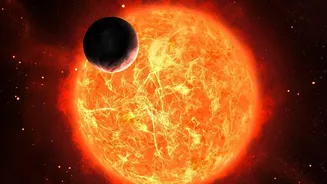
This discovery is a technical triumph and a sign of what's to come. Astronomers are now using Webb to study the atmospheres of dozens of other exoplanets, including Earth-sized rocky worlds orbiting nearby red dwarf stars, like LHS 475 b. While initial observations of that specific planet did not find a significant atmosphere, the telescope’s power to even ask the question is a game-changer. Each observation helps scientists refine their techniques and builds a clearer picture of the cosmos. The ultimate goal is to find a rocky planet in a star's habitable zone with an atmosphere containing a mix of gases—like water, methane, and oxygen—that could indicate the presence of life. This recent finding of water vapor is a critical milestone on that journey.