


The High-Rise Gardener's Puzzle
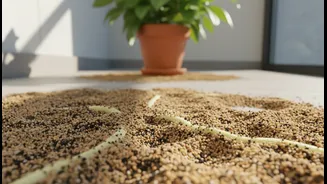
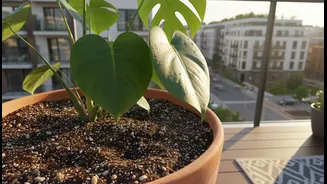
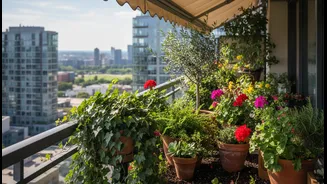
Gardening on a balcony, especially in a high-rise building, is a world away from planting in a ground-level backyard. Your pots are exposed to a unique microclimate. Strong, tunnelling winds are a major factor, whipping around buildings and across your
balcony. This constant airflow dries out the top layer of soil much faster than you might expect. Coupled with intense, reflected heat and light from the building's facade, this creates an environment where plants can look thirsty even when they've been watered recently.
The Vicious Cycle of Watering
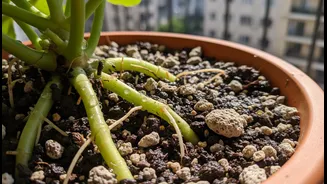
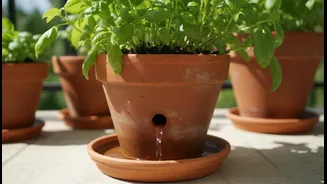
This leads to a common, well-intentioned mistake. You see the dry surface and drooping leaves, and you reach for the watering can. The problem is, while the top inch of soil is parched, the bottom of the pot often remains saturated. Unlike garden beds where excess water can drain deep into the earth, container pots have a limited volume. Frequent watering to combat surface dryness can quickly lead to a waterlogged state at the bottom of the pot, where the roots are. This is the perfect storm for a silent killer: accelerated root rot.
What is Root Rot, Exactly?
Root rot isn’t just about too much water; it’s a disease caused by fungal pathogens that thrive in wet, low-oxygen conditions. When soil is consistently soggy, there are no air pockets left for the roots to breathe. The roots begin to weaken and break down, creating an opening for fungi like Pythium and Phytophthora to attack. A plant with rotting roots cannot absorb water or nutrients, which is why it often looks like it's wilting from thirst, even when sitting in wet soil.
Meet Perlite: The Porosity Hero
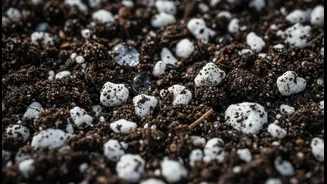
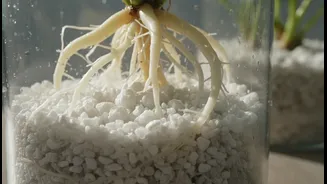
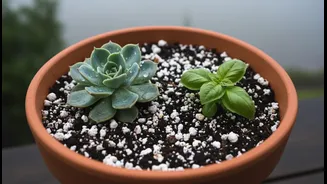
This is where perlite comes to the rescue. Often mistaken for tiny pieces of styrofoam, perlite is actually a naturally occurring volcanic glass. When this glass is heated to extreme temperatures, it expands and 'pops' like popcorn, creating a sterile, pH-neutral, and incredibly lightweight material. Its most important quality for gardeners is its highly porous structure. These tiny, lightweight rocks are filled with air pockets, making them a powerful tool for improving soil.
How Perlite Rescues Your Roots
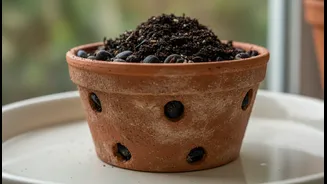
When you mix perlite into your potting soil, you are fundamentally changing its physical structure. The irregularly shaped particles create tiny channels and air pockets throughout the soil. This has two major benefits. First, it dramatically improves aeration, ensuring that your plant's roots have access to the oxygen they need to thrive. Second, it provides pathways for excess water to drain away freely, preventing the soil from becoming compacted and waterlogged. This action directly counters the conditions that allow root rot to take hold.
Putting It Into Practice
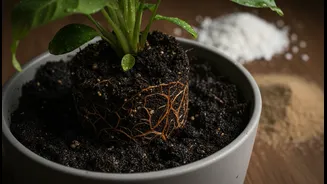
Incorporating perlite into your balcony garden is simple. For most houseplants, vegetables, and flowers, a good rule of thumb is to create a mix that is about 20-30% perlite. You can achieve this by mixing one part perlite with three or four parts of your favourite potting soil or coco peat. For plants that are especially sensitive to wet conditions, like succulents and cacti, you can increase the ratio. When repotting a plant that has been struggling, inspect its roots. If they are mushy and brown, you may be dealing with existing root rot. Trim the affected roots before repotting into your fresh, perlite-amended mix.