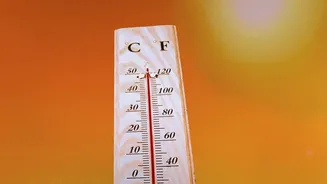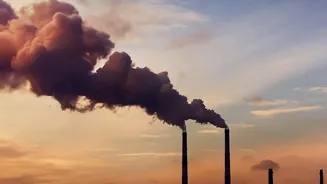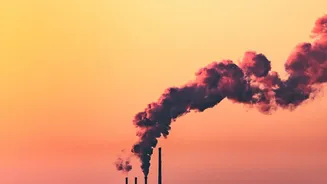




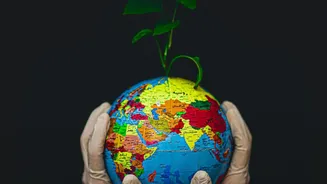
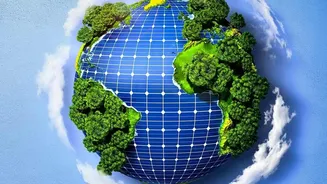
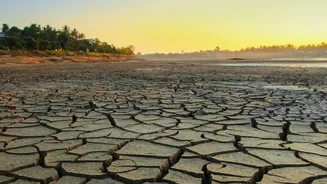
A series of stark new United Nations reports confirms the world is losing its battle to keep global warming below 1.5°C. Released just ahead of the COP31 climate summit in Antalya, Türkiye, the findings show that global climate action has stalled.
The Goal Is Now 'Unavoidable' Overshoot
The
UN Environment Programme’s (UNEP) 2026 Emissions Gap Report delivers a sobering verdict: the window to limit global warming to 1.5°C without temporarily overshooting that target has closed. For years, the goal of the Paris Agreement was to prevent temperatures from rising more than 1.5°C above pre-industrial levels. Now, scientists and policymakers agree that a period of 'overshoot' is inevitable due to decades of insufficient action. The new focus is on keeping this overshoot as short and minimal as possible, with a best-case scenario limiting peak warming to between 1.7°C and 1.8°C before hopefully bringing temperatures back down by 2100. However, every fraction of a degree of overshoot increases the risk of irreversible damage to ecosystems like ice sheets and coral reefs.
A Chasm Between Promises and Reality
At the heart of the problem is the vast gap between what countries have promised and what they are actually doing. Nations' self-determined climate plans, known as Nationally Determined Contributions (NDCs), are falling dramatically short. Even if fully implemented, current NDCs would only reduce emissions by 11-15% by 2035 compared to 2025 levels. To have a fighting chance at the new, less ambitious goal of returning to 1.5°C after an overshoot, the world needs to slash emissions by 45% by 2035. An independent assessment by Climate Action Tracker, released during the COP31 conference, reinforced this, noting that collective climate action has effectively been stagnant for five years. With current policies, the world is on a trajectory for a disastrous 2.6°C or 2.7°C of warming by the end of the century.
The Stalemate's Impact on India
For India, a global failure to curb emissions is not an abstract threat. The nation is one of the most vulnerable to climate change, already facing increasingly extreme heatwaves, erratic monsoons, and devastating cyclones. A world that warms beyond 1.5°C will intensify these threats, jeopardizing food security, public health, and economic stability. While India's per capita emissions remain below the global average, the country faces immense pressure. The UNEP report notes concerns that India's absolute emissions are still projected to rise and that it, along with China, holds most of the world's coal capacity under construction. Simultaneously, India continues to advocate for climate justice, rightly arguing that developed nations with a legacy of historical emissions must lead with deeper cuts and provide critical finance.
Finance Fails to Materialize
A connected crisis highlighted by the UN is the massive shortfall in adaptation finance. This is the funding needed by developing countries to build resilience against the climate impacts that are already unavoidable. A separate UNEP Adaptation Gap Report found that while developing countries need over $300 billion annually by $2035 to adapt, international public funding flows have flattened, reaching only about $30 billion in $2024$. This leaves vulnerable nations, which contributed least to the problem, dangerously exposed and unable to afford measures like stronger infrastructure and early warning systems. Without a surge in funding, the human and economic costs of climate disasters will continue to mount.
A Narrow Path Forward
Despite the grim outlook, the reports stress that surrender is not an option. The key message from UN leaders is that the world must now fight to limit the duration and severity of the temperature overshoot. This requires a radical acceleration of the transition to clean energy. The UNEP report outlines clear benchmarks: by $2035$, renewable electricity capacity must triple, and the use of coal in energy production must be cut by at least $55%$ compared to $2025$ levels. The reports serve as an urgent directive to the leaders gathered at COP$31$ in Türkiye: the time for incremental change is over. The coming years will determine whether the world can pull itself back from the brink or lock in a future of catastrophic climate change.