

A New Window on Distant Worlds
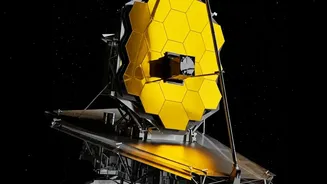
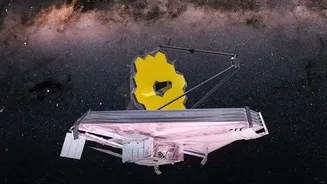
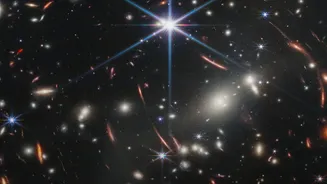
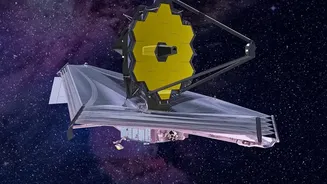
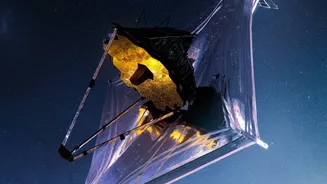
Since it began science operations, the James Webb Space Telescope has been rewriting our understanding of the cosmos. While its images of distant galaxies are stunning, its most profound work may be happening much closer to home, astronomically speaking.
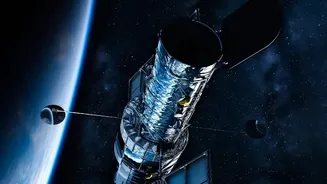
By focusing on exoplanets—planets orbiting other stars—Webb is doing something no prior telescope could do with such precision: analyzing their atmospheres. This capability comes from its power to see the universe in infrared light. Unlike the Hubble Space Telescope, which sees primarily in visible and ultraviolet light, JWST is designed to capture the longer wavelengths of infrared. This allows it to peer through cosmic dust and, crucially, detect the chemical fingerprints that molecules leave behind in starlight.
The Science of Starlight Forensics
The key technique is called transmission spectroscopy. Imagine a bright light bulb with a planet passing in front of it. As the planet transits its star from our point of view, a tiny fraction of the starlight filters through the planet's atmosphere before reaching the telescope. The gases in that atmosphere absorb specific colors, or wavelengths, of the starlight. By measuring which wavelengths are missing from the star's light during the transit, astronomers can determine exactly what chemicals are present, such as water, methane, or carbon dioxide. Each molecule leaves a unique signature, like a chemical barcode imprinted on the light. JWST's extreme sensitivity allows it to detect these incredibly subtle changes, turning a distant point of light into a world with a knowable chemical inventory.
A Gallery of Alien Atmospheres
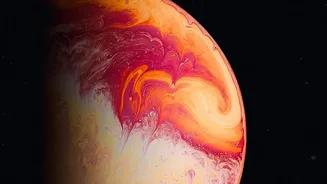
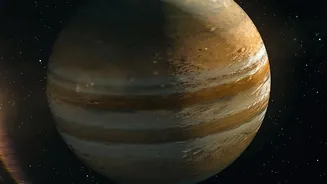
The 'breakthrough' isn't just one discovery, but a series of them that showcase this new power. One of Webb's first major targets was WASP-39 b, a 'hot Saturn' about 700 light-years away. There, Webb provided a complete menu of its atmospheric ingredients, detecting water, carbon dioxide, potassium, and, for the first time on an exoplanet, sulfur dioxide. The presence of sulfur dioxide was a 'wow' moment for scientists because it points to active chemical reactions in the atmosphere, driven by the energy of its star—a process called photochemistry. More recently, observations of the Saturn-sized planet TOI-199b revealed an atmosphere containing methane at temperate, almost Earth-like temperatures, a first for a gas giant of its kind.
The Search for Signs of Life
The ultimate goal for many is to find a 'biosignature'—a chemical hint that could only be produced by living organisms. One of the most talked-about candidates is K2-18 b, a potential 'Hycean' world with a deep ocean under a hydrogen-rich atmosphere, located 124 light-years away. Webb's observations confirmed the presence of methane and carbon dioxide. More tantalizingly, some analyses showed a weak signal that could be dimethyl sulfide (DMS), a compound that, on Earth, is overwhelmingly produced by marine life. However, this finding is far from confirmed. Follow-up studies have shown no conclusive evidence of DMS, highlighting the immense difficulty of the task. The debate itself proves that we have entered a new scientific era—one where we can rigorously argue about potential signs of alien life with real data.
An Era of Discovery, Not Just Speculation
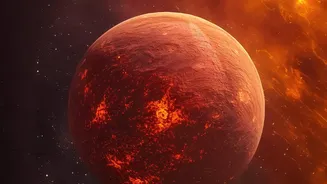
While finding definitive proof of life remains on the horizon, JWST's atmospheric studies are already transforming planetary science. The telescope has observed a 'super-puff' planet, WASP-107 b, violently shedding its atmosphere into space, giving us a real-time look at how planets evolve. In other cases, initial signs of water vapor on a rocky planet like GJ 486 b turned out to be a false alarm, likely caused by features on its star instead. Each observation, whether a confirmation or a complication, refines our understanding of the incredible diversity of worlds in our galaxy. These early findings demonstrate that JWST isn't just a discovery machine; it's a tool for deep, nuanced investigation that will shape exoplanet research for decades.