




The 80 Percent Less Oil Promise
The claim that air frying uses up to 80% less fat is a common one, first popularised by Philips in 2010 when launching its original Airfryer. This figure comes from a direct comparison to deep-frying, where food is fully submerged in hot oil. An air fryer,
by contrast, is a powerful countertop convection oven that circulates hot air at high speed to cook food and give it a crispy exterior. For snacks that are traditionally deep-fried, like samosas and pakoras, the reduction in oil is substantial and real. Instead of cups of oil, you often only need a light brush or a quick spray to achieve a satisfying crunch, which can cut calories significantly. If you were already baking or pan-frying your snacks with a small amount of oil, the difference might be less dramatic, but for classic fried recipes, the air fryer is a game-changer.
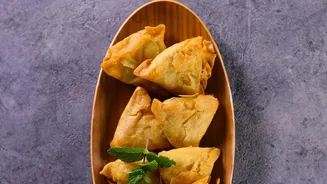
Mastering the Air-Fried Samosa
The key to a great air-fried samosa is a properly made dough and a light coating of oil. While you can use store-bought pastry sheets or wrappers, a traditional homemade dough holds up best. After filling and sealing your samosas, the next step is crucial: brush them lightly but evenly with oil on all sides. This is what helps the pastry turn golden and crisp instead of dry and pale. Preheat your air fryer to around 180-190°C (350-375°F). Arrange the samosas in a single layer, ensuring they don’t overcrowd the basket. Cook for about 15-20 minutes, flipping them halfway through. Some recipes suggest a two-temperature method: start lower and finish with a short blast at 200°C for extra browning. The result is a uniformly crisp shell protecting a perfectly cooked filling.
Achieving Crispy, Light Pakoras
Pakoras, or bhajis, present a unique challenge because their batter is typically wet. Dropping loose batter into an air fryer can be messy. The solution is to make the batter slightly thicker than you would for deep-frying and shape the pakoras into small, slightly flattened patties before placing them in the basket. For onion pakoras, ensure the sliced onions are well-coated in a sticky besan (gram flour) mixture that holds together. Preheat the air fryer to about 180°C (360°F) and spray the basket with oil. Arrange the pakoras in a single layer and spray the tops with a little more oil. Air fry for 12-15 minutes, flipping them at the nine-minute mark until they are golden and firm to the touch. This method works well for spinach, potato, and paneer pakoras too.
Perfecting the Aloo Tikki
Aloo tikki is wonderfully suited for the air fryer. The goal is a crispy exterior with a soft, fluffy interior, which the appliance handles beautifully. Start with boiled, cooled, and mashed potatoes; adding a binder like cornflour, rice flour, or breadcrumbs is essential for structure and crispness. Shape the mixture into uniform patties. For the best results, you can freeze the tikkis for a few hours before cooking. Preheat the air fryer to 180-200°C (375-390°F). Brush or spray the tikkis with oil and place them in the basket. Cook for 12-15 minutes, flipping them halfway through and adding another light brush of oil to the other side to ensure an even, golden-brown crust.
Tips for Ultimate Crunch
Regardless of the snack, a few universal rules apply for air frying success. First, always preheat your air fryer. This helps the food start cooking immediately at the right temperature, creating a better texture. Second, don't overcrowd the basket. Food needs space for the hot air to circulate around it; cooking in batches is better than cramming everything in at once. Third, a little oil goes a long way. Use an oil spray or a pastry brush to apply a thin, even coat. This is what produces the browning and crispiness you associate with fried food. Finally, remember to flip or shake the basket halfway through the cooking time to promote even cooking on all sides.