




A quiet revolution is taking place in Indian living rooms. The era of mass-produced, catalogue-perfect interiors is giving way to a warmer, more personal aesthetic, where every object tells a story and every texture has a soul.
Moving Beyond Mass Production
For years, the aspirational
urban Indian home looked West. It was defined by sleek, minimalist furniture, often factory-made and identical to thousands of others. Today, however, homeowners are consciously uncoupling from this model of sameness. They are seeking spaces that feel like personal retreats from bustling city life, prioritising comfort and character over showroom perfection. This has sparked a powerful movement towards artisanal furniture and ornaments, pieces that are unique, rooted in culture, and built with a human touch. Instead of a home that looks styled, the goal is a home that feels inhabited and authentic.
The New Language of Luxury
The definition of luxury is being rewritten. It's no longer about flashy surfaces and overt opulence, but about 'quiet luxury'—understated richness expressed through quality materials and craftsmanship. In this new context, a hand-carved cabinet from Jodhpur or a brass 'urli' from Kerala becomes a coveted statement piece. The focus is on natural, tactile materials that feel good to touch and connect the home to nature. Think solid sheesham and teak with matte finishes that celebrate the wood's natural grain, alongside cane, rattan, terracotta, and unpolished stone. These materials, often locally sourced, bring an earthy warmth that counters the coldness of generic modernism.
Why This, Why Now?
Several forces are driving this trend. A growing consciousness around sustainability has made consumers question the 'fast furniture' cycle and seek eco-friendly alternatives like reclaimed wood and bamboo. There is also a renewed pride in Indian heritage and craftsmanship, a desire to honour cultural roots within a contemporary living context. Homeowners want decor that tells a story, and artisanal pieces, with their minor imperfections and handmade character, offer a powerful connection to the maker. This shift empowers artisan communities, providing a larger market for skills that were once at risk of disappearing, from the lathe-turned woodwork of Channapatna to the Dhokra metal casting of West Bengal.
Crafts Reimagined for Today
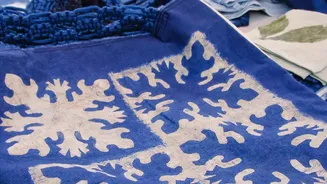
This is not about turning homes into museums. Designers and craftspeople are skilfully blending traditional techniques with modern sensibilities. Time-honoured crafts are being adapted into furniture and decor that fit seamlessly into urban apartments. Kalamkari, once reserved for religious tapestries, now adorns contemporary wall panels. Ajrakh block prints from Kutch are finding their way onto cushion covers and quilts, while sitalpati reed weaving from Assam is being used for chic lampshades and storage baskets. The result is a 'neo-traditional' fusion: a minimalist sideboard with handcarved details, a sleek sofa accented with blockprinted throws, or a modern armchair with a woven cane back.
Creating a Home with Soul
Ultimately, the turn towards artisanal decor is about creating a space with personality. It's about consciously choosing fewer but more meaningful items. A single, sculptural accent chair or an oversized handcarved coffee table can become the heart of a room, a conversation starter that reflects the owner's taste and values. These are not just functional objects; they are storykeepers. They carry the legacy of their craft, the warmth of the artisan's hand, and the soul of a culture. In a world of digital uniformity, these pieces ground us, reminding us that the most beautiful things are often those made slowly, thoughtfully, and with a deep sense of connection.