





The Annual Cycle of Damage and Disruption
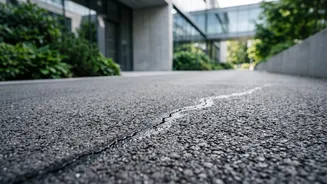
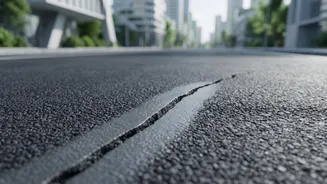
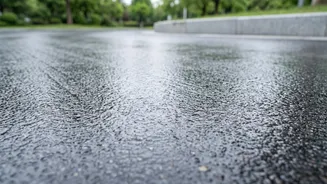
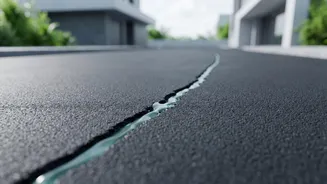
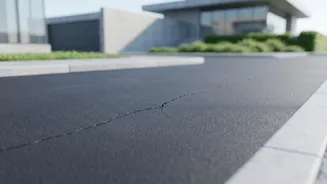
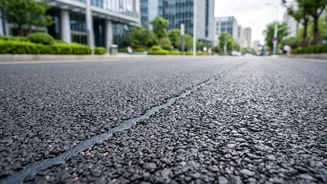
Every year, as the rains sweep across India, our roads begin to fail. What start as tiny cracks, often invisible to the eye, are quickly widened by water seeping into the pavement. The constant pressure from traffic does the rest, breaking the weakened
surface apart and creating the craters that plague drivers. This isn't just an inconvenience; it's a massive economic drain. The cost of repairing monsoon-damaged roads runs into thousands of crores annually. Beyond the repair bills, there are the hidden costs: vehicle damage, disrupted supply chains, and a tragic number of accidents and fatalities linked to hazardous road conditions. This relentless cycle of building, damaging, and patching has made finding a more durable solution a national priority.
An Introduction to Self-Healing Roads
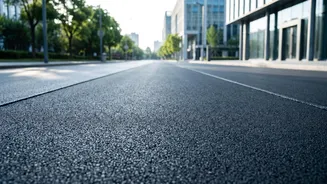
Imagine a road that can fix itself. It sounds like science fiction, but the concept of self-healing asphalt is now moving from laboratories to real-world trials. The core idea is to embed a repair mechanism directly into the road material itself. Instead of waiting for a small crack to become a dangerous pothole, this technology aims to heal the damage when it is still at a micro-level. Several Indian institutions, including the Central Road Research Institute (CSIR-CRRI) and the National Highways Authority of India (NHAI), are exploring these innovations to create more resilient infrastructure. The goal is to shift road maintenance from a reactive, costly chore to a proactive, built-in feature.
How Does Self-Repairing Asphalt Work?
There are two primary methods being developed to give roads this regenerative ability. The first involves embedding tiny microcapsules, filled with a rejuvenating agent, into the asphalt mix. When a micro-crack forms in the pavement, it ruptures the nearby capsules. The oily agent is released, flowing into the gap and softening the surrounding aged bitumen—the tar-like glue that holds the aggregate together. This allows the bitumen to fuse back together, effectively sealing the crack before it can grow. The second major approach uses induction heating. In this method, conductive materials like fine steel fibres are mixed into the asphalt. When maintenance is needed, a vehicle with a large magnetic coil passes over the road surface. The coil generates an electromagnetic field that heats the steel fibres, which in turn melt the surrounding bitumen just enough for it to flow and seal any fissures. The road is essentially 'healed' in minutes, a process that can dramatically extend its lifespan.
The 'Eco-Binder' Advantage
The innovation doesn't stop at self-repair. The term 'eco-binder' points to a crucial effort to make road construction more sustainable. Traditionally, asphalt binders are derived from petroleum, a finite and carbon-intensive resource. Eco-binders, however, are made from renewable, organic sources. CSIR-CRRI, for example, has pioneered a method to create bio-bitumen from agricultural waste like rice straw. This solves two problems at once: it reduces the country's reliance on imported petroleum for roads and provides a productive use for crop residue that is otherwise burned, causing severe air pollution. These bio-binders can be used as the rejuvenating agents within the microcapsules, adding a significant environmental benefit to the self-healing process. Using industrial byproducts like steel slag in the asphalt mix further enhances the material's green credentials.
The Road Ahead for India's Infrastructure
While this technology is still in the testing and development phase, its potential is enormous. Successful implementation could mean roads that last significantly longer, potentially doubling their service life. For citizens, this translates to safer journeys, fewer traffic jams caused by endless roadwork, and less money spent on vehicle repairs. For the government, it promises a dramatic reduction in annual maintenance budgets, freeing up funds for other critical infrastructure projects. The technology is not a magic bullet for all road issues—major structural failures from floods or landslides would still require conventional repairs. But by preventing the vast majority of cracks from turning into potholes, self-healing asphalt could fundamentally change our relationship with the roads we depend on every day.