



The Grand Objective: A Celestial Souvenir
The primary goal of the Chandrayaan-4 mission is to achieve something only a handful of nations have done: collect soil and rock samples from the Moon and return them safely to Earth. Unlike previous missions that studied the Moon remotely, this one will
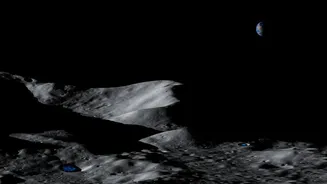
allow Indian scientists to analyze pristine lunar material in advanced laboratories. The focus is on the Moon's south polar region, an area believed to be rich in geological diversity and potentially water ice, which holds clues to the history of our solar system. By physically studying these samples, scientists hope to unlock secrets about the origins of the Earth and Moon.
A Five-Part Spacecraft and a Two-Part Launch
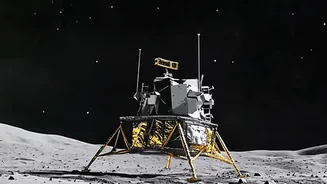
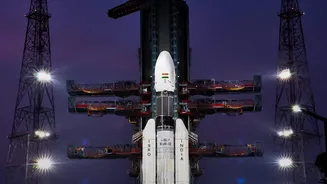
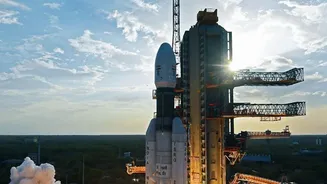
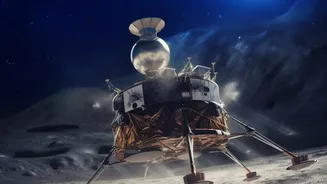
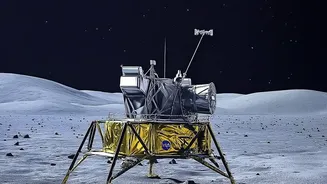
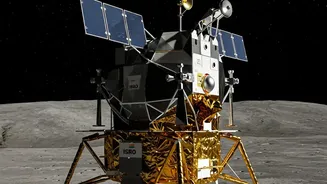
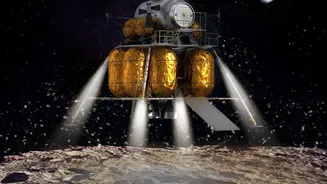
Chandrayaan-4 is far more complex than its predecessor and is comprised of five distinct modules: a Propulsion Module, a Descender Module (the lander), an Ascender Module, a Transfer Module, and a Re-entry Module. Together, these components are too heavy for India's most powerful rocket, the LVM3, to carry in a single trip. To solve this, ISRO has devised a two-launch strategy. Two separate LVM3 rockets will launch the modules into Earth's orbit. Once in space, the modules will perform a critical manoeuvre: docking together to form the integrated spacecraft that will journey to the Moon.
The Precision Landing and Robotic Collection
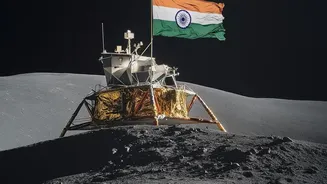
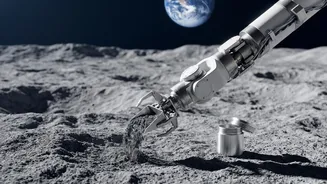
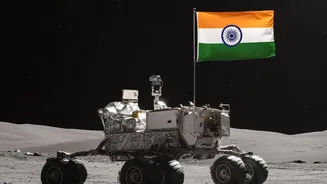
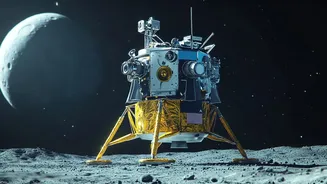
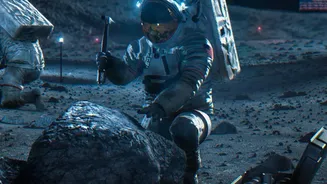
Once the integrated spacecraft reaches lunar orbit, the Descender and Ascender modules will separate and begin their descent to a pre-determined site near the lunar south pole. After a successful soft landing, the mission's crucial surface operations begin. A robotic arm on the Descender Module will scoop up to three kilograms of lunar soil and rocks from the surface. In addition, a drilling mechanism will collect sub-surface samples. These precious materials will be transferred into containers within the Ascender Module and hermetically sealed to prevent any contamination during the long journey home.
The Ascent: Launching from the Moon
This is one of the most challenging phases of the mission. Using the Descender as a launchpad, the Ascender Module will fire its thrusters and lift off from the lunar surface—a feat ISRO will attempt for the first time. The Ascender will then navigate into lunar orbit to rendezvous and dock with the Transfer and Re-entry modules, which will be waiting. This orbital docking, a delicate celestial ballet controlled from millions of kilometres away, is a technology ISRO has been developing with its SPADEX (Space Docking Experiment) program.
The Final Stretch: The Journey Back to Earth
After docking in lunar orbit, the samples are transferred from the Ascender to the Re-entry Module. The Transfer Module then fires its engine, pushing the Re-entry Module on a trajectory back towards Earth. As it approaches our planet, the Re-entry Module, designed to withstand the intense heat of atmospheric re-entry, separates and performs a controlled descent. It will land on Indian soil, delivering its priceless cargo of lunar material to eager scientists.