




The Architect of India's Space Dream
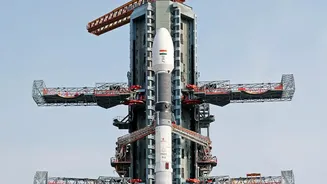
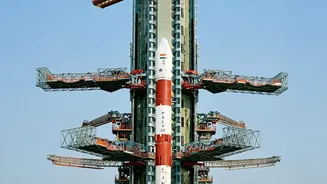
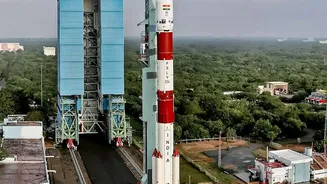
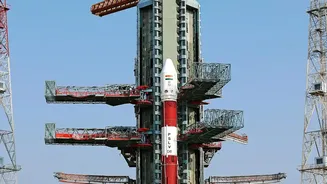
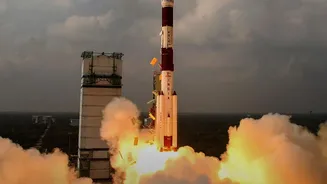
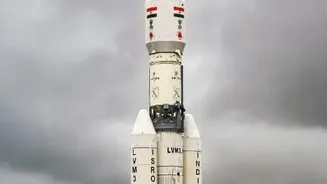
For decades, the Indian Space Research Organisation (ISRO) was the sole custodian of India's ambitions in the final frontier. It built the rockets, launched the satellites, and single-handedly placed the nation among the world's leading space powers.
Its focus was on national development, security, and scientific exploration, creating critical infrastructure for telecommunications, weather forecasting, and disaster management. This government-led model made India a formidable space-faring nation, renowned for its cost-effective and successful missions like Chandrayaan and Mangalyaan.
A New Galaxy of Private Players
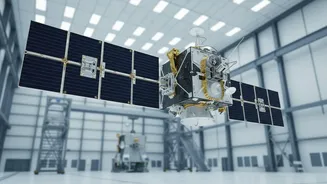
The last few years have witnessed a seismic shift. India's space sector, once a government monopoly, is now home to a vibrant ecosystem of over 400 startups. These non-governmental entities (NGEs) are building everything from launch vehicles and satellites to ground systems and data analytics platforms. Fueled by a new generation of entrepreneurs and growing investor confidence, companies like Skyroot Aerospace, Agnikul Cosmos, and Pixxel are not just suppliers to ISRO anymore; they are developing end-to-end capabilities, aiming to serve a global market. This startup boom represents the next phase of India's space journey: commercialisation.
The Policy That Opened the Sector
This transformation was catalysed by the Indian Space Policy 2023. The policy formally opened the door for private sector participation in all space activities. It also created two key bodies to manage this new dynamic: IN-SPACe (Indian National Space Promotion and Authorisation Centre) and NSIL (NewSpace India Limited). IN-SPACe acts as a single-window agency to promote and authorise private space activities, while also facilitating access to ISRO's facilities. NSIL, ISRO's commercial arm, is tasked with commercialising ISRO's technologies and managing operational missions. The goal is to allow ISRO to focus on advanced R&D, while the private sector handles more routine, operational tasks.
The Core Tension: Partner or Competitor?
Here lies the central reason for the startups' watchful gaze. While ISRO is a vital enabler, providing technology, mentorship, and testing facilities, its commercial arm, NSIL, is also a market player. NSIL is responsible for procuring, manufacturing, and launching operational satellites, often for the same customers that private companies hope to serve. This creates a scenario of 'co-opetition'—a mix of cooperation and competition. Startups worry that ISRO, through NSIL, could become a direct competitor for launch contracts and satellite manufacturing deals, potentially crowding out the very private sector it's meant to nurture. The key concern is ensuring a level playing field where ISRO is not competing for business that private players can handle.
Defining the Boundaries for Growth
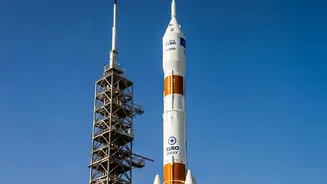
For the ecosystem to thrive, startups argue that clear boundaries are needed. The ideal model, in their view, is for ISRO to transition fully into a research and development role, focusing on deep space exploration, human spaceflight like the Gaganyaan mission, and cutting-edge technology development. They believe routine operational flights, such as launching satellites into Low Earth Orbit, should be progressively handed over to the private industry. This would create a predictable market for private launch companies and satellite builders. Startups are looking to IN-SPACe to be a fair regulator that ensures ISRO's vast infrastructure is accessible, and that NSIL's commercial mandates do not unfairly disadvantage emerging private companies.