





The Urban Water Challenge
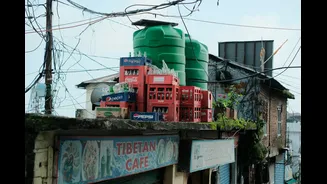
India's cities are thirsty. Rapid urbanisation, erratic monsoons, and an over-reliance on dwindling groundwater sources have created a perfect storm. Major metropolitan areas like Bengaluru, Delhi, and Chennai frequently face acute water shortages, forcing
a dependence on inconsistent municipal supplies and expensive private tankers. According to a NITI Aayog report, nearly 600 million people in India face high to extreme water stress, with 21 cities projected to run out of groundwater if trends continue. This isn't a distant problem; it translates into daily uncertainty, higher household expenses, and public health risks from contaminated sources. The water that falls freely on our roofs and flows from our showers often ends up wasted in storm drains, contributing to urban flooding instead of solving our shortages.
Rainwater Harvesting: Your Personal Reservoir
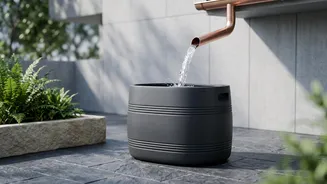
The most accessible technology for taking control is rainwater harvesting (RWH). The concept is simple: capture the rain that falls on your roof, filter it, and store it for later use. For an urban home, this typically involves a system of gutters and pipes that direct water from the terrace to a storage tank, often an underground sump or a plastic tank. A critical component is a 'first-flush' diverter, which prevents the initial, dirtier rainwater from entering your storage, ensuring better quality. A basic filtration system using sand and gravel can further purify the water for non-potable uses like gardening, flushing toilets, and washing floors and vehicles. In fact, RWH is mandatory for new buildings on plots over a certain size in most major Indian cities.
Greywater Recycling: The Power of a Second Use
Every day, households generate a significant amount of 'greywater'—the relatively clean wastewater from showers, washing machines, and bathroom sinks. This water, which accounts for 30-50% of household sewage, is distinct from 'blackwater' from toilets and can be easily recycled with minimal treatment. Simple, low-cost greywater systems divert this water, filter out soap residue and lint, and make it available for reuse in toilet flushing or irrigating gardens. This practice alone can reduce a household's fresh water consumption by 40-60%. For apartment buildings, more sophisticated (but increasingly affordable) centralised greywater treatment plants can drastically reduce the entire community's reliance on municipal water and lower operational costs.
The Financial and Environmental Payoff
Adopting this technology isn't just an environmental choice; it's a sound financial one. The cost for a basic residential RWH system can range from ₹20,000 to ₹80,000, depending on the complexity and storage capacity. While this seems significant, the return on investment can be swift, especially for those reliant on expensive tanker water, which can cost 10 to 100 times more than piped water. In such cases, the system can pay for itself in just three to seven years. Beyond the direct savings, these technologies offer profound environmental benefits. Recharging groundwater through percolation pits helps restore depleted aquifers, a critical issue for most Indian cities. Capturing runoff also reduces the strain on city drainage systems, mitigating waterlogging during heavy rains. Furthermore, having a personal water source increases a property's value and resilience.
Taking the First Step
Getting started is more accessible than you might think. A very basic groundwater recharge system, using a drum and PVC pipes, can be set up for as little as a few thousand rupees. For homeowners looking at storage systems, the first step is to assess your roof area and household needs. A 100-square-metre roof in a city with average rainfall can harvest over 55,000 litres of water a year. Many state governments and municipal corporations, spurred by national initiatives like the Jal Jeevan Mission and Jal Shakti Abhiyan, offer subsidies or property tax rebates for homes that install RWH systems, further lowering the barrier to entry.