





Decoding the Tech Jargon
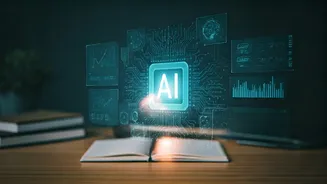
Let's break down that mouthful of a headline. A 'Hyper Personalized AI Reading Assistant' is like having a smart tutor living inside your device. As you read a textbook chapter or an article, this AI doesn't just display the text. It understands it. It can
summarize complex paragraphs, define difficult words in context, and, most importantly, it learns *how* you learn. On the other hand, 'Dynamic Question Banks' are not your standard multiple-choice quizzes. Instead of a fixed set of questions, this system generates new, unique questions on the fly, specifically tailored to what you just read and where the AI thinks you are struggling. The two work in tandem: the assistant observes your reading, and the question bank tests your understanding in a truly personalized way.
How It Works: A Student's Day
Imagine a student in Class 12 preparing for their physics board exam. They open their tablet to study the chapter on electromagnetism. As they read, they can highlight a section and ask the AI assistant, 'Can you explain this like I'm 15?' The AI rephrases the complex theory into simpler terms. After finishing the chapter, the dynamic question bank kicks in. It doesn't ask a generic question. Noticing the student spent extra time on the section about Lenz's Law, it generates three unique problems focused specifically on that concept, ranging from simple definition-based questions to more complex application-based problems. If the student gets them wrong, the AI assistant can point them back to the exact paragraphs in the text they need to review, creating a powerful and efficient feedback loop that traditional methods can't match.
The Promise for Indian Education
In a country where millions of students prepare for hyper-competitive exams like JEE, NEET, and UPSC, this technology is more than just a novelty; it's a potential game-changer. The primary promise is efficiency and equity. Students in remote areas without access to top-tier coaching centres could get high-quality, personalised instruction. It allows learning to move from a passive activity (reading a book) to an active, engaging dialogue. For exam preparation, dynamic question banks mean an almost infinite supply of practice material, preventing students from simply memorising answers from previous years' papers. The AI can simulate exam conditions, identify weak spots across subjects, and suggest a customised study plan to maximise scores. It's about turning study time into smart time.
Challenges and Critical Questions
While the potential is enormous, the road ahead is not without its hurdles. The most significant is the digital divide. For these tools to be truly equitable, every student needs access to a reliable device and high-speed internet, which is still not a reality across India. Secondly, there are concerns about data privacy and what happens to the vast amount of data collected on a student's learning habits. Will this data be used ethically? Furthermore, there's a pedagogical risk. Over-reliance on AI for summarization and problem-solving could potentially weaken a student's ability to grapple with difficult texts and develop critical thinking skills independently. The goal should be to use AI as a scaffold for learning, not a crutch that replaces fundamental skills.