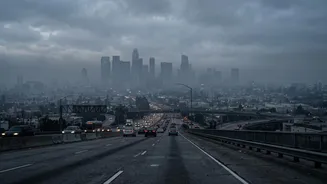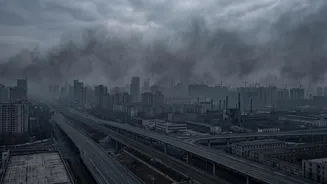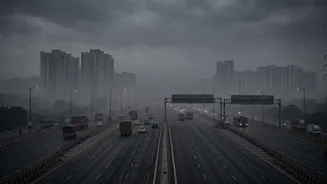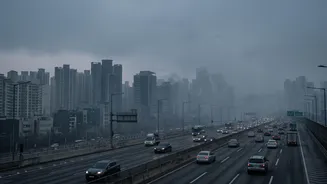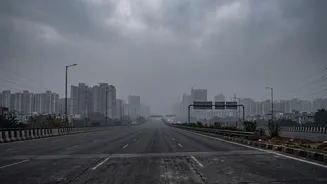




As winter approaches, Delhi-NCR's air quality has taken a familiar, worrying dip. In response, authorities have activated Stage 1 of the Graded Response Action Plan (GRAP), a set of anti-pollution measures designed to prevent the air from getting worse.
Why Now? The 'Poor' Air Trigger
The decision to implement Stage 1 measures was taken by the Commission for Air Quality Management (CAQM) after the region's average Air Quality Index (AQI) slipped into the 'Poor' category, crossing the 201 mark. This is the official trigger point for the first level of countermeasures under the revised GRAP framework. An AQI between 201 and 300 is is classified as 'Poor' and can cause breathing discomfort to most people upon prolonged exposure. The action is pre-emptive, aimed at preventing the AQI from deteriorating further into the 'Very Poor' and 'Severe' categories, which typically happens as temperatures drop and wind speeds decrease, trapping pollutants closer to the ground.
What is GRAP, Anyway?
Think of the Graded Response Action Plan (GRAP) as an emergency rulebook for fighting air pollution in Delhi-NCR. It’s not a year-round plan but a set of measures that are automatically triggered when the air quality reaches certain negative thresholds. The plan is divided into four stages, from 'Poor' (Stage 1) to 'Severe Plus' (Stage 4). Each stage imposes a progressively stricter set of restrictions on activities that contribute to air pollution, such as construction, industrial operations, and vehicular traffic. The goal is to act decisively and quickly to curb pollution sources before a public health emergency is declared.
Stage 1 Measures You Need to Know
Stage 1 focuses on halting major sources of dust and emissions. All construction and demolition (C&D) activities on plots of 500 square metres or larger must stop immediately. This applies to both government and private projects. However, certain activities are exempt, including railway and metro projects, airport and hospital construction, and national security-related infrastructure. Additionally, authorities will intensify mechanised sweeping of roads, increase the frequency of water sprinkling to settle dust, and strictly enforce the ban on open burning of garbage and biomass. Industrial units are required to switch to cleaner fuels where applicable and adhere to all emission norms.
Impact on Daily Life and Commute
For the average resident, the most visible impact will be on the roads. Traffic police will be on high alert to check for valid Pollution Under Control (PUC) certificates for all vehicles. Expect stricter enforcement and potential fines for non-compliance. You may also see more anti-smog guns and water sprinklers operating in high-traffic areas. The government is also urging the public to minimise the use of private vehicles and rely more on public transport. While there are no 'Odd-Even' traffic restrictions under Stage 1, it serves as a warning to prepare for more stringent measures if pollution levels continue to rise. Tandoors in hotels and restaurants are also discouraged from using charcoal or firewood.
What Happens if Air Quality Worsens?
If the current measures fail to stabilise the air quality and the AQI enters the 'Very Poor' category (Stage 2), stricter actions will be enforced. These could include a ban on diesel generators and increased parking fees to discourage private vehicle use. Stage 3 ('Severe') triggers a ban on most construction activities and the closure of certain industries. The final stage, Stage 4 ('Severe Plus'), involves the most drastic measures, such as implementing the 'Odd-Even' scheme for private cars and potentially banning the entry of trucks into Delhi. The goal of Stage 1 is to prevent the region from ever reaching these more disruptive stages, protecting both public health and economic activity.