


The Limits of the 'Goldilocks Zone'
The idea of a habitable zone has been a simple, powerful guide for astronomers. It defines the region around a star where a planet could theoretically host liquid water on its surface—a key ingredient for life as we know it. If a planet is too close to its star,
its water boils away. Too far, and it freezes into a ball of ice. This concept places planets like Earth in a sweet spot, while our neighbours Venus and Mars fall outside the ideal conditions, despite Mars also being within our sun's habitable zone. However, this model primarily works for a rocky planet with an Earth-like atmosphere. Increasingly, scientists argue this is a clumsy and overly simplistic measure. It includes planets with no real chance of being habitable while excluding others that might be. Simply being in the right orbital path doesn't guarantee a welcoming environment.
The Planet's Protective Blanket
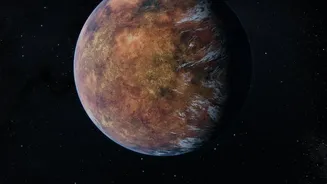
The real game-changer, scientists now believe, is a planet's atmosphere. Think of it as a planet's climate control system and protective shield. An atmosphere is essential because it can trap heat, shield the surface from harmful cosmic radiation, and create the necessary pressure to allow liquid water to exist. Without it, even a perfectly positioned planet would likely be a barren, lifeless rock. Recent discoveries have driven this point home. In mid-2026, astronomers announced the first confirmed atmosphere around a rocky planet, LHS 1140 b, which sits in its star's habitable zone. This discovery was a breakthrough, providing the strongest evidence yet that planets with Earth-like temperatures might retain the conditions needed to support life. The presence of this gaseous envelope is now seen as a critical component for habitability.
From Greenhouse to Icebox
Not all atmospheres are created equal, and they can make or break a planet's climate. A thick atmosphere rich in greenhouse gases like water vapour or carbon dioxide can keep a planet warm, even if it's far from its star. This greenhouse effect is useful; without it, Earth's average temperature would be below freezing. However, this can go too far. A planet that gets slightly too much radiation can trigger a runaway greenhouse effect, where evaporating oceans create a thick, steamy atmosphere that traps more and more heat, eventually boiling the planet into a sterile, Venus-like hellscape. On the other hand, a planet could have its atmosphere stripped away by intense flares from its host star, a common problem for planets orbiting volatile red dwarfs. Without that atmospheric blanket, any surface water would quickly freeze or evaporate into space, rendering the planet inhospitable.
A New Strategy for Finding Life
This shift in thinking means astronomers are changing how they search for potentially habitable worlds. Rather than just identifying planets in the Goldilocks Zone, the focus is now on finding planets that have managed to hold onto their atmospheres. This has led some scientists to suggest that the definition of the habitable zone itself should be revisited to include a planet's capacity to host a stable, life-supporting atmosphere. Advanced tools like the James Webb Space Telescope (JWST) are at the forefront of this new search. By analyzing the starlight that filters through an exoplanet's atmosphere, JWST can detect the chemical fingerprints of different gases like water, methane, and carbon dioxide. These observations offer direct clues about a planet's climate and its potential to support life, moving us beyond simple orbital mechanics.
Beyond Location, Towards Conditions
The quest for life beyond Earth is becoming more nuanced. An address in the right cosmic neighbourhood isn't enough. A planet needs the right internal and external conditions to build and maintain a habitable environment. This includes factors like active geology, which can replenish the atmosphere through volcanism, and a protective magnetic field to shield it from being eroded by solar winds. The discovery of an atmosphere on LHS 1140 b is a milestone, but it's just the beginning. Scientists are excited because it proves that rocky, temperate planets can have all the essential ingredients for life. While we have no evidence of life there yet, the presence of an atmosphere makes it a prime target for future study and brings us one step closer to answering the ultimate question: are we alone?