




Sixteen Sunrises in a Single Day
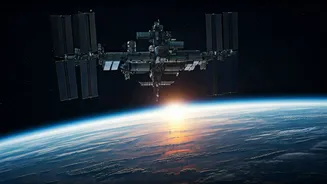
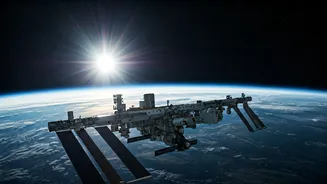
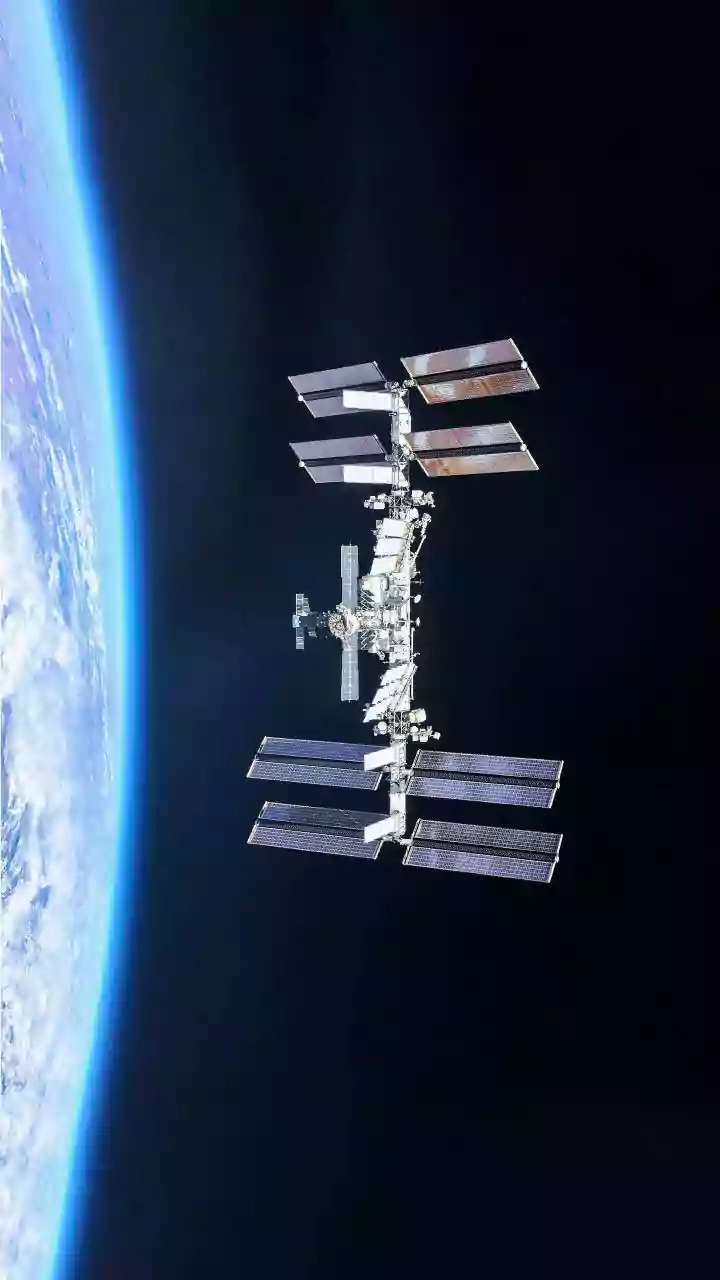
Here is the fact that startles so many people: astronauts aboard the ISS witness 16 sunrises and 16 sunsets every 24 hours. What we experience once a day, they experience every 90 minutes. This isn't a trick of perception or a quirk of the station's windows;
it's a fundamental consequence of living life in the fast lane, orbiting Earth at an incredible speed. Each day, the crew sees a new dawn break over a different part of the planet, from the Pacific Ocean to the Sahara Desert, creating a rhythm of life that is completely alien to our experience on the ground.
The Science of Speed and Orbit
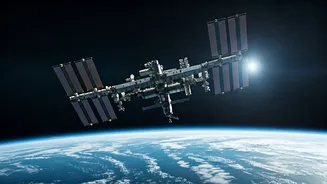
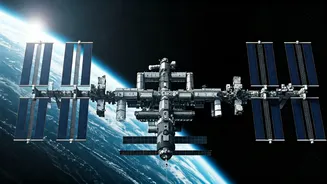
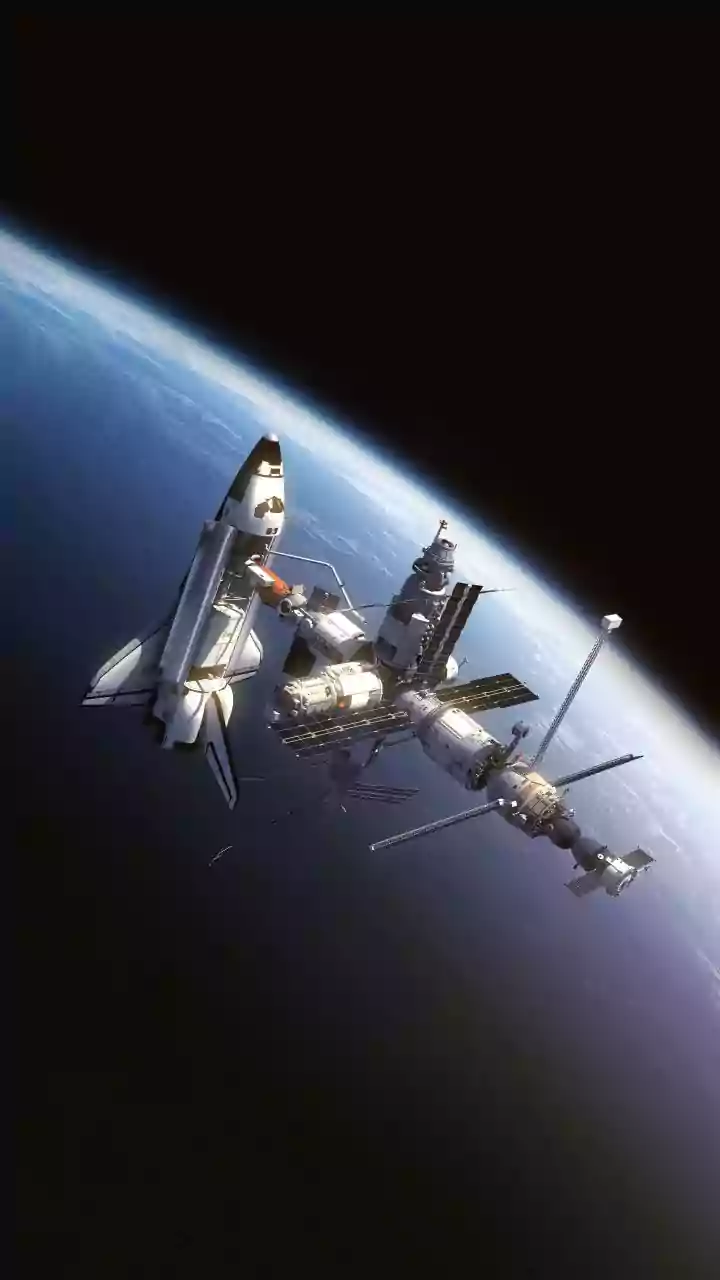
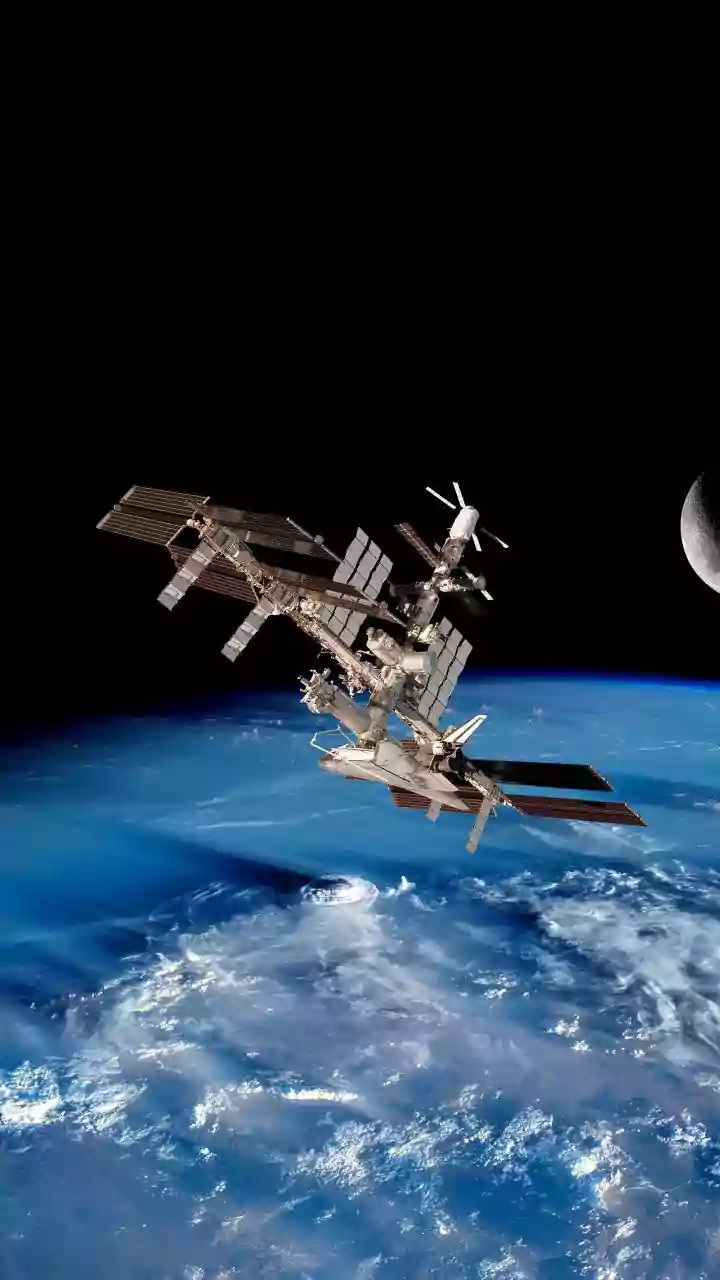
This phenomenon is all down to the ISS's velocity and altitude. The station travels at approximately 28,000 kilometres per hour, or about 7.7 kilometres every second. At this speed, it completes a full circle around Earth in about 92 minutes. As the station zooms along its path about 400 kilometres above the surface, it continuously passes from the Earth's shadow into the sun's light, and then back into darkness. This rapid transition means they experience roughly 45 minutes of daylight followed by 45 minutes of night in each orbit. This relentless cycle transforms the very concepts of day and night into a high-speed celestial light show.
Living Without a Normal Day
So how do you function when the sun rises 16 times a day? You certainly don't go to bed every time it gets dark. The frequent, rapid shifts between light and dark would make it impossible to maintain a normal biological schedule. To counteract this, life on the ISS is meticulously planned. Astronauts operate on Coordinated Universal Time (UTC), the same time standard used by pilots and air traffic controllers, to ensure their schedules are synchronised with Mission Control on the ground. Their work, meals, exercise, and a scheduled eight-hour sleep period are all organised according to the clock, not the view outside the window. To get proper rest, astronauts sleep in small, private crew quarters and often use eye masks to block out the frequent sunrises.
The View from the Top
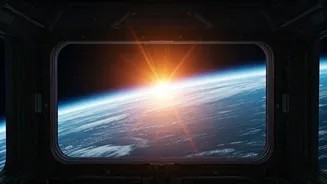
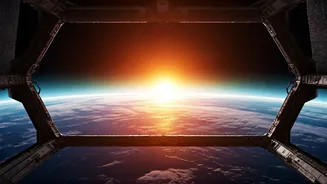
While disorienting, the experience is also described as profoundly beautiful. Astronauts have often spoken about the awe-inspiring view from the station's Cupola, a seven-windowed observation module. From that vantage point, an orbital sunrise is not the gentle, slow event we see on Earth. Because of the station's speed, the sun appears to leap over the horizon in a matter of seconds. It’s a rapid, brilliant flash of light. Astronauts describe seeing the thin, vibrant blue line of Earth's atmosphere painted with fiery oranges and reds as the sun's rays cut across it. Indian-American astronaut Sunita Williams shared her amazement at this spectacle, calling the experience of seeing 16 sunrises a day both "beautiful" and "surreal."
Training the Body Clock
The constant cycling of light and dark poses a real challenge to the human body's internal clock, or circadian rhythm, which is naturally tuned to a 24-hour cycle. Disruption can lead to fatigue and sleep problems, which is a major concern for astronaut health and performance on long-duration missions. To mitigate this, space agencies like NASA and ESA have invested in research to help astronauts adapt. The lighting inside the ISS itself is specially designed to help. The lights change in brightness and colour temperature throughout the 'day' to simulate a more natural progression from morning to evening, before dimming for the scheduled sleep period. This helps signal to the astronauts' bodies when it's time to be alert and when it's time to rest, despite the 16 sunrises blazing outside.