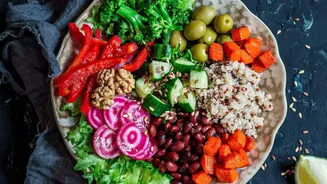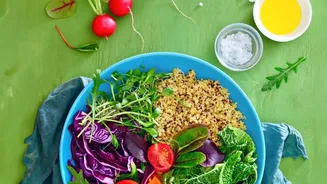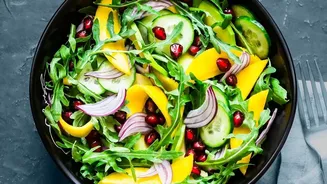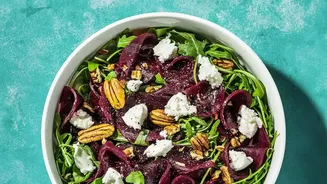



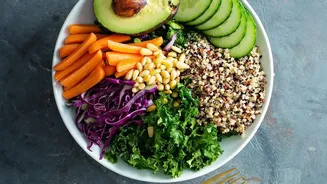
The Overall Power of a Daily Salad
Making a salad a daily habit is one of the easiest ways to increase your intake of essential vitamins and minerals. Salads are naturally high in fibre, which is crucial for good digestive health, helping to prevent constipation and promote a healthy gut.
The high fibre content also helps you feel full for longer, which can aid in weight management by reducing the urge to overeat. A diet rich in fresh vegetables, like those found in salads, is associated with higher levels of powerful antioxidants, including vitamins C and E, which protect the body from damage caused by harmful molecules called free radicals. Regularly eating salads can boost your immune system, improve hydration, and contribute to overall well-being.
Cucumber: The Hydration Hero
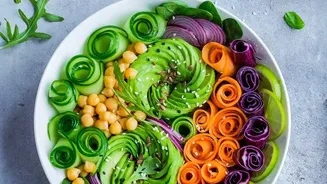
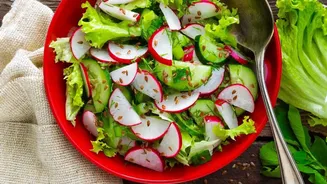
Cucumbers are more than just a refreshing, crunchy addition to your bowl; they are a nutritional powerhouse in their own right. Composed of about 96% water, they are excellent for staying hydrated, which is essential for everything from skin health to temperature regulation. Beyond hydration, cucumbers are packed with important nutrients. They are an excellent source of Vitamin K, a crucial vitamin for building strong bones and ensuring proper blood clotting. They also provide antioxidants and essential minerals like potassium, which helps manage blood pressure by lessening the effects of sodium. The fibre in cucumbers, especially in the skin, aids in maintaining regular bowel movements and promoting gut health.
Beetroot: The Earthy Energiser
The vibrant, deep red of beetroot signals its dense nutritional profile. Beets are particularly famous for their high content of dietary nitrates. The body converts these nitrates into nitric oxide, a molecule that helps relax and widen blood vessels, which can lead to improved blood flow and healthier blood pressure levels. This effect also makes beetroot popular among athletes for potentially boosting stamina and exercise performance. Furthermore, beetroots are a great source of fibre, folate, potassium, iron, and vitamin C. The pigment that gives beets their colour, betanin, is a potent antioxidant that helps fight inflammation and cellular damage in the body.
Sprouts: The Nutrient-Dense Wonders
Sprouts are essentially young plants in their prime, and this means they are incredibly packed with unlocked nutrients. The sprouting process significantly increases the availability of vitamins and minerals like vitamin C, folate, and iron. They are an excellent source of plant-based protein and digestive enzymes, which help your body break down food more efficiently and absorb more nutrients. This makes sprouts fantastic for digestive health, helping to ease constipation and foster a healthy gut. Due to their low-calorie but high-nutrient and fibre content, sprouts are also great for weight management. They can also contribute to heart health by helping to manage cholesterol levels.
Building Your Ultimate Health Bowl
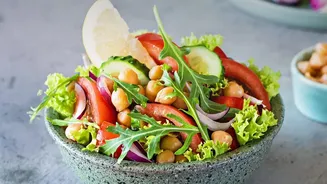
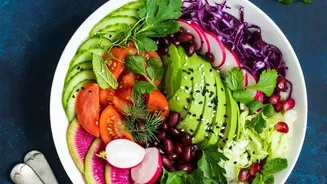
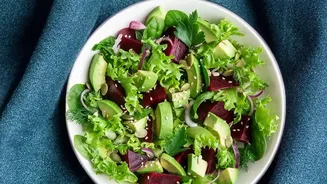
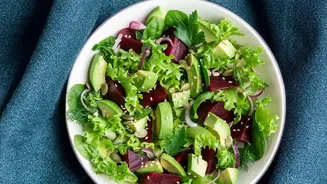
Combining cucumber, beetroot, and sprouts creates a salad that is balanced in texture, flavour, and nutrition. Start with a bed of leafy greens for an extra dose of vitamins. Add the crisp, hydrating cucumber, the earthy, sweet beetroot (raw and grated, or cooked and cubed), and a generous handful of sprouts. To make it a more substantial meal, consider adding a source of lean protein like chickpeas, paneer, or grilled chicken. Healthy fats from avocado, nuts, or seeds will not only add flavour but also help your body absorb fat-soluble vitamins from the other ingredients. A simple dressing of lemon juice, olive oil, and herbs is all you need to tie everything together for a wholesome, satisfying, and incredibly healthy meal.