




A Sweet Discovery in the Stars
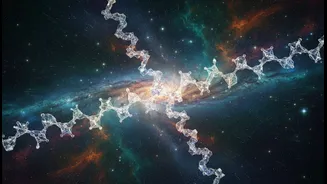
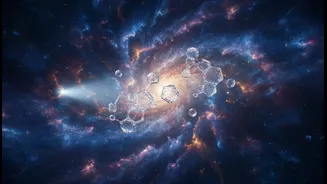
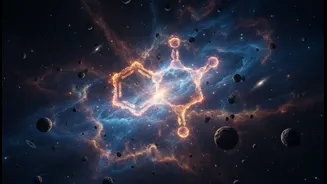
The molecule in question is called glycolaldehyde, the simplest form of sugar. While you wouldn't want to stir it into your coffee, its chemical structure (C2H4O2) makes it a crucial player in prebiotic chemistry. Its detection confirms that some of the fundamental
ingredients for life can form in the harsh environment of interstellar space, long before planets even exist. Recently, in July 2026, astronomers also confirmed the presence of another sugar, erythrulose, in a molecular cloud near the Galactic Center called G+0.693-0.027. This discovery reinforces the idea that the building blocks for more complex biological molecules are surprisingly common in the cosmos.
The Cosmic Chemical Kitchen
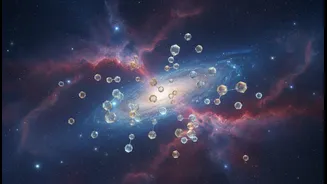
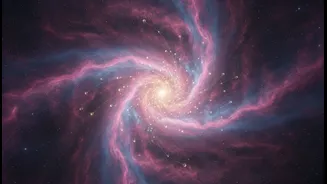
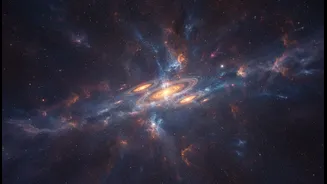
These sugars were not found just anywhere. They were detected in giant molecular clouds—vast, cold, and dense regions of gas and dust. One key location is Sagittarius B2, a massive star-forming region near the heart of the Milky Way. These clouds are cosmic nurseries where new stars and planetary systems are born. Temperatures here can plummet to just a few degrees above absolute zero. In these frigid conditions, simple atoms and molecules freeze onto the surfaces of tiny dust grains. Over millions of years, these icy mantles become cosmic laboratories where molecules react to form more complex structures, including alcohols and sugars.
Listening for Molecular Fingerprints
Detecting a specific molecule from 26,000 light-years away is a remarkable feat of astronomical detective work. Scientists use powerful radio telescopes, like the Atacama Large Millimeter/submillimeter Array (ALMA) and the Green Bank Telescope, to do it. Each molecule rotates and vibrates at specific, predictable frequencies. When it does, it either emits or absorbs radio waves, creating a unique spectral "fingerprint." By tuning their telescopes to these exact frequencies, astronomers can identify the chemical composition of distant gas clouds, effectively listening for the tell-tale signature of molecules like glycolaldehyde.
From Stardust to Planets
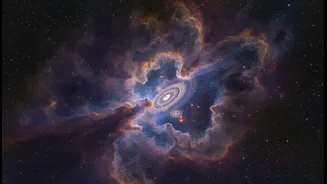
So, how does interstellar sugar help build a planet? The process begins when a molecular cloud collapses under its own gravity to form a new star at its center. The remaining gas and dust form a swirling, flattened disc around the newborn star, known as a protoplanetary disk. This disk is a mixture of gas, ice, and dust grains coated with the very prebiotic molecules, including sugars, that formed in the cold cloud. These sticky, coated dust grains begin to clump together, growing from microscopic particles to pebbles, then to larger rocks called planetesimals. These planetesimals are the seeds of planets. Through countless collisions over millions of years, they merge and grow into full-fledged worlds, carrying their original chemical inventory with them.
The Ingredients for Life
The discovery of sugars in these planet-forming regions is profoundly significant. Glycolaldehyde is a key ingredient in the formation of ribose, the sugar that forms the backbone of RNA, a molecule similar to DNA and essential to all known life. Finding these molecules in the right place at the right time—in the same material from which planets form—suggests that worlds may be seeded with the building blocks of life from their very inception. It supports the theory that comets and meteorites, which are leftover material from this formation process, could have delivered these essential organic compounds to a young Earth, potentially kick-starting the chemistry that led to life.