

A New Frontier for Indian Jobs
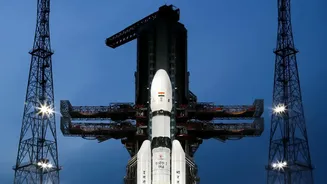
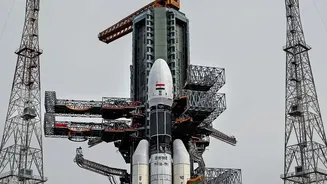
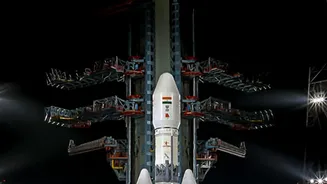
India's space economy is undergoing a massive transformation. Once driven almost entirely by the Indian Space Research Organisation (ISRO), the sector is now a hotbed of private innovation. Projections show the domestic space economy could grow from around
$8.4 billion today to nearly $44 billion by 2033. This explosive growth is fuelled by government policies designed to open the sector. The establishment of IN-SPACe (Indian National Space Promotion and Authorisation Centre) as a single-window agency has been a game-changer, allowing private companies to participate in everything from satellite manufacturing to launch services. As a result, India is now home to over 400 space startups, attracting significant investment and creating thousands of high-skilled jobs.
The Data Goldmine from the Stars
Some of the fastest-growing careers in the space industry don't involve building rockets, but interpreting the data they send back. Satellites constantly gather enormous volumes of information about our planet. This has created a huge demand for Satellite Data Analysts and Remote Sensing & GIS Experts. These professionals use skills in Python, AI, and machine learning to process satellite imagery for sectors like agriculture (monitoring crop health), urban planning, disaster management, and climate change monitoring. Companies such as Pixxel and SatSure are at the forefront, hiring data scientists who can turn raw satellite feeds into valuable business intelligence.
Manufacturing the Future of Flight
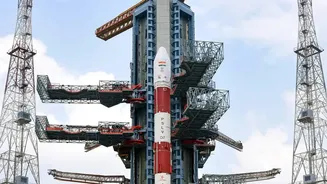
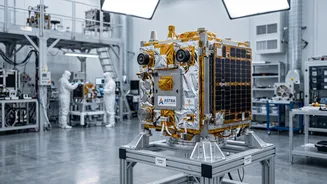
While data is crucial, the hardware still needs to be built. The 'upstream' part of the space economy—designing and manufacturing launch vehicles and satellites—is buzzing with activity. Private companies like Skyroot Aerospace and Agnikul Cosmos are developing their own rockets, creating a demand for core engineering talent. This includes Aerospace Engineers for vehicle design and propulsion, Mechanical Engineers for structures and components, and Electronics Engineers for vital avionics and control systems. The rise of smaller, cost-effective satellites and advanced manufacturing has also created niche roles for specialists in 3D printing, robotics, and automation.
The Code That Powers the Mission
Modern space missions are powered as much by software as by rocket fuel. Aerospace Software Engineers are in high demand to develop everything from the on-board flight software that controls a spacecraft to the ground control systems that manage missions. Expertise in languages like C++ and Python, along with knowledge of embedded systems, is highly sought after. Another critical area is Guidance, Navigation, and Control (GNC), where engineers design the complex algorithms that steer rockets and satellites. Furthermore, as space assets become more connected, Space Cybersecurity Analysts are needed to protect satellites and ground stations from digital threats, a role that blends national security with commercial necessity.
Beyond Engineering: The Expanding Ecosystem
The growth of the space economy has created a surprising number of non-technical roles. As the sector becomes crowded with new companies and international agreements, Space Law and Policy Advisors are needed to navigate complex regulations and contracts. Business Development professionals are required to find commercial clients for launch services and satellite data. The influx of private investment means that professionals in finance and venture capital with an understanding of the sector are also in demand. There are even opportunities for science communicators and educators to inspire the next generation of space professionals. These roles show that you don't need an engineering degree to be part of India's space journey.
How to Launch Your Space Career
For core technical roles, a B.Tech in fields like Aerospace, Mechanical, Electronics, or Computer Science is the most common entry point. Graduates from institutions like the IITs, NITs, and the Indian Institute of Space Science and Technology (IIST) are highly sought after by both ISRO and private firms. For data-centric roles, a background in computer science, data science, or even geography can be a strong asset. Aspiring professionals should focus on building practical skills through hands-on projects like student satellite programs or model rocketry. Networking on professional platforms and following companies like Skyroot, Agnikul, and Pixxel can provide direct insight into hiring trends.