







The Scent of the Soil: What Is Vetiver?
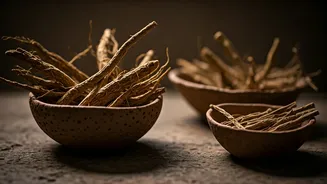
Vetiver, known locally as ‘khus’, is a perennial grass native to India. While the grass itself is unassuming, its true magic lies in its dense, fibrous root system. These roots are harvested for their rich, complex essential oil, which has a deeply earthy,
woody, and slightly sweet aroma. For centuries, khus has been synonymous with cooling and refreshment in India. You might have seen it woven into mats (tattis) that are hung in doorways and sprinkled with water; as the water evaporates, it cools the air and releases vetiver’s signature grounding scent. This is not just a pleasant fragrance; the roots themselves have hygroscopic properties, meaning they can absorb moisture and, with it, the airborne molecules that cause musty smells.
The Sacred Aroma: Understanding Sandalwood
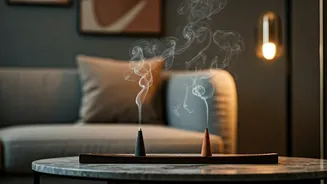
Sandalwood, or ‘chandan’, holds a revered place in Indian culture, prized for its spiritual significance and its unmistakable fragrance. The aroma is warm, creamy, and woody, known for its calming and purifying effects. Unlike vetiver’s earthy coolness, sandalwood offers a rich, lasting warmth. Traditionally used as a paste in religious rituals and as a key ingredient in Ayurvedic medicine, sandalwood’s aromatic compounds are powerful deodorisers. Its scent doesn't just cover up bad smells; its strong, pleasant profile effectively overpowers and neutralises them, replacing stale air with a sense of clean, sacred tranquility. The oil is one of the most precious in the world, valued for a fragrance that can linger for days.
How They Work Together to Clear the Air
Combining vetiver and sandalwood creates a powerful, synergistic effect against humid indoor odours. Vetiver acts as a natural dehumidifier and odour trap. Its complex root structure provides a large surface area to absorb moisture and lock away smelly compounds. It tackles the root cause of mustiness—the dampness itself. Sandalwood, on the other hand, works as a potent aromatic purifier. Its strong, pleasing scent masks any remaining unpleasant odours while imparting its own clean, calming fragrance. Together, they form a two-pronged attack: vetiver absorbs and neutralises, while sandalwood masks and refreshes. The result is a home that doesn't just smell 'not bad,' but smells genuinely good, with a natural, layered fragrance that is both calming and invigorating.
Method 1: The Traditional Vetiver Root Bundle
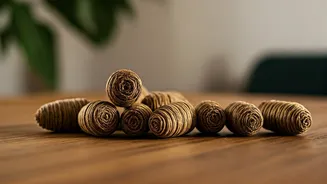
This is the simplest, most low-tech way to harness the power of vetiver. You can purchase dried vetiver roots from local markets or online. Simply take a small bundle of the roots, tie them together with a string, and place them in areas prone to dampness and musty smells. They work wonderfully in wardrobes, shoe racks, laundry rooms, and bathrooms. To activate and enhance the fragrance, you can lightly spritz the bundle with water every few days. For a more decorative touch, place a bundle of roots in a bowl of water in your living room. It will act as a natural, passive diffuser, slowly releasing its earthy aroma while absorbing stale odours from the air.
Method 2: Using an Electric Diffuser
For a more modern and widespread approach, an ultrasonic electric diffuser is an excellent choice. This device uses water and electronic frequencies to create a fine mist of water and essential oils, dispersing them throughout a room. To combat humidity odours, use pure essential oils of both vetiver and sandalwood. A good starting blend is 3-4 drops of sandalwood oil and 2-3 drops of vetiver oil. The vetiver is quite potent, so a little goes a long way. The diffuser will not only fill your space with their beautiful combined scent but also add a minimal, controlled amount of moisture to the air, which can surprisingly help balance the perception of stale, damp air with fresh, fragrant vapour.
Method 3: Create Your Own Reed Diffuser
A DIY reed diffuser is an elegant and continuous way to scent your home without electricity. You will need a small glass bottle with a narrow neck, a few rattan reeds, a carrier oil (like unscented almond or safflower oil), and your vetiver and sandalwood essential oils. Fill the bottle about three-quarters full with the carrier oil. Then, add about 20-25 drops of essential oil for every 100ml of carrier oil. A good ratio would be 15 drops of sandalwood to 10 drops of vetiver. Swirl the bottle to mix, then place the reeds inside. The reeds will soak up the scented oil and release the fragrance into the air. Flip the reeds once a week to refresh the scent. It’s a beautiful, long-lasting solution for smaller spaces like a study or a bedroom.