



The Challenge of a Hostile World
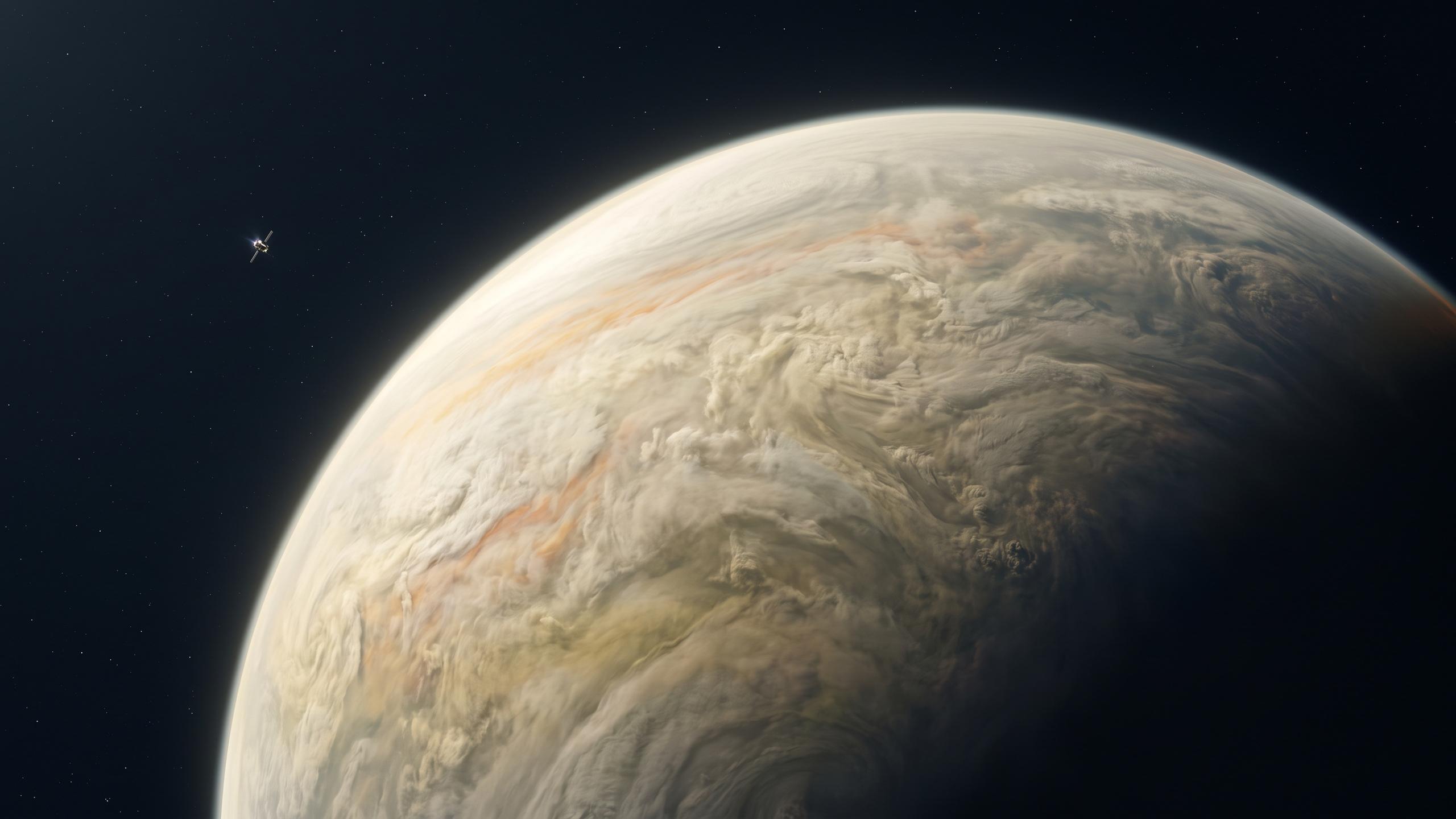
Studying Venus is incredibly difficult. Its atmosphere is over 90 times denser than Earth's, creating a crushing pressure that would destroy most spacecraft in an instant. The planet is perpetually covered in thick clouds of sulfuric acid that make direct
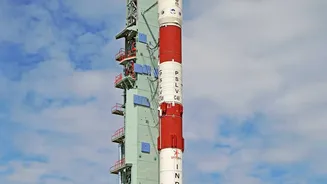
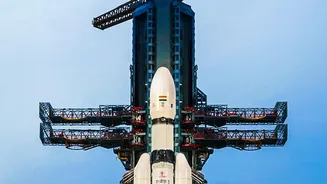
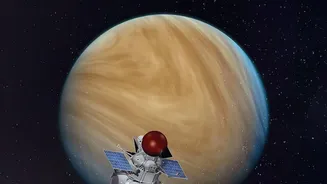
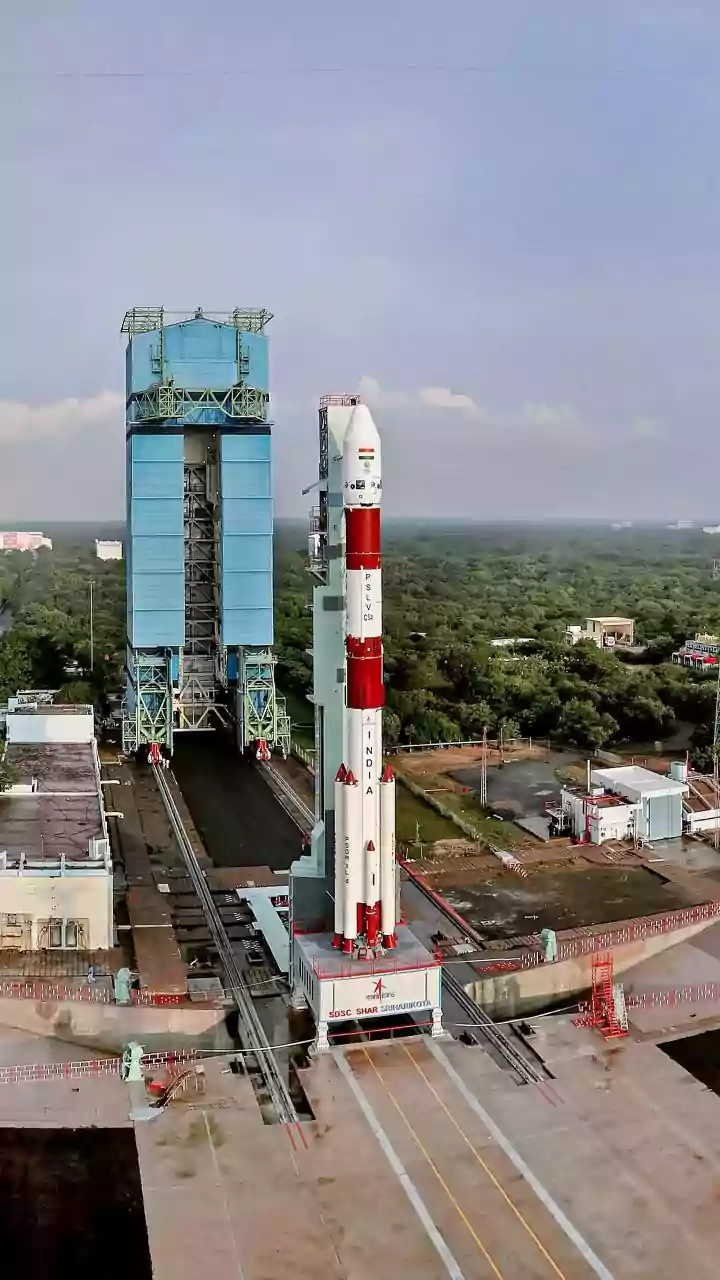
visual observation of the surface impossible. Add to that surface temperatures hot enough to melt lead, and you have one of the most hostile environments in the solar system. Any mission hoping to understand its atmospheric chemistry cannot simply look; it must be equipped with specialized senses to perceive what is hidden from conventional sight. This is the central challenge that ISRO’s Venus Orbiter Mission, nicknamed Shukrayaan, is designed to overcome.
Peering Through with Radar
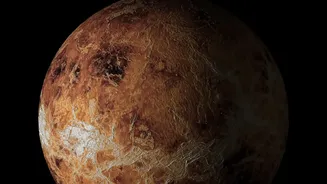
The mission's primary tool for bypassing the clouds is a high-resolution Synthetic Aperture Radar (SAR). Unlike a standard camera, which relies on visible light, radar sends out radio waves that can penetrate the dense cloud cover, bounce off the solid surface, and return to the orbiter. By analyzing these returning signals, scientists can create detailed, three-dimensional maps of Venus's surface, revealing mountains, plains, and potential volcanic features, regardless of the weather or time of day. ISRO plans to use an advanced SAR, building on its experience with the Chandrayaan-2 lunar mission, to map the Venusian surface with greater resolution than ever before. This allows scientists to link surface geology, like active volcanoes, to the gases they might be releasing into the atmosphere.
A Toolkit of Specialized Sensors
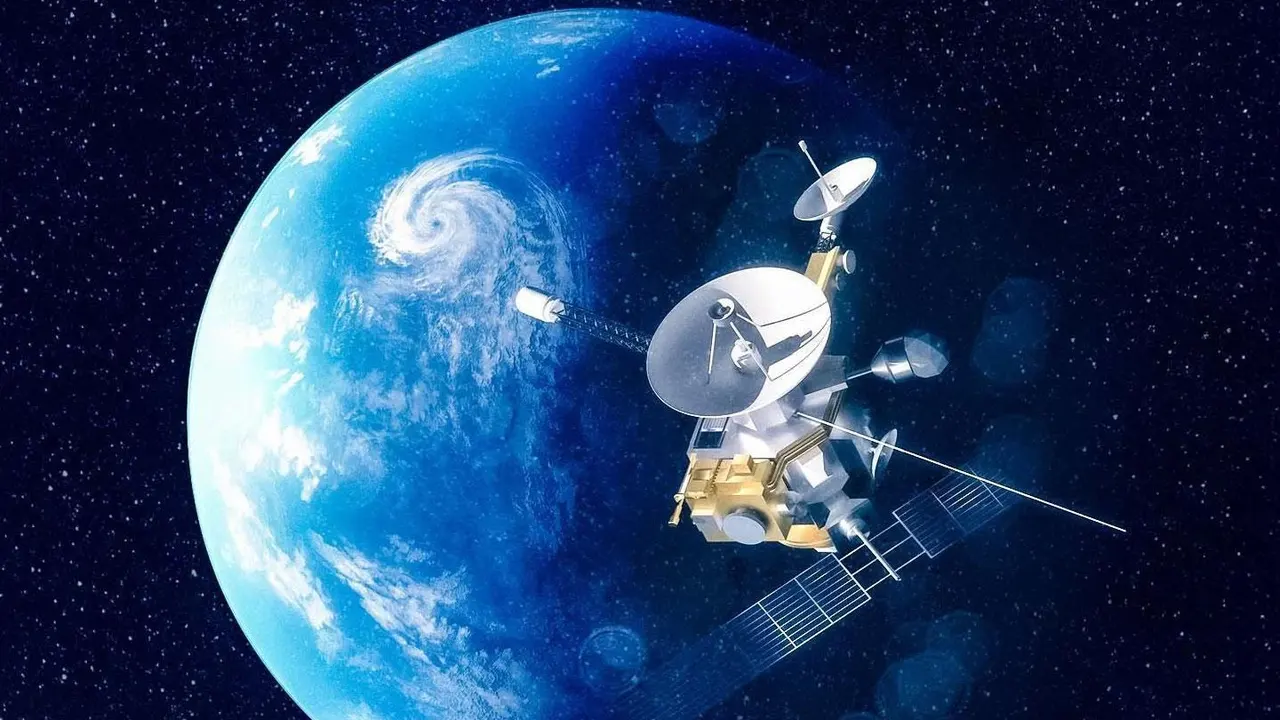
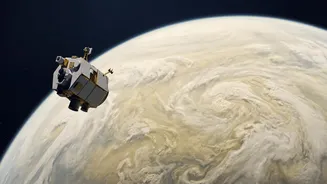
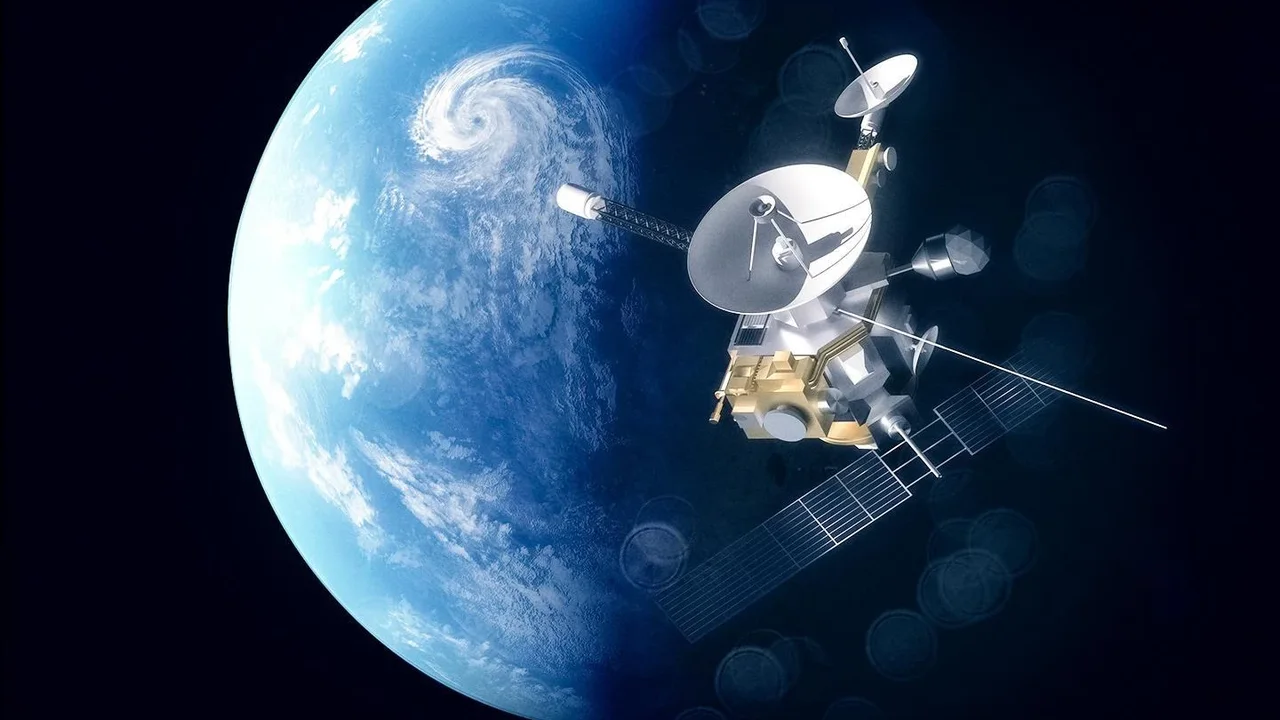
To analyze the chemistry of the atmosphere itself, Shukrayaan will carry a suite of sophisticated instruments. One key payload is the Venus Infrared Atmospheric Gases Linker (VIRAL), a collaborative instrument that will use spectroscopy to identify the chemical makeup of the air. Another, known as the Venusian Neutrals Analyser (VNA), will study how the solar wind interacts with the planet's upper atmosphere, helping to explain how Venus lost its water and became so inhospitable. The orbiter will also feature thermal and cloud-monitoring cameras to study the dynamics of the super-rotating atmosphere, where winds whip around the planet far faster than it spins. These instruments work together to build a complete picture of the atmosphere's structure, composition, and behaviour from the top down.
Finding the Invisible Windows
While Venus's atmosphere is mostly opaque, there are specific, narrow 'windows' in the infrared spectrum where light can escape from the lower atmosphere and even the surface. Shukrayaan's orbiter is designed to exploit these windows. Spectrometers onboard will be tuned to these exact wavelengths, allowing them to measure the composition of the deep atmosphere that is normally hidden. This technique allows scientists to hunt for trace gases, analyze mineral compositions on the surface, and search for thermal anomalies that could indicate active volcanic hotspots. By focusing on these specific infrared signatures, ISRO can gather data about the region beneath the main cloud deck without ever having to descend into the crushing pressures below.
Answering Science's Biggest Questions
The ultimate goal of this atmospheric investigation is to understand Venus's divergent evolution from Earth. Why did a planet so similar in size and mass become a runaway greenhouse inferno while Earth became a haven for life? By studying its atmospheric chemistry and dynamics, ISRO hopes to find clues about Venus's watery past and its dramatic climate change. These findings have profound implications, not just for planetary science, but for understanding climate processes on our own world. The mission, which was approved in 2024 and is slated for a 2028 launch, represents a major step for India's interplanetary ambitions and joins a renewed global interest in unlocking the secrets of our closest planetary neighbour.