






The Game-Changing Policy Shift
The single most significant catalyst for this transformation is the Indian Space Policy 2023. This landmark reform fundamentally changed the rules of the game, formally opening the doors for private companies—referred to as Non-Governmental Entities (NGEs)—to
participate in every aspect of the space economy. Before this, the Indian Space Research Organisation (ISRO) handled nearly everything, from research and development to building and launching rockets and satellites. The new policy smartly redefines ISRO's role, urging it to focus on futuristic R&D and deep space exploration, while private firms take over routine operations like satellite manufacturing and launch services. This has created a clear, structured environment where startups can thrive, supported by a new regulatory body, IN-SPACe, which acts as a single-window agency to authorize and supervise their activities.
Beyond the Cost Advantage
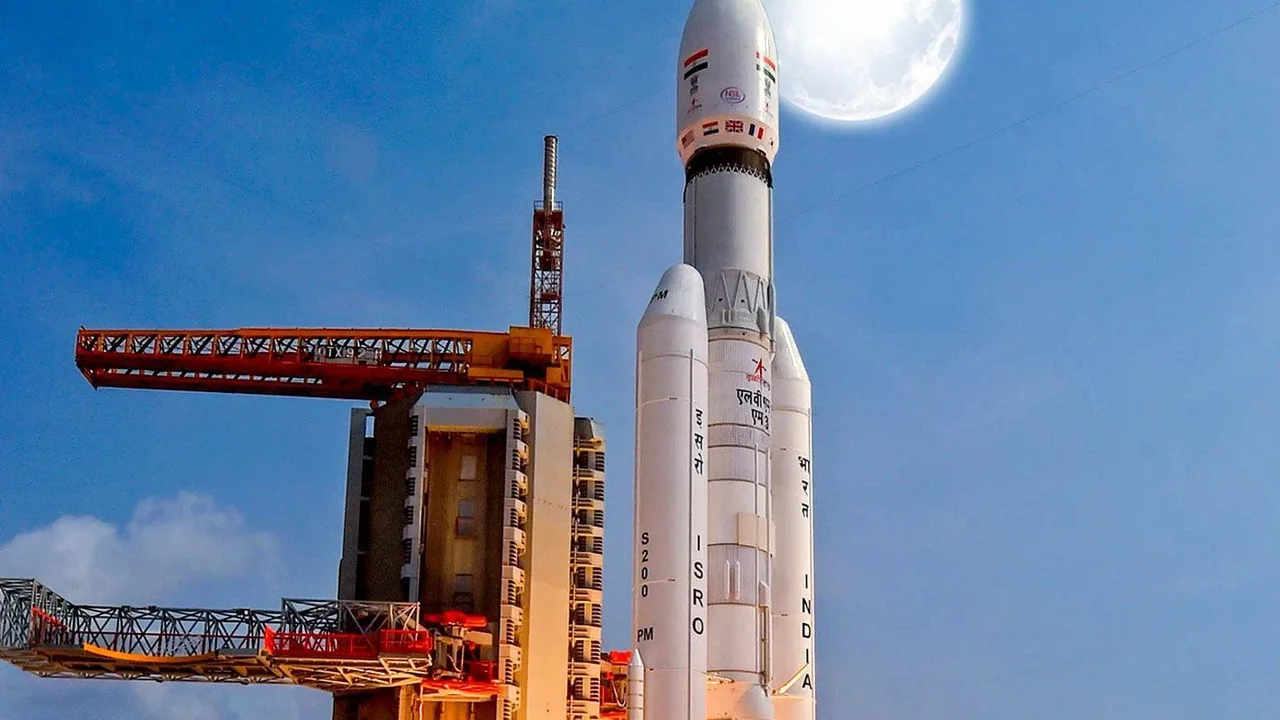
For decades, India's space program has been celebrated for its 'frugal innovation'—achieving major milestones like the Mars Orbiter Mission and Chandrayaan-3 lunar landing at a fraction of the cost of international counterparts. While this reputation for cost-effectiveness provides a strong marketing pitch, the reality of commercial launches is more complex. Some recent analyses suggest that India's per-kilogram launch cost has been historically higher than competitors like the U.S. due to a lower launch frequency and smaller rocket sizes. However, private players are set to change this. Companies like Skyroot Aerospace and Agnikul Cosmos are developing launch vehicles designed for the burgeoning small satellite market, which is projected to grow significantly. By increasing launch frequency and leveraging modern manufacturing techniques like 3D printing for engines, they aim to make India a truly cost-competitive launch destination for global customers.
Building the Full Space Stack
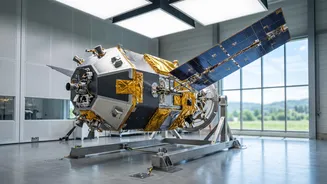
The opportunity extends far beyond just rockets. Indian companies are building capabilities across the entire space value chain, from upstream manufacturing to downstream data analytics. Hyderabad-based Dhruva Space, for instance, builds small satellite platforms and orbital deployers. The most compelling growth area might be in downstream services. The global Earth observation market, driven by commercial clients in agriculture, insurance, and logistics, is expected to be worth nearly $7 billion by 2034. Here, Bengaluru's Pixxel is a standout player, developing a constellation of hyperspectral imaging satellites that provide incredibly detailed data, a service that has already attracted NASA's attention. This 'full-stack' approach—offering satellites, launch services, and data analytics—allows Indian firms to provide end-to-end solutions, making them more attractive to international clients who want a one-stop shop for their space needs.
Challenges on the Final Frontier
Despite the immense potential, the path to global dominance is not without obstacles. One of the primary challenges is scaling up. Moving from a successful test launch to a reliable, frequent, and commercially viable launch service is a massive industrial undertaking. Companies need to secure not just funding but a steady stream of international customers to justify production. Furthermore, the space industry relies on a complex global supply chain for critical components like semiconductors and advanced materials, which can be vulnerable to geopolitical disruptions. Indian firms will need to build resilient supply chains and integrate themselves into global markets to compete effectively. Finally, while the 2023 policy was a huge step, regulatory frameworks for things like liability, spectrum allocation, and foreign investment are still evolving and will need to provide long-term clarity for sustained growth.