







More Than Just Hues of Blue
When we picture the ocean, we typically think of a deep, uniform blue. But in reality, the sea is a mosaic of different colours, ranging from blue-green to green, and even brown or red in some areas. These variations, known as 'ocean colour', are determined
by what’s in the water. While pure water absorbs red light and reflects blue, other substances change this equation. The most significant of these is chlorophyll, the green pigment found in microscopic marine plants called phytoplankton. Just like plants on land, these tiny organisms form the base of the marine food web. Where there's more phytoplankton, the water appears greener. Other materials like suspended sediments or dissolved organic matter can also alter the water’s colour, often turning it brownish near coastlines. By studying these subtle shifts, scientists can diagnose the health and productivity of our oceans.
ISRO's Eyes in the Sky
The Indian Space Research Organisation (ISRO) has been a pioneer in this field with its OceanSat series of satellites. The lineage began with Oceansat-1 in 1999, followed by Oceansat-2 in 2009, each carrying an Ocean Colour Monitor (OCM) instrument. The latest and most advanced is Oceansat-3, also known as EOS-06, which was launched in November 2022. This satellite carries a sophisticated 13-band Ocean Colour Monitor (OCM-3) that can observe the Earth with remarkable detail. Orbiting at an altitude of about 740 kilometres, EOS-06 provides continuous data on ocean colour, sea surface temperature, and wind vectors, ensuring that India has a steady stream of information for a wide range of applications.
A Guide for India's Fishermen
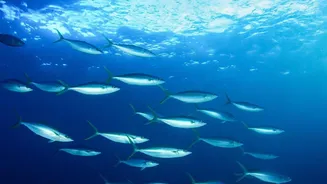
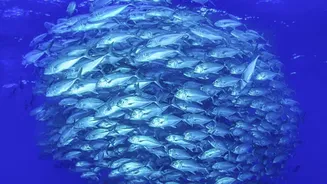
One of the most direct benefits of monitoring ocean colour is the identification of Potential Fishing Zones (PFZ). Since phytoplankton are the primary food source for many fish, high concentrations of chlorophyll often indicate where fish are likely to gather. Using data from OceanSat, the Indian National Centre for Ocean Information Services (INCOIS) generates daily PFZ advisories. These advisories are sent to lakhs of fishermen, helping them locate abundant fishing areas without wasting precious time and fuel searching vast expanses of the sea. This service not only improves the livelihoods of fishing communities but also reduces the carbon footprint of fishing operations by cutting down on diesel consumption.
Forecasting Nature's Fury
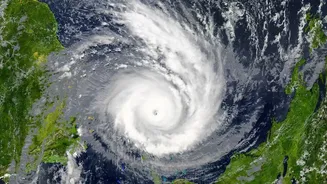
Beyond marine life, OceanSat's capabilities are crucial for weather forecasting, especially in monitoring cyclones. Satellites in the series, like EOS-06, are equipped with instruments such as a scatterometer and a Sea Surface Temperature Monitor. The scatterometer provides data on ocean surface wind speed and direction, while the temperature monitor tracks heat in the upper ocean—a key ingredient for cyclone formation and intensification. By combining this data with ocean colour observations, which can reveal the biological response to changing ocean conditions, forecasters get a more complete picture of a developing storm. This integrated approach helps in more accurate predictions of a cyclone's track and intensity, giving disaster management agencies valuable time to prepare and save lives.
A Vital Tool for Climate Science
The long-term data collected by the OceanSat series provides an invaluable record for climate change research. Continuous monitoring of ocean colour helps scientists track global trends in phytoplankton populations, which play a critical role in the Earth's carbon cycle by absorbing carbon dioxide. Changes in these populations can signal shifts in ocean ecosystems due to warming waters or ocean acidification. The data also helps monitor the health of sensitive ecosystems like coral reefs and detect harmful algal blooms, which can have devastating effects on marine life and human health. By observing these large-scale patterns over many years, ISRO's satellites are contributing vital information to our understanding of how the planet is changing and what the future might hold for our oceans.