






Vozinha (Cape Verde, Goalkeeper)
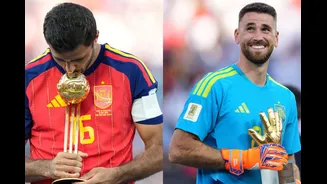
At 40 years old and without a club, Vozinha entered the tournament as an unknown. He leaves it a national hero. The Cape Verde keeper was colossal, producing strings of saves to secure historic draws against Spain and Uruguay in the group stage. His heroics,
including eight saves against Argentina in the round of 32, took his tiny nation into extra time against the defending champions and captured the world's imagination.
Ayyoub Bouaddi (Morocco, Midfielder)
While many eyes were on Morocco's established stars, 18-year-old Ayyoub Bouaddi quietly became the team's engine room. The Lille midfielder, who only recently declared for Morocco over France, showed maturity beyond his years, anchoring the midfield with incredible composure against giants like Brazil. His ability to win duels and maintain a high pass completion under pressure was crucial to Morocco's knockout stage run.
Keito Nakamura (Japan, Winger)
Japan’s attack was a constant threat, and Keito Nakamura was a primary reason why. The right-footed left winger, who plays for Reims in France, was a livewire. He scored a stunning goal against the Netherlands and provided a key assist in the demolition of Tunisia. His pace, dribbling, and unpredictability made him a nightmare for defenders and announced his arrival on the world stage.
Johan Manzambi (Switzerland, Midfielder)
Switzerland’s steady presence in the knockout rounds was powered by a new generation, led by 20-year-old Johan Manzambi. The Freiburg midfielder burst onto the scene with three goals in the group stage, including a decisive brace against Bosnia-Herzegovina. His poise and clinical finishing from midfield provided a vital, and unexpected, source of goals that made the Swiss a formidable opponent.
Joel Ordóñez (Ecuador, Centre-Back)
Ecuador's defensive record in qualifying was stellar, and 22-year-old Joel Ordóñez was the foundation. He brought that same resilience to the World Cup. His blend of recovery pace and composure on the ball, drawing comparisons to top European defenders, was evident as he marshalled Ecuador's backline. In a tournament full of attacking flair, his disciplined, intelligent defending stood out.
Richie Laryea (Canada, Defender)
With co-hosts Canada sweating on the fitness of Alphonso Davies, they needed a hero to step up. They found one in Richie Laryea. Normally a right-back, he filled in on the left and delivered tirelessly energetic performances, providing defensive security and an attacking outlet. His versatility and work rate were instrumental in Canada’s historic run to the knockouts, proving squad depth is as important as star power.
Mousa Al-Taamari (Jordan, Winger)
Jordan's presence at the World Cup was a surprise to some, but their performances were not. Mousa Al-Taamari was their creative force. Known as one of Asia's most exciting attackers, his direct dribbling and big-game mentality were on full display. Though not a household name in Europe, he proved he has the talent to decide matches at the highest level and was the focal point of every Jordanian attack.
Ibrahim Maza (Algeria, Midfielder)
At just 20 years old, attacking midfielder Ibrahim Maza was the creative engine for Algeria. The Bayer Leverkusen prospect showed exceptional vision and intelligence operating between the lines. He was the key to their fluid transitions from defence to attack, inspiring a crucial comeback against Jordan and starring in a dramatic draw with Austria. His ability to deliver key passes under pressure marked him as a future star.
Elijah Just (New Zealand, Winger)
New Zealand turned heads with their spirited performances, and 26-year-old winger Elijah Just was their breakout star. He announced himself to the world with three goals in the group stage, including two in a hard-fought 2-2 draw with Iran and another against Belgium. For a player developing his career in Europe, it was a spectacular arrival on the biggest stage, proving that talent can emerge from any corner of the footballing world.
Weston McKennie (USA, Midfielder)
While Christian Pulisic often dominates the headlines for the USMNT, Weston McKennie's relentless work rate was the team's heartbeat. His versatility, athleticism, and ability to contribute at both ends of the pitch were on full display. He may not always get the glory, but his tireless running and tactical discipline allowed the USA's more attacking players the freedom to shine, making him arguably their most important player.