

The Grand Vision for India's Rivers
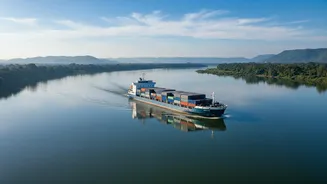
Since the National Waterways Act of 2016, India has been working to transform its vast network of rivers, canals, and backwaters into bustling commercial highways. The government declared 111 waterways as National Waterways (NWs), a dramatic increase
from the initial five. The goal is ambitious: to shift a significant portion of cargo traffic from congested roads and railways to a cheaper, more fuel-efficient, and environmentally friendly mode of transport. Projects like the Jal Marg Vikas Project on NW-1 (the Ganga river) and integration with the Sagarmala Programme aim to create a seamless multimodal logistics network, reducing India's high logistics costs, which are estimated to be around 13-14% of GDP. One litre of fuel, for instance, can move 105 tonne-kilometres by water, compared to just 24 by road.
Why 'Door-to-Door' is the New Benchmark
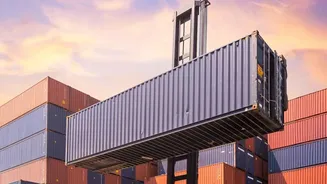
For decades, logistics has often focused on 'port-to-port' or 'terminal-to-terminal' efficiency. However, a shipment doesn't begin or end at a river terminal. It starts at a factory and ends at a warehouse or a customer's doorstep. Door-to-door (D2D) service covers the entire journey: from pickup, documentation, transport, and customs to final delivery. In the context of waterways, this means the total time and cost involved in getting goods from the factory to the river, the journey on the water, and the final leg of delivery from the river to the destination are what truly matter. A slow barge journey can be part of a highly efficient D2D chain if the connections at either end are seamless, quick, and inexpensive. This holistic view is crucial because shippers choose transport modes based on the total cost and time, not just one part of the journey.
The First and Last-Mile Hurdle
The greatest challenge to making India's waterways competitive is solving the 'first-mile, last-mile' connectivity problem. A waterway is only as strong as its weakest link, and often, that link is the road or rail connection to the jetty. Inadequate infrastructure, such as a lack of rail sidings at terminals or poor-quality approach roads, can wipe out any cost savings gained from using water transport. Recognizing this, government initiatives are now focused on developing multi-modal terminals that integrate seamlessly with road and rail networks under frameworks like PM Gati Shakti. The development of 'freight villages' like the one in Varanasi is a step in this direction, designed to aggregate cargo and provide comprehensive logistics services in one place.
Innovations Bridging the Gaps
To tackle the door-to-door challenge, innovative solutions are being deployed. Roll-On-Roll-Off (Ro-Ro) terminals, for example, allow trucks loaded with goods to simply drive onto a vessel at the start of the journey and drive off at the destination. This significantly reduces handling time and costs. Furthermore, the government is incentivising private investment in building terminals and jetties and encouraging private participation in vessel operations through schemes like Jalvahak, which provides financial incentives to shift cargo to waterways. Digital platforms like the PANI portal provide real-time information on river navigation, helping vessel operators plan their journeys more effectively, while the 'One Nation One Port Process' initiative aims to standardise operations across all ports and terminals.
The Economic and Environmental Payoff
If India gets the door-to-door equation right, the benefits could be enormous. For bulk industries like cement, steel, fertilisers, and automobiles, it promises a substantial reduction in transportation costs, making Indian goods more competitive. A successful shift to waterways would also ease the immense pressure on the country's overburdened road and rail networks. Environmentally, the impact is equally significant. Water transport emits far less carbon per tonne-kilometre compared to road transport, contributing to India's decarbonisation goals. Initiatives like the Harit Nauka Guidelines, which push for green-fueled vessels, further underscore the commitment to making this modal shift a sustainable one.