








The Persistent Problem of Uranium
Uranium is a naturally occurring, but radioactive, heavy metal that fuels nuclear power and weapons. Decades of mining, processing, and waste disposal have left a toxic legacy, with uranium contaminating soil and groundwater at numerous sites worldwide.
When uranium is in a soluble form, it can travel easily through water, posing significant risks to ecosystems and human health. Current methods for cleaning up this contamination are often expensive, energy-intensive, and can sometimes create secondary pollution issues, involving harsh chemicals or large-scale excavation. This has left scientists searching for a better, more sustainable solution.
Nature's Microscopic Janitors
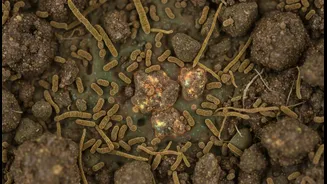
The solution might be found in some of the smallest forms of life on Earth. The field of bioremediation uses living organisms—in this case, microorganisms—to clean up hazardous substances. For years, scientists have suspected that certain bacteria could play a role in managing uranium, but the exact mechanisms were not well understood. Research has increasingly focused on a group of bacteria, particularly from the Geobacter family, that have a remarkable and useful metabolic ability. These microbes don't just tolerate toxic environments; they can actively interact with radioactive materials as part of their natural life processes.
How Bacteria 'Eat' Uranium
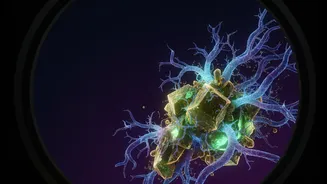
These bacteria don't literally eat uranium in the way we eat food. Instead, they use it in a clever chemical process for energy. Many of these microbes, like Geobacter sulfurreducens, essentially breathe metals instead of oxygen. They perform a chemical process called reduction, where they transfer electrons to the soluble uranium (U(VI)). This process changes the uranium's chemical state to an insoluble form (U(IV)). In simple terms, the bacteria convert the dissolved, mobile uranium into a solid, stable mineral form that precipitates out of the water. This effectively locks the uranium in place, preventing it from spreading further through the groundwater. Some research shows the bacteria use tiny protein filaments that act like wires to 'zap' the uranium, while other parts of the cell surface act like a sponge to soak it up.
From the Lab to Contaminated Lands
While the science is promising, taking this process from a controlled lab environment to a complex, real-world contaminated site presents significant challenges. The effectiveness of these bacteria can be influenced by many factors, including the pH of the water, the presence of other chemicals like nitrates, and the overall geochemistry of the site. The headline's focus on "early research" is key; while the principles are established, scientists are still working to optimize the conditions for sustained and effective bioremediation in the field. One approach, known as biostimulation, involves adding specific nutrients or food sources, like glycerol or acetate, to a contaminated site to encourage the growth and activity of these helpful native bacteria.
A New Paradigm for Environmental Cleanup
The potential of microbial remediation extends far beyond just uranium. If bacteria can be harnessed to immobilize one of the most persistent and dangerous radioactive contaminants, it opens up a new way of thinking about environmental cleanup. This research encourages a shift from brute-force chemical and physical methods to more elegant, nature-inspired solutions. Scientists are exploring if these or similar microbes could be used to target other toxic heavy metals, potentially helping to clean up industrial waste or even recycle valuable metals from electronics. The ultimate goal is to develop cost-effective, self-sustaining systems that work with nature, not against it, to heal polluted environments.