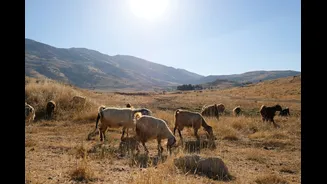







India's farms are facing a critical challenge: dwindling groundwater. As water tables fall, the sustainability of agriculture is at risk. But an innovative solution is gaining ground: agrivoltaics. Can this dual-use model actually work?
What is Agrivoltaic Farming?
Imagine a farm
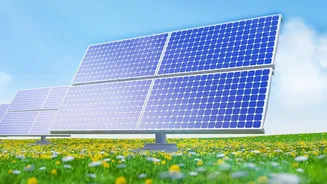
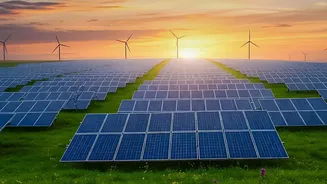
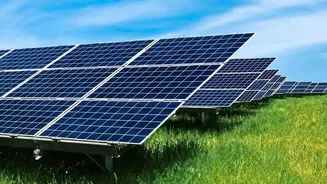
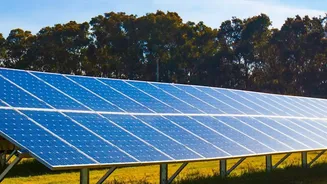
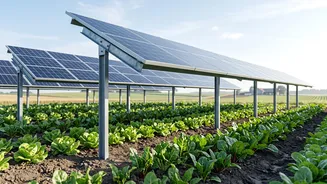
where crops grow under the partial shade of solar panels mounted on tall structures. This is the core concept of agrivoltaics, also known as agri-PV. Instead of choosing between using land for agriculture or for solar energy generation, this model does both simultaneously. The panels are installed high enough to allow farm machinery to pass underneath and for sufficient sunlight to reach the plants below. It’s a land-efficient approach that addresses two of India’s most pressing needs: food security and clean energy, transforming farms into hubs of dual productivity. This model is now receiving a major policy push from the Indian government, which sees it as a way to raise farmer incomes while expanding renewable energy capacity.
The Direct Link to Water Savings
The primary way agrivoltaics eases groundwater pressure is straightforward: shade. The solar panels create a cooler microclimate on the ground, reducing soil temperature and, crucially, lowering the rate of water evaporation from the soil. This means the soil retains moisture for longer, decreasing the overall need for irrigation. Field studies and pilot projects have shown that this effect can lead to significant water savings, with some estimates suggesting a reduction in water use by 20-30% for certain crops. Furthermore, some systems are designed to harvest rainwater that falls on the panels, channelling it into storage tanks for later use in irrigation, further reducing dependence on borewells.
A Harvest of Co-Benefits
The advantages of agrivoltaics extend well beyond water conservation. For farmers, it offers a crucial second stream of income. They continue to earn from their crop harvest while also profiting from the electricity generated, which can be used to power farm equipment like irrigation pumps or sold back to the grid. This financial diversification provides a vital buffer against crop failures or market volatility. For certain shade-tolerant crops, the partial protection from harsh sunlight can even lead to improved yields and quality. Pilot projects in India, such as the one by the Central Arid Zone Research Institute (CAZRI) in Jodhpur, have successfully demonstrated the cultivation of crops like moong bean and clusterbean under solar panels, validating the model's potential.
Hurdles on the Path to Scale
Despite its promise, widespread adoption of agrivoltaics in India faces significant challenges. The most immediate barrier is the high upfront cost. The elevated structures required for agri-PV systems make them 25–30% more expensive than conventional ground–mounted solar projects. For India’s small and marginal farmers, who make up over 85% of the farming community, this initial investment is often prohibitive without substantial financial support. There is also a need for more research to identify the best crop–and–panel combinations for different agro–climatic zones, as not all crops thrive in partial shade. Developing a supportive policy framework that provides subsidies or viability gap funding is essential to make these projects economically attractive for farmers.