



A Portrait of a Stellar Nursery
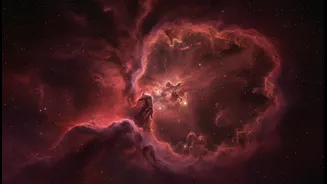
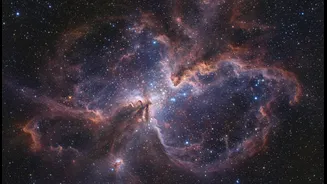
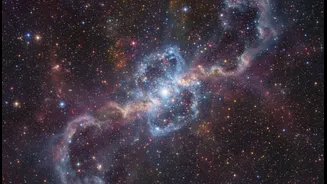
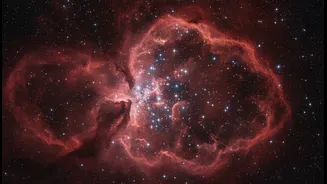
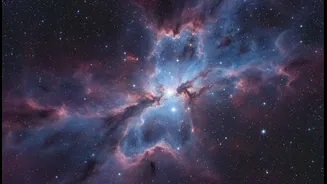
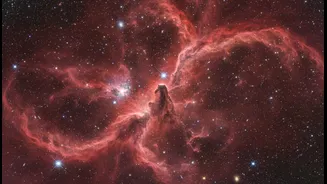
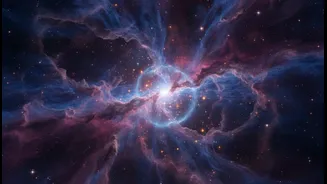
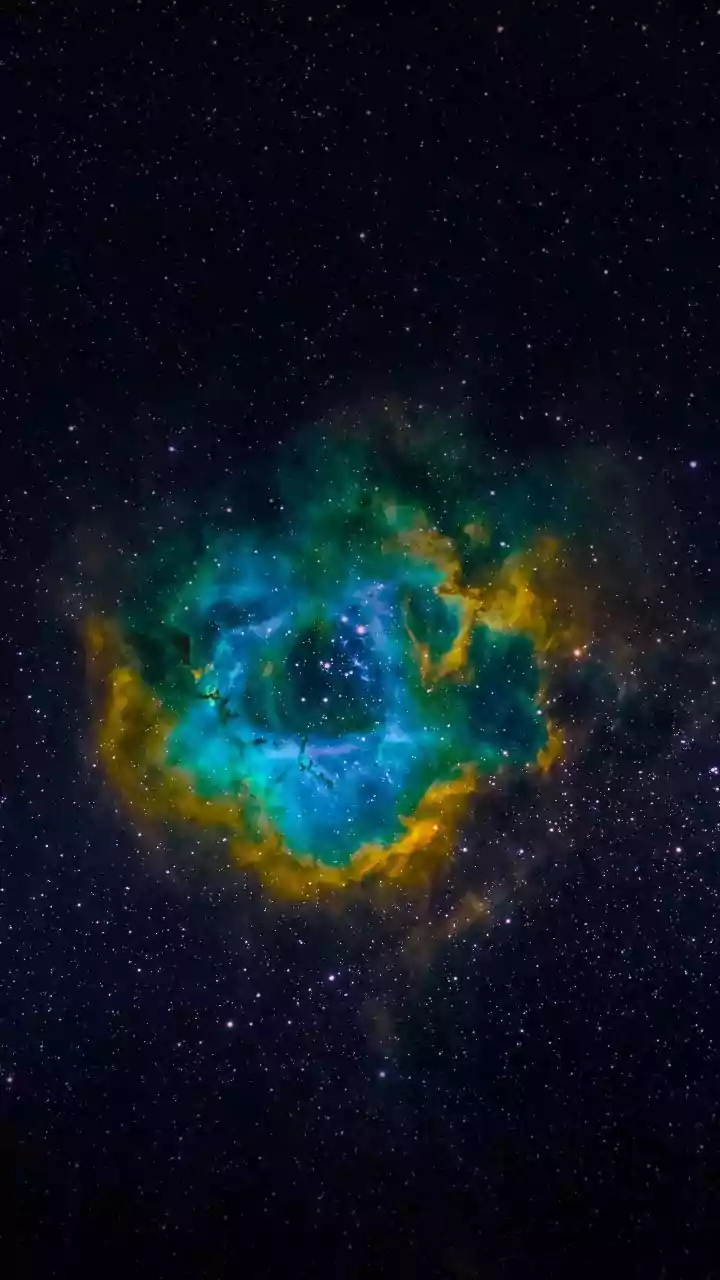
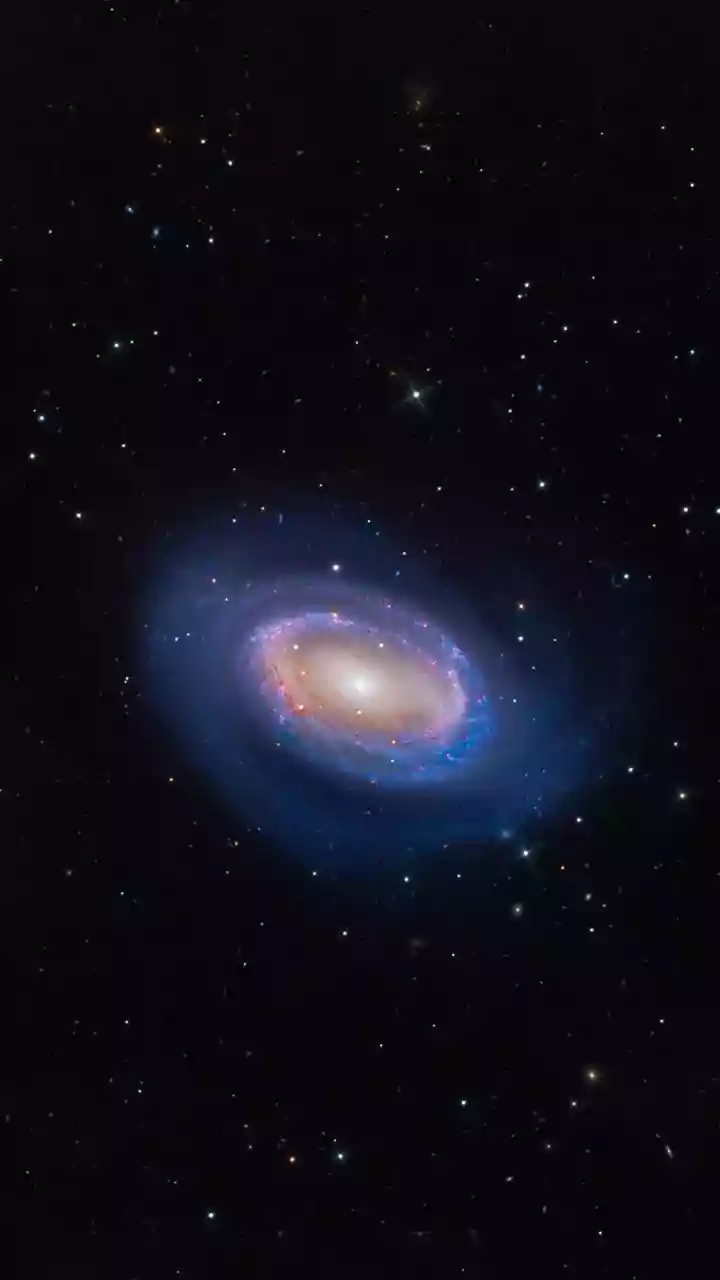
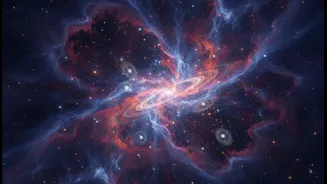
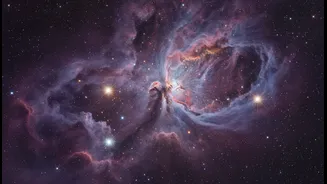
The image, released in early July 2026, captures LH 95, a sprawling star-forming region located in the Large Magellanic Cloud, a satellite galaxy orbiting our own Milky Way. At first glance, it looks like a cosmic fireworks display. Thousands of brilliant
blue and white stars sparkle against a backdrop of glowing, deep red clouds of gas and dust. The scene is both beautiful and busy, capturing a cosmic 'maternity ward' where around 2,500 young stars are in the process of being born. NASA has compared the stunning visual to fireworks shining through drifting smoke, a fitting description for such a dynamic celestial event taking place 163,000 light-years from Earth.
The Science on the Chalkboard
Like a diagram in a science textbook, every colour in the image tells a story. The brilliant crimson glow is not just for show; it's the tell-tale sign of hydrogen gas being energized by intense ultraviolet radiation. This radiation pours from the brightest, most massive young stars in the frame, which appear as glittering blue and white points of light. These powerful stars, some many times more massive than our Sun, also unleash fierce stellar winds. Together, these forces heat the surrounding gas and sculpt it, carving out the pockets and wispy filaments that give the nebula its dramatic structure. The result is a snapshot of creation, showing how newborn stars actively shape the environment from which they emerged.
The Energy of Discovery
This brings us to its unique 'classroom energy'. The term can sometimes imply a dry, lecture-hall stillness, but this image is the opposite. It evokes the exhilarating chaos of a hands-on science lesson—the moment a chemical reaction fizzes over, or when a diagram suddenly makes a complex idea click into place. The vibrant, contrasting colours and the sheer activity packed into one frame are reminiscent of a well-loved classroom poster, designed to spark curiosity. We see the cause (the hot, bright stars) and the effect (the glowing, sculpted gas) playing out simultaneously. It’s not a static picture; it’s a lesson in astrophysics happening right before our eyes, capturing the messy, beautiful, and energetic process of the universe at work.
Hubble’s Role as a Universal Educator
For over three decades, the Hubble Space Telescope has been more than a scientific instrument; it has been a teacher for humanity. Its images have consistently brought the wonders of the cosmos into our homes and schools, transforming abstract concepts into breathtaking realities. From the iconic 'Pillars of Creation' to the 30th-anniversary 'Cosmic Reef' image, Hubble has a long legacy of capturing stellar nurseries in a way that is both scientifically valuable and publicly accessible. This new view of LH 95 continues that tradition. It provides astronomers with crucial data on how stars of different masses coexist and evolve, but it also provides the public with a fresh reminder of the dynamic universe we inhabit.