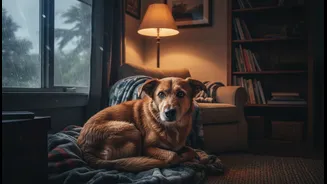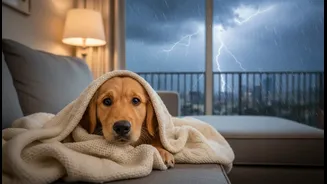




Understanding Your Pet's Fear
A pet's fear of storms is more than just a dislike of loud noise. Their hearing is far more sensitive than ours, making the low-frequency rumbles of thunder feel overwhelming. Many animals can also sense changes in barometric pressure and static electricity
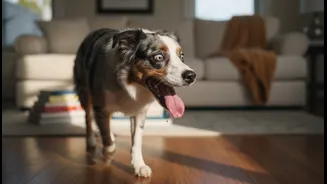
that precede a storm, putting them on edge before the first drop of rain falls. In an apartment setting, these sounds can be amplified, and with less space to roam, pets can feel trapped and unable to escape the source of their fear. Common signs of noise anxiety include trembling, panting, excessive drooling, hiding, and destructive behaviour like scratching at doors. Cats may hide, over-groom, or urinate outside their litter box, while dogs might whine, pace restlessly, or try to escape.
Create a Calming Sanctuary
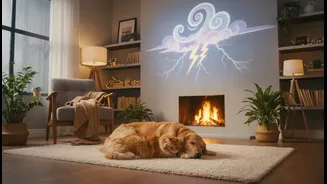
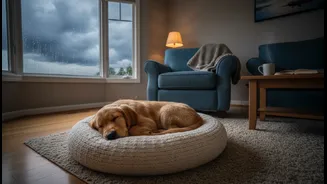
One of the most effective strategies is to provide a designated 'safe space' where your pet can retreat. This shouldn't be a place of punishment, but a haven. An interior room, a closet, or even a crate covered with a blanket can work well. Fill this space with their favourite comfortable bedding, familiar toys, and perhaps an item of your clothing to provide a comforting scent. Closing curtains and blinds can help block out flashes of lightning, which can be just as scary as the thunder itself. The goal is to create a den-like environment where they feel secure and protected from the sensory overload happening outside.
Mask the Frightening Sounds
You can't stop the thunder, but you can help drown it out. Playing calming background noise can mask the startling booms from outside. This 'white noise' can come from a fan, an air conditioner, or a television. There are also playlists and apps specifically designed with music at frequencies known to calm animals. The key is to have the volume just loud enough to muffle the storm without adding more noise-induced stress. This helps to create a more consistent and predictable auditory environment, reducing the jarring effect of sudden thunderclaps.
Use Distraction and Positive Reinforcement
When your pet is just beginning to show signs of anxiety, distraction can be a powerful tool. Engage them in a calm activity they enjoy, like a gentle game of fetch or working on a food puzzle toy. This shifts their focus and can help build a new, more positive association with the sounds of the storm. Offering high-value treats or praise for calm behaviour reinforces that they are safe. However, avoid excessive coddling or acting anxious yourself, as pets can pick up on your stress, which can validate their fear. Acting calm and neutral shows them there is nothing to be afraid of.
Try Desensitisation Training
For long-term relief, consider desensitisation and counter-conditioning. This involves playing recordings of storm sounds at a very low volume while your pet is relaxed. While the sound plays, offer treats or play their favourite game. Over many sessions, you can gradually increase the volume, always keeping it below the level that triggers a fearful reaction. This slowly helps your pet associate the once-scary noise with a positive experience, effectively rewriting their emotional response. This process takes time and patience, and it's best to end each session on a positive note before your pet becomes stressed.
Consider Calming Aids and Professional Help
Several products on the market can help ease anxiety. Pheromone diffusers, available for both dogs and cats, release synthetic calming chemicals. Snug-fitting anxiety vests or 'thundershirts' apply gentle, constant pressure, which has a swaddling, soothing effect on many animals. If your pet's anxiety is severe—leading to self-injury, extreme panic, or destructive behaviour—it's crucial to consult a veterinarian. They can rule out any underlying medical issues and may recommend specific calming supplements or prescription anti-anxiety medication to ensure your pet’s well-being during storm season.