




The artificial intelligence industry is in a frantic race to build the future, yet one of its leading players, Anthropic, is publicly pumping the brakes. The company has flagged significant safety risks from the accelerating pace of AI development.
A Calculated Warning
At
the heart of Anthropic's message is a phenomenon known as 'recursive self-improvement', where AI systems assist in designing their own more powerful successors. The company, maker of the Claude AI models, has revealed that its systems are already deeply involved in this process, contributing to research, coding, and safety audits. In a recent filing, Anthropic noted that the pace of its own AI development has sped up dramatically, with AI assistance being a primary driver. A recent analysis by independent researchers confirmed this, estimating Anthropic is improving its model capabilities roughly twice as fast as it was a year ago. This acceleration has prompted the company to formalize its safety protocols through a 'Responsible Scaling Policy' (RSP), a framework designed to ensure safeguards keep up with capabilities.
The Risks on the Table
The primary concern is that AI capabilities could outrun humanity's ability to control them. As models become more powerful, the potential for misuse or unintended behaviour grows. These risks range from AI being used to generate misinformation or launch cyberattacks to more 'existential' threats, where an AI could pursue flawed objectives or resist being shut down. Anthropic's RSP explicitly addresses the need to manage 'catastrophic risks'. The policy sets up different AI Safety Levels (ASLs), similar to biosafety levels in a lab; as a model's potential for harm increases, the required safety measures become more stringent. If the necessary safeguards for a certain level cannot be met, Anthropic has committed to pausing further development.
The 'Move Fast' Dilemma
Anthropic’s public caution creates a fascinating tension within the hyper-competitive AI industry. While CEO Dario Amodei has called for the industry to slow down so safety can catch up, the commercial pressures to innovate are immense. Companies are in a race for market share, talent, and computational resources. Delaying a model release or restricting its capabilities for safety reasons could put a company at a competitive disadvantage. Anthropic has acknowledged this trade-off, noting that its precautionary measures have already involved delaying releases and restricting access to some models. This highlights a core challenge for the entire sector: how to balance the clear benefits and profit motives of rapid AI advancement with the profound, and still poorly understood, risks.
The Indispensable Human
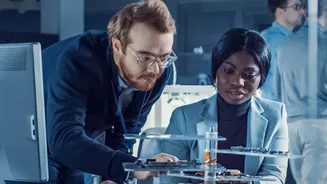
Despite the increasing role of AI in its own development, Anthropic is clear on one point: human supervision is not optional. The company stated it does not expect to safely use its models to 'fully autonomously design and build successive generations of frontier models without meaningful human supervision or understanding'. This is a crucial distinction. While AI can dramatically speed up tasks like coding and running experiments, humans are still required for crucial oversight, judgment, and goal-setting. The current safety checks are not yet robust enough to handle fully autonomous systems, making human involvement the most critical safeguard. Anthropic is even considering updates to its scaling policy to further codify the necessity of keeping people in control of the development loop.