






Why 15 Minutes Is Enough
The secret to a successful short workout isn't duration; it's intensity. High-Intensity Interval Training (HIIT) is a method that alternates between short bursts of all-out effort and brief recovery periods. This approach is incredibly time-efficient,
with studies showing that a 15-to-20-minute HIIT session can deliver similar or even greater cardiovascular benefits and calorie burn than longer sessions of steady, moderate exercise. When you push your body to its near-maximum effort, you trigger a metabolic response that continues to burn calories even after you’ve finished exercising. This makes it possible to improve stamina, build strength, and support weight loss in a fraction of the time.
Your Living Room Is Your Gym
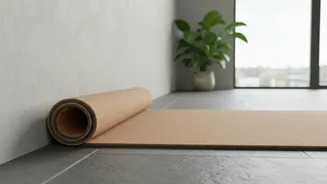
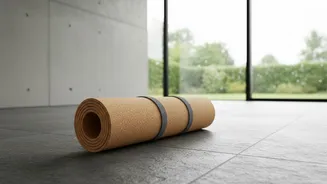
You don't need a sprawling home gym or expensive machines to get a fantastic workout. In fact, some of the most effective exercises rely on your own body weight for resistance. The beauty of bodyweight training is its minimal space requirement. A space just large enough to lie down is often all you need. Exercises can be done quietly to avoid disturbing neighbours, and you can even get creative by using sturdy household items like chairs for dips or walls for push-up variations. The key is to shift your mindset from what you lack in equipment to the powerful tool you always have with you: your own body.
The Essential No-Equipment Moves
To build an effective routine, focus on compound exercises that work multiple muscle groups simultaneously. This maximizes efficiency and calorie burn. Master these five fundamental movements: 1. Squats: This powerhouse move targets your glutes, quadriceps, and hamstrings. Keep your chest up and back straight, lowering your hips as if sitting in a chair. 2. Push-ups: The ultimate upper-body exercise for chest, shoulders, and triceps. If a standard push-up is too difficult, start with your knees on the ground or perform them against a wall. 3. Lunges: Excellent for single-leg strength, balance, and targeting the glutes and quads. Step forward, backward, or to the side to add variety. 4. Plank: A core-stabilizing champion. Hold a straight line from your head to your heels, engaging your abdominals and back muscles to prevent your hips from sagging. 5. Burpees: This is a full-body conditioning move. For a quieter, small-space version, perform a 'no-jump' burpee: squat down, step your feet back to a plank, perform a push-up, step your feet back in, and stand up.
Structuring Your 15-Minute Session
A good structure prevents wasted time and ensures you maintain intensity. A simple and effective format is a circuit. First, allow for a 2-minute dynamic warm-up with light movements like arm circles and leg swings. For the main workout, choose four or five exercises from the list above. Perform each exercise for 45 seconds at high intensity, followed by 15 seconds of rest before moving to the next. Complete the entire circuit of exercises three times. This 15-minute block will push your heart rate and challenge your muscles effectively. Always finish with a 2-to-3-minute cool-down involving static stretching to improve flexibility.
Putting It All Together: A Sample Routine
Here is a total-body workout you can try today. Remember to warm up first! Set your timer for 15 minutes and perform three rounds of the following circuit: Bodyweight Squats: 45 seconds Rest: 15 seconds Push-ups (on knees or toes): 45 seconds Rest: 15 seconds Alternating Lunges: 45 seconds Rest: 15 seconds Plank: 45 seconds Rest: 15 seconds This circuit format keeps you moving and your heart rate elevated. Don't be afraid to substitute exercises to keep things interesting. The goal is progress, not perfection. Focus on maintaining good form over speed or rep counts to prevent injury and get the most out of every movement.