



What is the Bharatiya Antariksha Station?
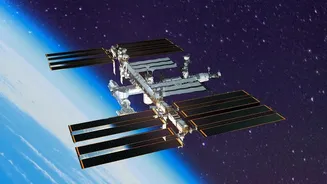
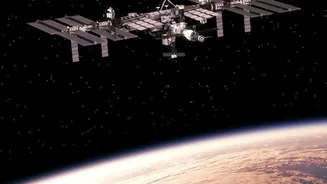
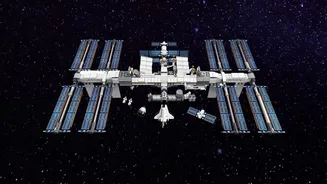
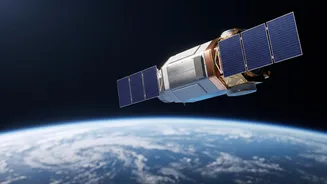
The Bharatiya Antariksha Station is a modular space station planned by the Indian Space Research Organisation (ISRO). It is designed to be assembled in orbit, piece by piece, at an altitude of about 400 kilometres. The first module, known as BAS-01, is targeted
for launch by 2028, with the entire five-module, 52-tonne station expected to be operational by 2035. This station will serve as a long-term platform for three to four astronauts to live and work in space for missions lasting three to six months. The project is a natural and critical extension of the Gaganyaan programme, which is developing the capability to send Indian astronauts into space. Mastering human spaceflight with Gaganyaan is the essential first step before India can build and sustain its own orbital outpost.
A Laboratory in the Sky
The primary purpose of a space station is to provide a unique laboratory environment: microgravity. On Earth, gravity influences everything from chemical reactions to the human body. In orbit, its effects are negligible, opening up new frontiers for research. Scientists will be able to conduct long-duration experiments in fields like materials science, creating new alloys and crystals that are impossible to make on Earth. In biotechnology and pharmaceuticals, the absence of gravity allows for the study of protein crystallisation in ways that could lead to new drug discoveries. Furthermore, studying the long-term effects of microgravity and space radiation on the human body is crucial for planning future deep-space missions, including India's goal of a crewed lunar landing by 2040.
Driving Technological Innovation on Earth
Building a space station is one of the most complex engineering challenges imaginable, and solving its problems often leads to innovations with widespread applications back on Earth. The project will necessitate advancements in numerous high-tech fields. For instance, developing advanced life-support systems that can reliably recycle air and water in a closed loop for months has direct applications in creating sustainable technologies for use in harsh environments on our planet. Similarly, the robotics required for assembling and maintaining the station will drive progress in automation. Other key areas of development include new power generation and storage systems, like advanced fuel cells and solar arrays, as well as robust communication technologies to link the station with ground control. These innovations are expected to ripple through the Indian economy.
Economic and Strategic Importance
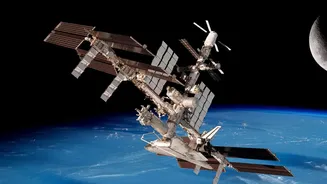
Beyond science, the Bharatiya Antariksha Station carries immense strategic and economic weight. It will place India in an elite club of nations with a permanent presence in space, bolstering its geopolitical standing and enabling international collaboration on its own terms. With the International Space Station (ISS) expected to be de-orbited around 2030, the BAS could become a vital platform for global scientific cooperation. Economically, the project will stimulate India's domestic space ecosystem, from large public-sector undertakings to private startups involved in manufacturing and services. The government's vision is for the space economy to grow to $44 billion by 2033. The station also opens the door to future commercial opportunities, including hosting private researchers, conducting commercial experiments, and potentially even space tourism.