


The Science of a Safe Return
In human spaceflight, getting to orbit is only half the challenge; getting back safely is paramount. The Indian Space Research Organisation (ISRO) recently focused on exactly that, conducting a series of crucial tests on the systems designed to bring
the crew module and its astronauts safely back to Earth. One of the key milestones was the Integrated Main Parachute Airdrop Test (IMAT). In a test conducted in Madhya Pradesh, a dummy payload was dropped from an Indian Air Force aircraft at an altitude of 2.5 kilometres. A sequence of parachutes, including drogue and main parachutes, deployed successfully to stabilise and slow the module to a safe landing speed. This was the fifth test in a series designed to qualify the extensive parachute system, which includes a total of 10 parachutes of four different types.
Mastering the Splashdown
A successful mission ends with a splashdown in the ocean, but even this final phase is fraught with challenges. ISRO has also validated the Crew Module Up-righting System (CMUS). This system is designed to ensure that if the capsule lands in the sea and is tilted or even upside down due to ocean conditions, it can automatically right itself. Using compressed gas from high-pressure bottles to inflate flotation bags, the system ensures the capsule returns to a stable, upright position. This is vital for the astronauts inside as they await recovery by naval teams. Further tests confirmed the mechanism that separates the crew module from the service module before re-entry, and validated the module's structural integrity when the cover protecting the parachutes is jettisoned.
What is Gaganyaan?
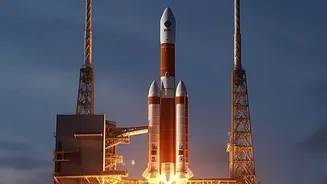
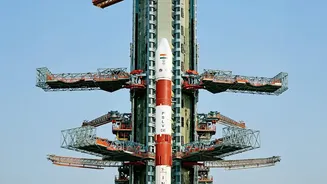
For those new to the mission, Gaganyaan is India's landmark human spaceflight programme. The primary goal is to demonstrate the nation's capability to launch a crew of three astronauts into a Low Earth Orbit of about 400 kilometres. The crew will spend up to three days in orbit before returning to Earth, splashing down in Indian waters. The mission will use a human-rated version of the powerful LVM3 rocket, India's most reliable launch vehicle. A successful Gaganyaan mission will make India only the fourth country in the world—after the United States, Russia, and China—to have an independent capability for human spaceflight.
The Final Frontier: What's Next?
With these safety qualifications complete, ISRO is moving forward with its phased testing plan. According to recent updates, the next major milestone is the first uncrewed flight, designated G1. This mission, targeted for late 2026, will be a full dress rehearsal, testing all the key systems from launch to re-entry and recovery. It will carry a humanoid robot named 'Vyommitra' to simulate the human presence and collect vital data on the conditions inside the capsule. This will be followed by at least one more uncrewed mission to ensure every system is flawless before the first crewed flight, which is anticipated by 2027. Each successful step, from parachute tests to system validations, builds confidence and moves India steadily closer to writing a new chapter in its space exploration story.