




Start with Smarter Clothing Choices
The secret to a light suitcase begins before you pack. For a rainy trip, focus on materials that are lightweight, quick-drying, and can be easily layered. Think merino wool sweaters, which insulate without bulk, and synthetic fabrics that dry quickly.
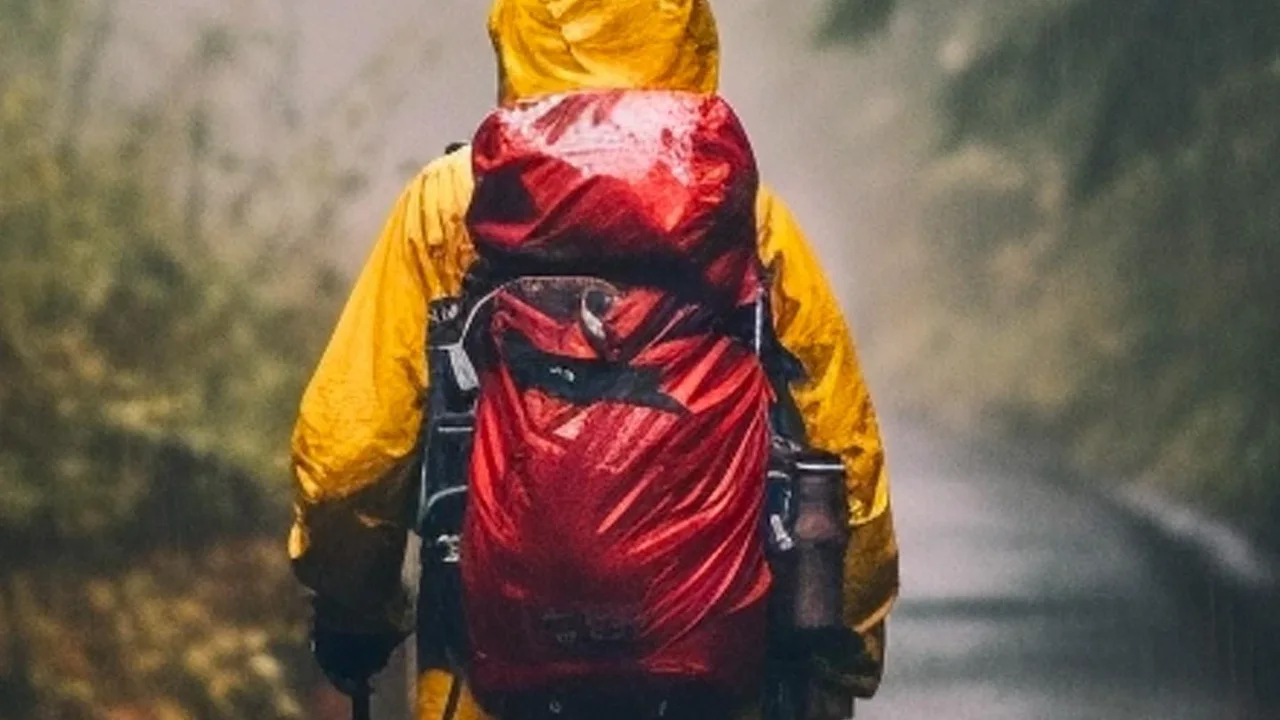
Instead of a heavy raincoat, opt for a modern, packable rain jacket. Many are designed to fold into their own pocket, taking up minimal space while offering significant protection. When it comes to bottoms, choose versatile trousers or jeans in dark colours. For footwear, a single pair of waterproof boots or stylish water-resistant sneakers can handle sightseeing and evening outings, eliminating the need for multiple bulky pairs.
Understanding Your Tools: Air Extraction Bags
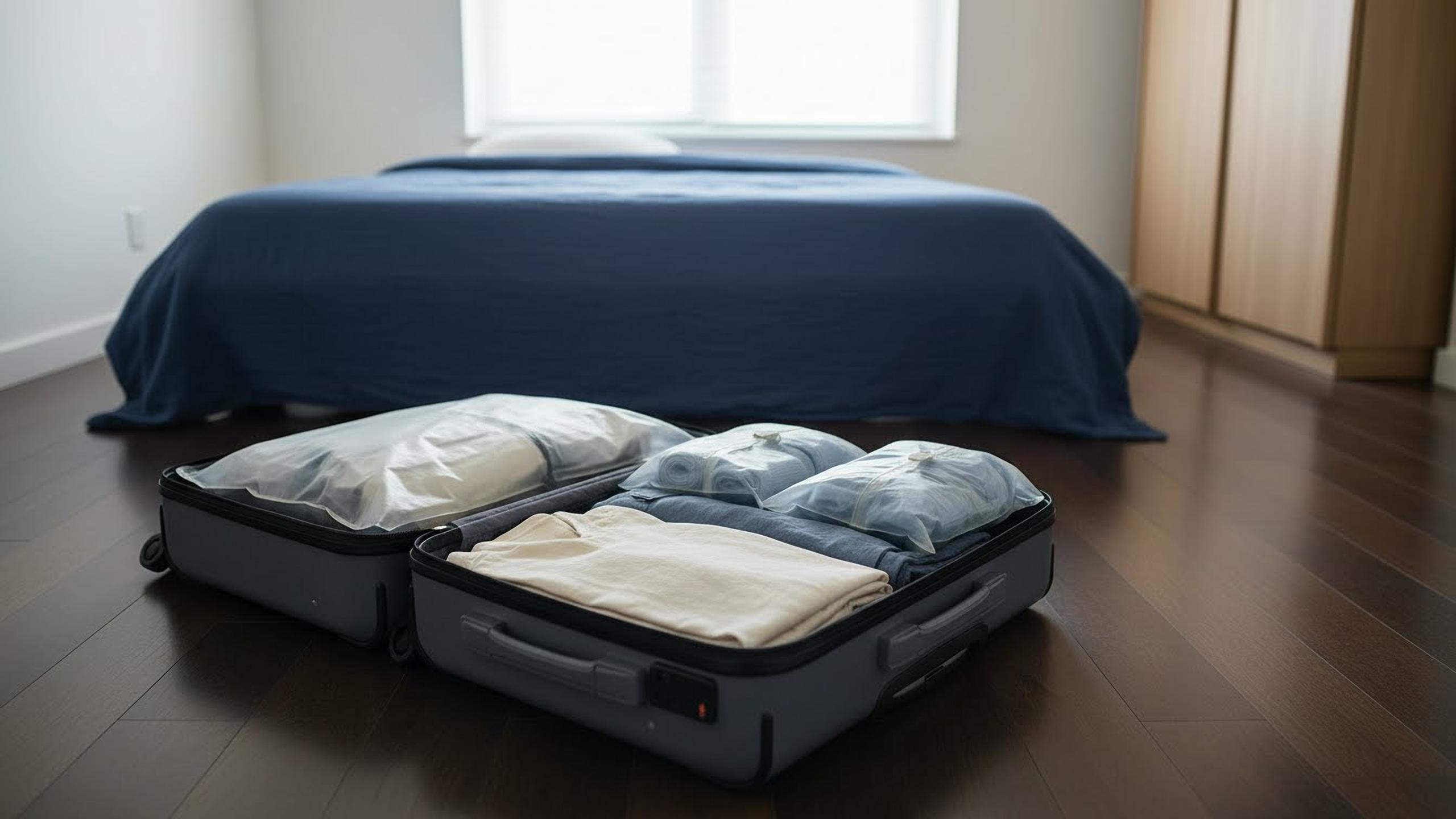
Air extraction is the key to shrinking bulky items. This is typically done with two types of travel bags: compression packing cubes or vacuum-seal bags. Compression cubes use a second zipper to squeeze everything together, pushing excess air out. They are great for organisation and don't require any special tools. Vacuum-seal bags, on the other hand, require you to roll the bag to push air out through a one-way valve or use a small pump. While vacuum bags offer the most significant space savings, the roll-up versions are often more practical for travel as they are easier to repack on the go. These bags are perfect for compressing puffy jackets, sweaters, and other voluminous clothing.
The Art of the Roll
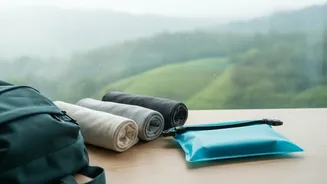
How you place clothes into the bags matters. Rolling your clothes instead of folding them is a widely recommended technique to both save space and minimise harsh wrinkles. T-shirts, trousers, and knitwear do very well when rolled tightly. For items like blazers or structured shirts, a neat, flat fold might be better to preserve their shape. The goal is to create uniform, dense bundles that can be packed tightly into a compression bag. Don't overfill the bags; a snug fit is better than a strained zipper, which can lead to uneven compression and damage the bag or your clothes.
A Step-by-Step Packing Method
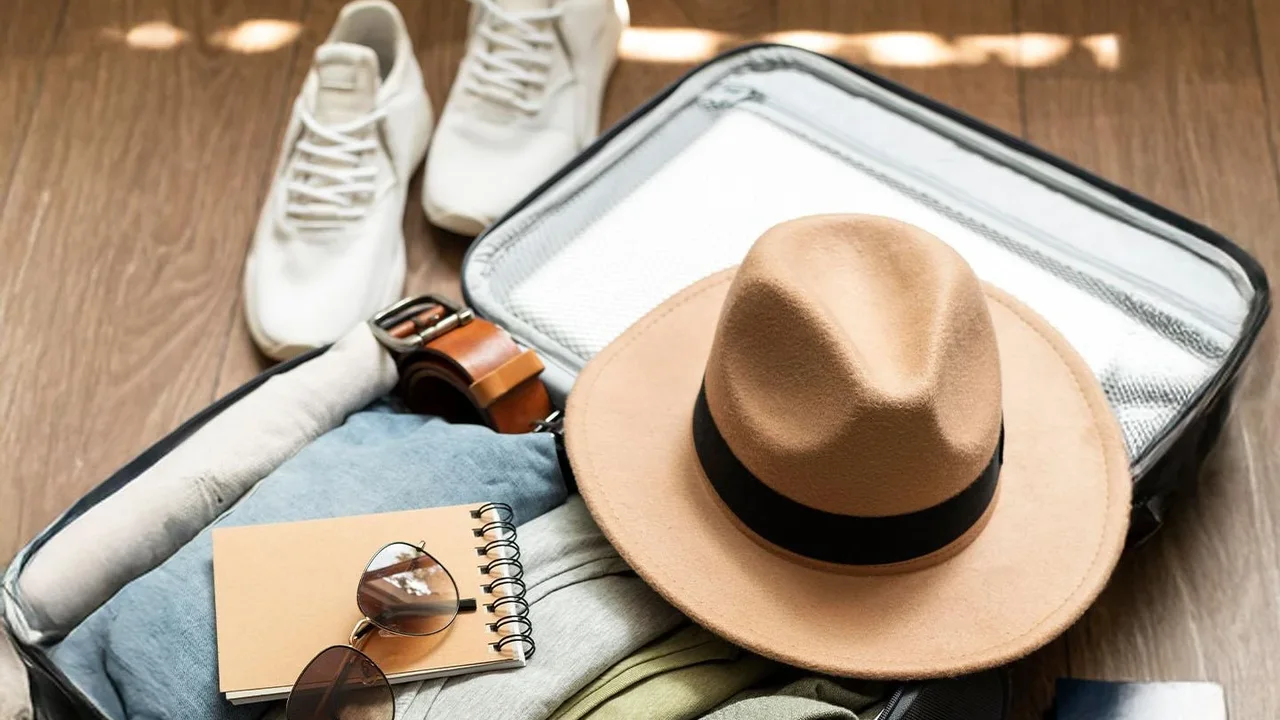
First, categorise your rolled and folded clothes: tops in one pile, bottoms in another, and bulky items like sweaters in a third. Place these bundles into your compression bags. Zip the main compartment, then slowly and carefully close the compression zipper, using your finger to guide the fabric away from the zipper track to prevent snagging. You will feel the air being pushed out and see the bag shrink. Once compressed, these dense fabric bricks can be arranged in your carry-on like a game of Tetris. Place heavier cubes at the bottom of your suitcase near the wheels to keep it stable. Fill any gaps with smaller items like shoes, belts, or your toiletry bag.
Managing Wrinkles and Final Touches
The main downside of heavy compression is the potential for wrinkles. While rolling helps, some creasing is inevitable. To combat this, unpack your compression bags as soon as you arrive at your destination. Hang your clothes in the bathroom while you take a hot shower; the steam will help release many of the wrinkles. For more stubborn creases, a travel-sized wrinkle-release spray or a portable steamer can be invaluable. By strategically choosing your gear and mastering compression, you can confidently face a rainy forecast with just a carry-on, leaving you free to enjoy your trip without being weighed down.