

A New Era of Propulsion
The Indian Space Research Organisation (ISRO) is advancing into a new phase of satellite propulsion, moving from traditional chemical rockets to sophisticated electric systems. At the heart of this change is the development of an indigenous Stationary
Plasma Thruster (SPT), a type of Hall-effect thruster. While ISRO has used electric propulsion before, those systems relied on imported thrusters. This new technology, developed by the Liquid Propulsion Systems Centre (LPSC), is entirely homegrown, marking a critical step towards self-reliance and enhancing India's capabilities in space. The system is slated to be demonstrated on a Technology Demonstration Satellite (TDS-01), showcasing its readiness for future missions.
How Plasma Power Works
Unlike conventional rockets that burn chemical fuels to create a powerful but short-lived push, plasma thrusters work on a more elegant principle. They use electrical power, typically from a satellite's solar panels, to create and accelerate a stream of plasma—a state of matter where gas atoms are stripped of their electrons, creating ions. In ISRO's Hall thruster, a small amount of an inert gas like xenon is ionised. Electric and magnetic fields then accelerate these ions, pushing them out at extremely high speeds. While the resulting thrust is very gentle—often compared to the force of a piece of paper resting on your hand—it is incredibly efficient and can be sustained for months or even years. This continuous, gentle push is perfect for adjusting a satellite's orbit, a process known as station-keeping.
The Weight-Loss Advantage
One of the biggest constraints in satellite design is weight. A significant portion of a traditional satellite's mass is dedicated to carrying chemical propellants for orbital manoeuvres. Electric propulsion systems, however, are far more efficient. Because they accelerate propellant to much higher velocities, they require significantly less of it to achieve the same change in motion. This efficiency, measured as 'specific impulse', is five to six times higher for plasma thrusters compared to chemical ones. According to ISRO officials, this could reduce the mass of a 5,000 kg communication satellite to around 3,500 kg. This massive weight saving means ISRO can either launch satellites on smaller, cheaper rockets or pack more valuable equipment—like communication transponders or scientific instruments—onto a satellite of the same size.
Going the Distance in Orbit
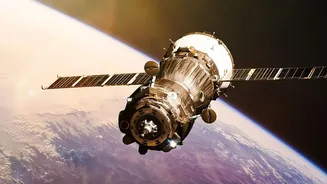
The high fuel efficiency of plasma thrusters doesn't just save weight; it dramatically extends a satellite's operational lifespan. Satellites constantly need to make small adjustments to their orbits to counteract gravitational pulls and maintain their precise position, a critical function known as station-keeping. With chemical propellants, the satellite's life is over once the fuel runs out. Because plasma thrusters use a tiny amount of propellant, they can perform these manoeuvres for many more years. This longevity increases the return on investment for each mission, ensuring that costly satellites can provide services for a much longer period before needing replacement. ISRO has successfully completed long-duration tests, running its 300 millinewton (mN) thruster for over 1,000 hours to validate its reliability and robustness for these extended missions.