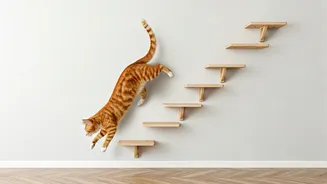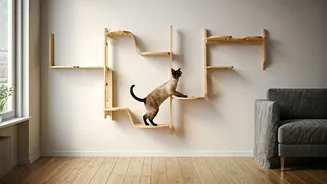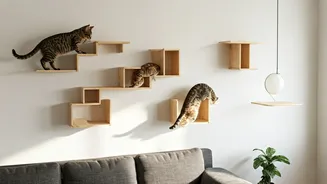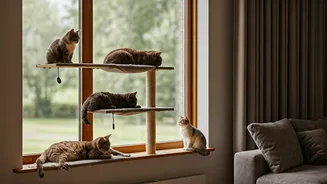




Why Cats Crave Height
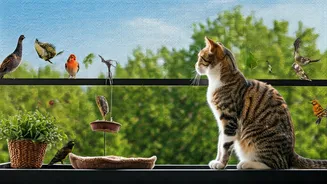
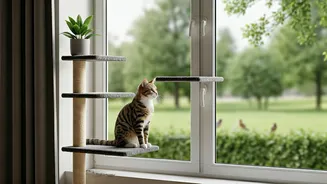
A cat’s desire to climb is not just a quirky habit; it is deeply ingrained in their DNA. Their wild ancestors were both predators and prey, and high perches offered a strategic advantage. From an elevated vantage point, a cat could survey its territory
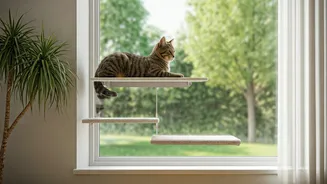
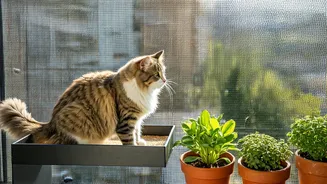
for potential meals while staying safe from larger threats on the ground. This instinct remains strong in domestic cats today. Providing vertical space is not a luxury but a biological necessity that helps them feel secure, confident, and in control of their environment. By giving them access to height, you are speaking their natural language and acknowledging their evolutionary needs. It effectively transforms your home into a three-dimensional territory, which is crucial for their psychological well-being.
The Mental and Physical Benefits
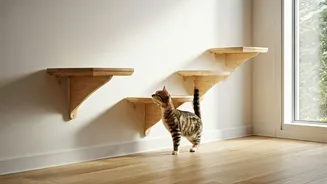
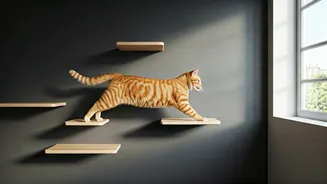
Wall-mounted shelves are far more than just feline furniture; they are an essential enrichment tool. For an indoor cat, life can become monotonous. Vertical climbing offers a powerful antidote to boredom, providing both physical exercise and mental stimulation. The acts of jumping, climbing, and balancing engage core muscles, improve flexibility, and help maintain a healthy weight, which is vital for preventing obesity in less active indoor pets. Mentally, new vantage points keep their environment interesting and engaging. Moreover, height serves as a safe retreat. In a busy household with children, other pets, or loud noises, an elevated perch is a private sanctuary where a cat can decompress, reducing stress and anxiety-related behaviours like over-grooming or aggression.
Creating Harmony in Multi-Cat Homes
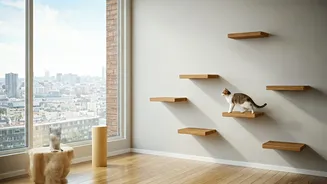
In homes with more than one cat, floor space can become a battleground for dominance and resources. Vertical territory is a game-changer for reducing conflict. Cat shelves allow felines to establish their own zones and navigate a room without forcing face-to-face confrontations. A more confident cat might claim the highest perch, while a shyer one can observe from a secure mid-level spot. This system of vertical hierarchy allows cats to communicate their social standing without resorting to fights. When designing a “cat superhighway,” it’s crucial to include at least two distinct paths up and down. This prevents a dominant cat from blocking a single access point and ensures every cat has an escape route, promoting a more peaceful coexistence.
Choosing the Right Shelves
When selecting shelves, function and safety are paramount. Look for materials that are sturdy and provide good grip. Solid wood or high-quality plywood are excellent choices for their durability, while particle board should be avoided as it can't withstand the dynamic force of a jumping cat. The shelf surface is equally important. Bare wood or metal can be slippery, so opt for shelves that come with carpet, sisal, or other non-slip fabric. Shelf depth is crucial for comfort; a depth of at least 10-12 inches allows a cat to lounge and nap securely. Consider your cat’s personality and age. An energetic kitten might love a complex, multi-level setup, whereas a senior cat will need wider, lower shelves with shorter distances between them.
Planning and Safe Installation
Proper installation is non-negotiable for safety. The most critical rule is to anchor shelves directly into wall studs. Drywall alone is not strong enough to handle the repeated impact of a jumping cat and will eventually fail. Use a stud finder to locate the wooden beams in your walls, which are typically spaced 16 inches apart. Plan your layout before drilling any holes. Use painter's tape to map out the shelf locations. A good rule of thumb for spacing is 12-18 inches vertically and 12-16 inches horizontally between shelves, but adjust this based on your cat’s agility. Always use the heavy-duty hardware provided, or purchase high-quality lag bolts that will penetrate at least 1.5 inches into the stud. After installation, test the stability of each shelf by applying significant pressure before letting your cat explore.