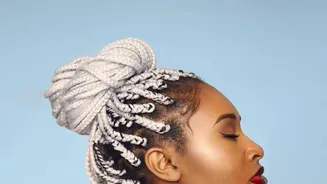




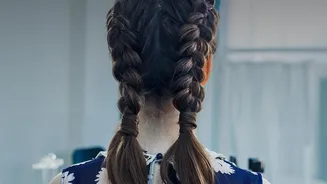

Adding extensions to your braids is a fantastic way to achieve extra length, volume, or even a pop of colour. The secret to a flawless, professional look is a seamless blend. This guide will walk you through each step to master the technique.
Preparation Is Everything
A great braiding
result starts long before you pick up the first strand of extension hair. To ensure your braids are neat and long-lasting, you must begin with a clean and well-prepped base. Start by thoroughly washing your hair with a clarifying shampoo to remove any product buildup or oils. Follow up with a deep, moisturizing conditioner to ensure your natural hair is hydrated and fortified, which helps prevent breakage under the tension of braids. Once rinsed, detangle your hair completely using your fingers or a wide-tooth comb. For the smoothest braiding canvas, especially for curly or coily textures, it’s best to stretch your hair. You can achieve this by blow-drying your hair on a low-heat setting, using a blow-dryer comb attachment to gently straighten as you dry. Applying a heat protectant spray is a crucial step to prevent damage.
Choose and Prep Your Extensions
Selecting the right extensions is key to achieving that 'seamless' look. For beginners, pre-stretched braiding hair is often easier to work with, as the ends are already tapered for a more natural finish. If you don't have pre-stretched hair, you can taper the ends yourself by holding the bundle a few inches from the bottom and gently pulling small, varied sections to create subtle layers. When it comes to colour, you can go for a perfect match to your natural hair or blend multiple shades for a highlighted effect. Before you start braiding, it’s wise to prepare your extension hair. Separate the hair into sections that correspond with the size of the braids you want to create. Having these pieces ready and hanging on a braiding rack or the back of a chair will make the process much faster and smoother.
Sectioning for Clean Parts
Clean, precise parts are the foundation of a polished braided style. Use a rat-tail comb to create your desired parting pattern. You can opt for two simple sections for pigtail braids or multiple box parts for styles like box braids. Secure each major section with clips to keep them separate and out of the way. Working with one section at a time, apply a small amount of edge control or gel along the part lines. This not only creates a sleek appearance but also helps manage flyaways and provides a better grip as you begin to braid. Be careful not to use too much product, as it can cause buildup or make the hair too slippery to handle.
The Feed-In Technique
The feed-in method is the secret to braids that look like they're growing right from your scalp. Start by taking a small piece of your natural hair at the beginning of a section and splitting it into three equal strands. Begin a standard cornrow or braid for a few stitches using only your natural hair. Now, it's time to add the extension. Take a small piece of your pre-separated braiding hair and fold it in the middle. Place this folded piece over the braid, adding one half of the extension to the left strand and the other half to the right strand of your braid. Continue braiding, incorporating the extension hair as you go. After a couple more stitches, add another small piece of extension hair. The key is to gradually increase the amount of hair you feed in. Starting with small pieces prevents the bulky knot at the root that can make braids look unnatural. Maintain consistent, firm tension—but not so tight that it causes pain or pulls on your scalp.
Finishing and Sealing the Ends
Once you've braided down to the desired length, you need to secure the ends to prevent them from unraveling. The most common method for synthetic braiding hair is to use hot water. Boil some water and carefully pour it into a tall, heat-proof jug or cup. Dip the ends of the braids into the water for a few seconds. Have a towel ready to wrap around the wet ends immediately to catch dripping water and protect your skin. This process seals the synthetic fibers, leaving a smooth, clean finish. Be extremely cautious when handling hot water to avoid burns. Other methods include using a tiny rubber band, nail glue (used sparingly on the extension hair only), or carefully burning the ends with a lighter or braid sealer, though this carries a significant risk and should be done with extreme care. For a final polished look, you can apply mousse over the braids to tame any frizz.