



The Need for Speed
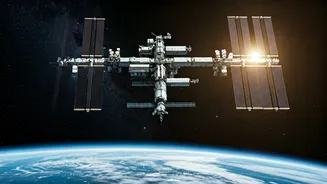
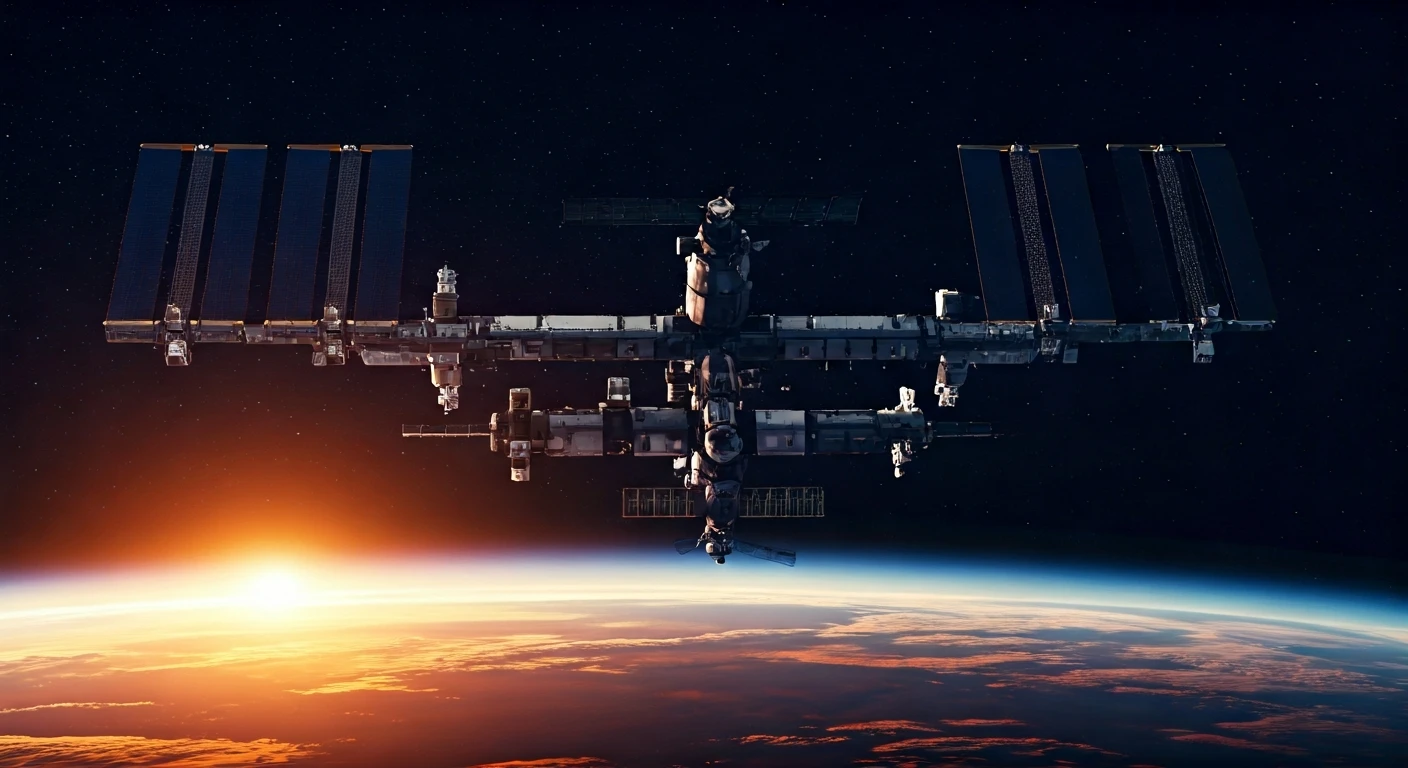
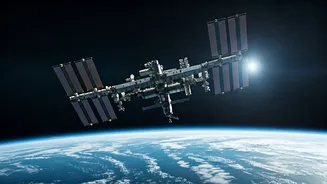
The primary reason for the spectacle of 16 daily sunrises is the incredible velocity of the ISS. The station hurtles around our planet at approximately 28,000 kilometres per hour (about 7.7 kilometres per second). To put that in perspective, it's like
travelling from Delhi to Mumbai in just over two and a half minutes. This immense speed is not for show; it's a requirement of physics. To avoid being pulled back to Earth by gravity, an object in orbit must travel fast enough to essentially keep 'falling' around the planet. This constant state of freefall is what creates the feeling of weightlessness for the astronauts on board.
A Journey in Low Earth Orbit
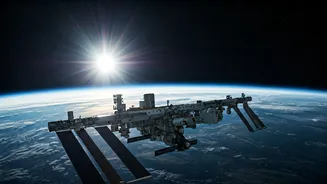
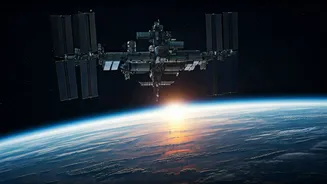
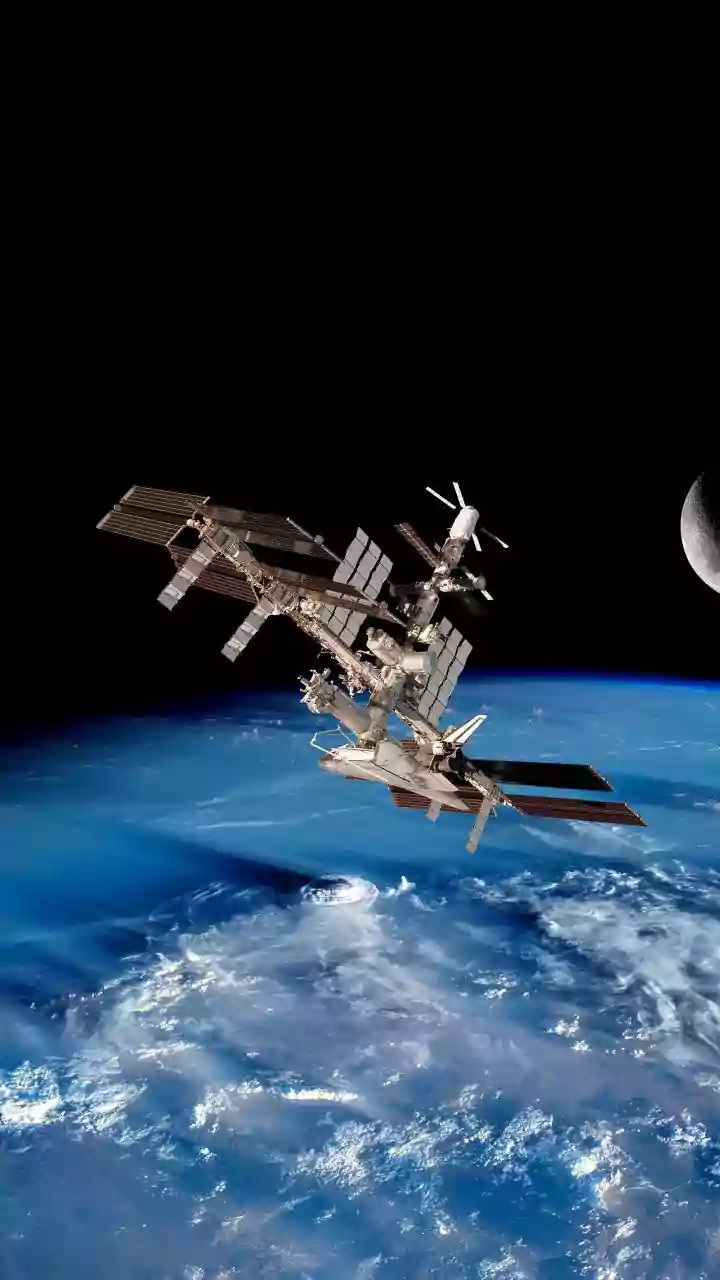
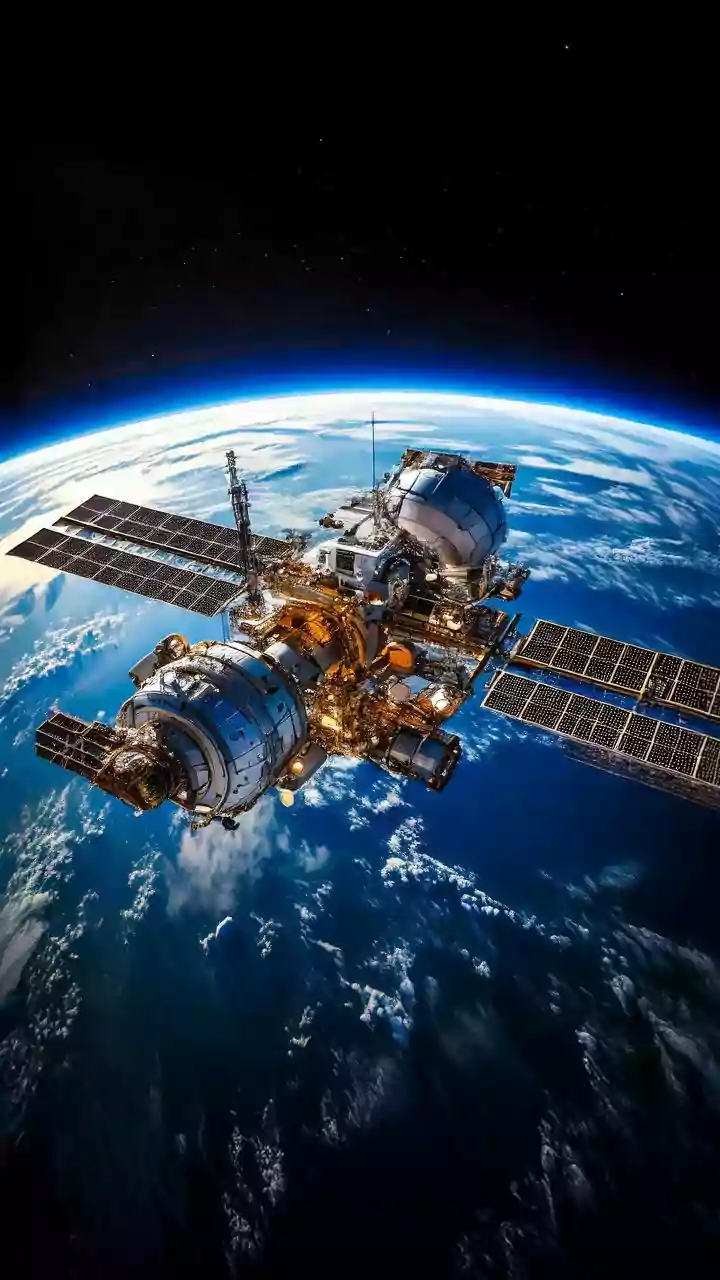
This incredible speed is tied to the station's altitude. The ISS resides in what is known as Low Earth Orbit (LEO), approximately 400 kilometres above the planet's surface. This is relatively close in space terms. Because it's so close, the pull of Earth's gravity is strong, necessitating the high orbital speed to maintain a stable path. This combination of high speed and low altitude means the ISS can complete a full circle around the Earth in just 90 to 93 minutes. Every time it completes one of these laps, it passes from the sunlit side of the Earth into its shadow, and then back into the light.
Redefining a 'Day'
If you divide a 24-hour Earth day by the 90-minute orbital period of the ISS, you get the magic number: 16. For the crew on board, one orbit is like one full day-night cycle on Earth, just compressed into an hour and a half. They experience about 45 minutes of daylight, followed by 45 minutes of darkness. This rapid cycling means that concepts of morning and evening lose their traditional meaning. Instead of relying on the sun, the international crew operates on a strict 24-hour schedule based on Coordinated Universal Time (UTC) to keep their work, meals, and sleep in sync with Mission Control on the ground.
Life Under a Rapid Sun
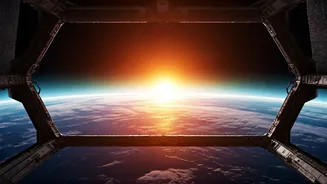
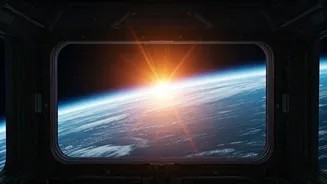
Living with 16 sunrises and sunsets poses a unique challenge to the human body's natural circadian rhythm, which is wired for a 24-hour cycle. Astronauts can struggle to maintain a normal sleep pattern, which is why their schedules are so rigorously managed. They use sleeping bags hooked to a wall, often with eye masks and blackout shades to create an artificial night. To help regulate their internal clocks, the station is equipped with special LED lighting that can change colour temperature, mimicking the blueish light of morning and the reddish hues of evening on Earth. Despite the challenges, astronauts often describe the experience as profoundly beautiful. The sunrises and sunsets are incredibly rapid and dramatic, with the sun bursting over the Earth's curve in seconds, painting the thin atmosphere in vibrant colours.