



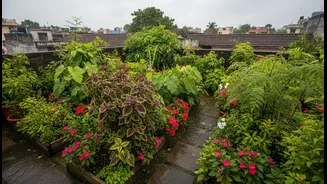



How Plants Naturally Cool Your Home
Before diving into the list of plants, it’s helpful to understand the science behind this cooling effect. Plants cool their surroundings in two primary ways. First, through shading, the leaves of plants physically block solar radiation from hitting the concrete
surface of your roof, which is a major absorber of heat. Second, and more powerfully, is a process called evapotranspiration. Plants absorb water through their roots and then release it as water vapour through their leaves. This process actively removes heat from the surrounding air, much like how sweating cools our bodies. A rooftop covered in vegetation can be dramatically cooler than a bare one, reducing heat transfer into the building below and lowering the need for air conditioning.
Vibrant and Hardy Flowering Plants
For those who want a splash of colour along with the cooling benefits, these sun-loving flowering plants are perfect for Indian terraces. Bougainvillea is a classic choice, known for its stunning, papery bracts in shades of magenta, orange, and white. It thrives on neglect and actually flowers more prolifically in hot, dry conditions. Hibiscus is another heat-tolerant favourite, producing large, beautiful blooms that can withstand scorching rays. For smaller pots and railing planters, Portulaca, or Moss Rose, is an excellent option. As a succulent, it stores water in its leaves and produces a carpet of cheerful, jewel-toned flowers with minimal watering.
Lush and Leafy Shrubs
If dense foliage and a consistently green look are your goals, certain shrubs are exceptionally well-suited for rooftop heat reduction. The dwarf Neem tree, grown in a large container, is a fantastic choice. Its dense canopy provides excellent shade, and it's renowned for its hardiness in high temperatures and its natural insect-repellent properties. Lemongrass is another must-have; its tall, grassy leaves create a lovely texture and release a pleasant fragrance. It tolerates heat well and doubles as a fresh culinary ingredient. For a fragrant touch, Mogra (Jasmine) or Tulsi (Holy Basil) are excellent. Tulsi, in particular, is easy to grow, has dense leaves that contribute to a cooler microclimate, and holds cultural significance in many Indian homes.
Creepers and Climbers for Maximum Coverage
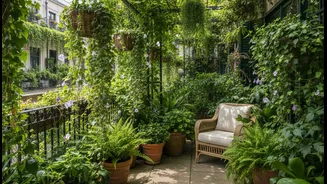
To maximise the shading effect, climbers and creepers are invaluable. By training them over a simple frame, trellis, or pergola, you can create a living green roof that provides a dense layer of insulation. The Betel Leaf plant is a fast-growing climber with broad leaves that form a natural, cooling cover. It prefers partial sunlight, making it ideal for covered or partially shaded terraces. Money Plant (Pothos) is another easy-to-grow climber that does well in partial sunlight and is very low maintenance. These plants help create a vertical garden that shades not only the roof but also the walls, further reducing heat absorption.
Drought-Tolerant Succulents and Palms
For the ultimate in low-maintenance gardening, succulents are unbeatable. Aloe Vera is a prime example, with thick, fleshy leaves that store water, allowing it to survive long dry spells. It's useful, tough, and thrives in sunny spots. Adenium, also known as the Desert Rose, is another star performer for hot rooftops. Its swollen trunk acts as a water reservoir, and it produces stunning flowers with very little care. For adding a tropical aesthetic and privacy, palms like the Areca Palm are a great choice. They handle the heat well and their feathery fronds can create dappled shade, contributing to the overall cooling of your terrace space.