






India's Human Spaceflight Dream
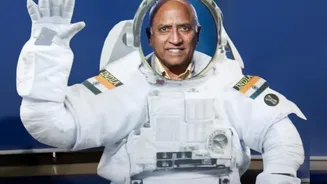
The Gaganyaan programme is ISRO's landmark initiative to demonstrate human spaceflight capability by launching a crew of three astronauts into a 400 km orbit for a three-day mission and bringing them back safely to Earth. A successful mission will place
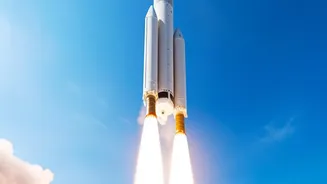
India in an elite club of nations with independent human spaceflight capabilities, currently comprising the United States, Russia, and China. The programme involves developing critical technologies, including a human-rated LVM3 rocket, a life support system for the crew, and, most importantly, a robust system to ensure crew safety during every phase of the mission.
Safety Above All: The Crew Escape System
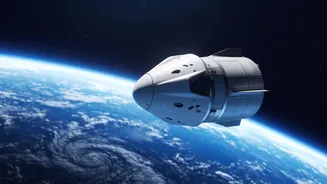
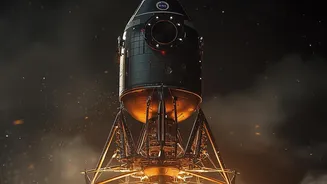
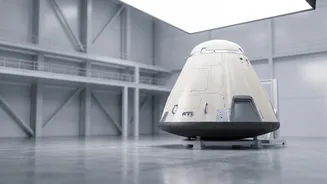
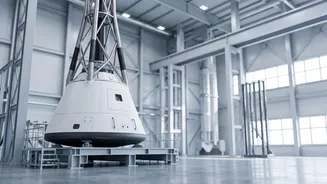
In human spaceflight, ensuring the safety of the crew is the highest priority, valued even above mission success itself. The most dangerous phases of a space mission are the launch and ascent, where the rocket is under immense stress and filled with explosive propellants. This is why ISRO has developed a sophisticated Crew Escape System (CES). The CES is an emergency mechanism designed to rapidly pull the crew module—the part of the spacecraft carrying the astronauts—away from the main rocket in case of a catastrophic failure on the launchpad or during ascent. Think of it as a highly advanced ejection seat, but for the entire capsule.
The Ultimate Escape Plan
The abort tests are a series of dress rehearsals designed to validate the Crew Escape System under different failure scenarios. ISRO has planned multiple types of these tests. The Pad Abort Test (PAT), which was successfully conducted in 2018, simulated an emergency while the rocket was still on the launch pad, proving the system could lift the crew module to a safe altitude for a parachute-assisted splashdown. The more complex in-flight abort tests, like the Test Vehicle Abort Mission-1 (TV-D1) conducted in October 2023, simulate failures during the rocket's ascent. The TV-D1 test successfully demonstrated an abort at an altitude of about 17 km, where the capsule was pulled away from its booster rocket and brought down safely.
Simulating a High-Stakes Scenario
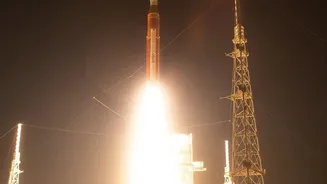
During an in-flight abort test, a specially designed Test Vehicle launches the uncrewed Gaganyaan crew module. At a predetermined point in the flight—often during the period of maximum aerodynamic pressure (Max Q) when the stress on the vehicle is highest—an abort is intentionally triggered. The CES, which consists of powerful, quick-burning solid motors, fires with immense thrust, accelerating the crew module away from the launch vehicle. Once at a safe distance, the escape system detaches, and a sequence of parachutes deploys to slow the capsule's descent for a soft landing in the sea, where it can be recovered. The entire sequence is autonomous, managed by an Integrated Vehicle Health Management system that detects anomalies in milliseconds.
Learning to Ensure Success
Each abort test is a goldmine of data. Hundreds of sensors on the crew module and test vehicle record every detail of the flight, from acceleration and temperature to the performance of the separation mechanisms and parachutes. This information is crucial for ISRO engineers to verify that their designs work as intended in the real world and to refine the systems. These tests validate not just the escape motors, but the entire sequence of events, including the parachute deployment system, which is a complex multi-stage process involving drogue and main parachutes to safely slow the module from high speeds. Successful tests build confidence and provide the safety assurance needed to proceed with crewed flights.
The Road to Sending Indians to Space
The series of abort tests are a mandatory prerequisite before the first uncrewed Gaganyaan orbital mission, currently targeted for late 2026, which will be followed by more uncrewed flights. These orbital tests, some featuring the humanoid robot 'Vyommitra', will validate the spacecraft's performance for the full duration of a mission, including life support and re-entry systems. Only after every system has been proven reliable through this exhaustive testing campaign will ISRO commit to the first crewed Gaganyaan mission, which is currently anticipated around 2027. These rigorous abort tests are therefore not just a technical requirement; they are a profound statement of ISRO's commitment to the safety of its future vyomanauts, ensuring that when they do fly, they have a reliable path back to Earth no matter what happens on the way up.