




What Are Climate Models Anyway?
Think of a climate model as a giant, virtual version of Earth running on a supercomputer. It uses the laws of physics to simulate the complex interactions between the atmosphere, oceans, land, and ice. By inputting data on things like greenhouse gas levels,
solar radiation, and ocean currents, these models can project how the global climate might change over decades or even centuries. They are fundamental to understanding the long-term impacts of human activity. However, a model is only as good as the information it's given. For a long time, sudden, large-scale natural events were treated as 'noise' in the system. Now, scientists know they are crucial variables that must be included for a truly accurate picture.
The Volcano Variable: A Global Sunshade
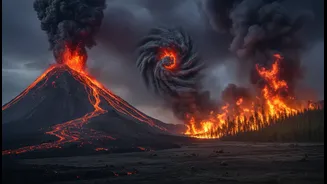
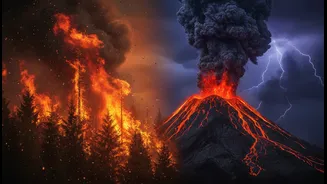
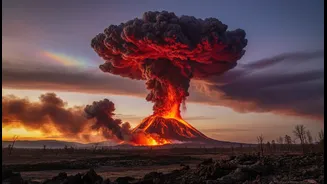
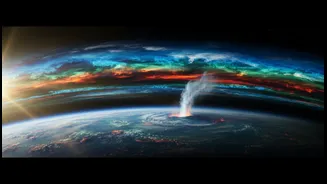
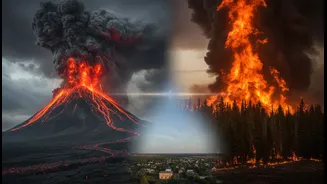
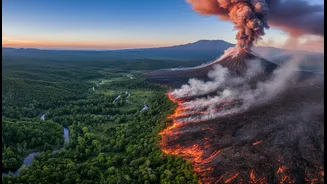
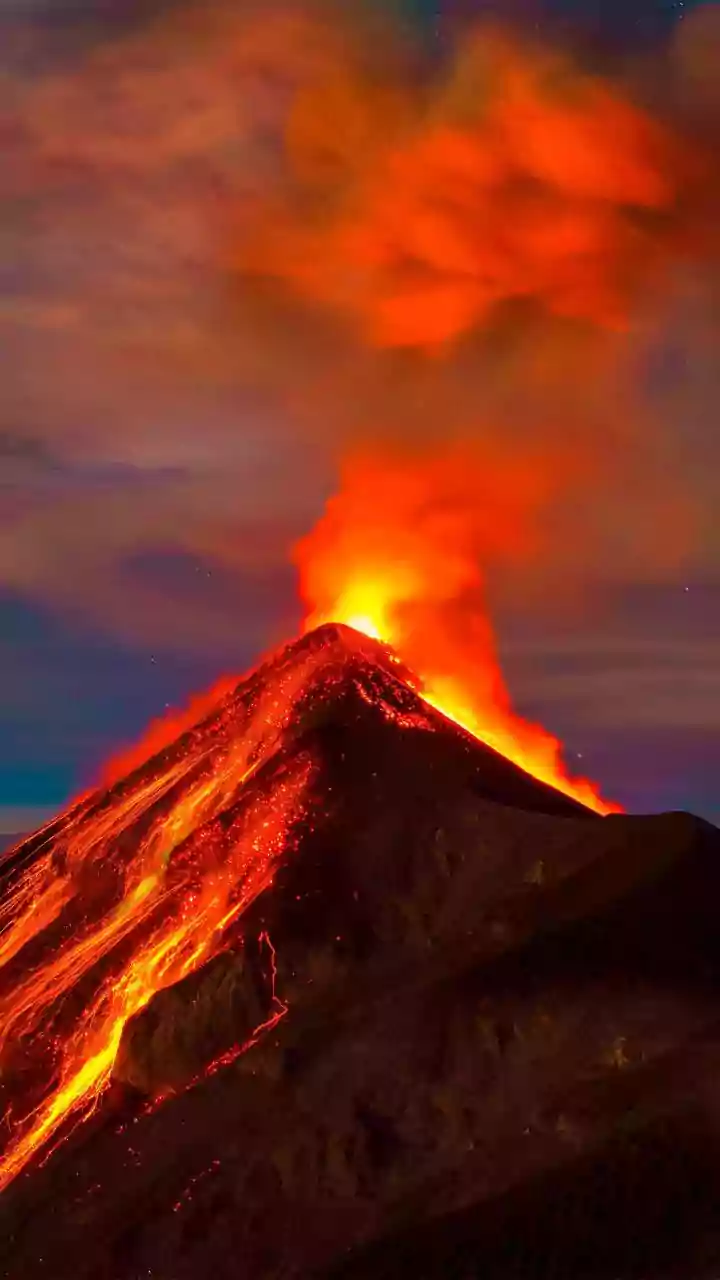
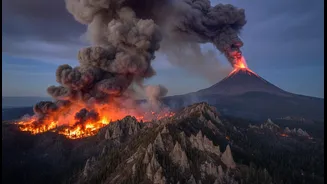
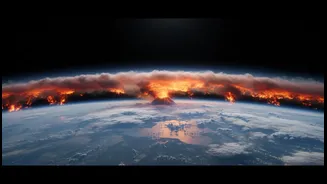
When a major volcano erupts, it does more than spew ash and lava. It blasts enormous clouds of gas and particles high into the stratosphere, far above the weather. The most important of these is sulfur dioxide. This gas reacts with water vapor to form a haze of tiny, light-colored sulfate aerosol particles. These particles act like a planetary sunshield, reflecting incoming sunlight back into space and causing a temporary cooling effect on the Earth's surface. The 1991 eruption of Mount Pinatubo, for example, injected millions of tons of sulfur dioxide into the stratosphere and cooled the planet by about half a degree Celsius for up to three years. While volcanoes also release carbon dioxide, the amount is tiny compared to human emissions. Their primary, short-term impact is cooling, making them a critical, albeit unpredictable, factor in global temperature fluctuations.
The Wildfire Factor: A Complicated Calculation
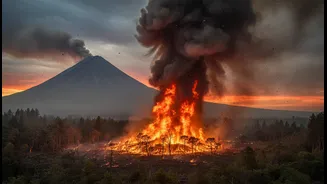
Wildfires have a much more complex and dual impact on the climate. On one hand, they release immense quantities of carbon dioxide, a long-lived greenhouse gas that contributes to warming. On the other hand, the smoke they produce is a cocktail of different aerosols with competing effects. Dark, sooty particles known as black carbon absorb sunlight, heating the atmosphere directly. Simultaneously, lighter-colored organic carbon particles can reflect sunlight, producing a localized, short-term cooling effect. The net result depends on everything from the type of forest that burns to the altitude the smoke reaches. Furthermore, a burned landscape, especially one in a snowy region, becomes more reflective, which can also influence regional temperatures. This mix of warming and cooling effects makes wildfires a significant challenge to model accurately.
The Challenge of Modeling Chaos
The core problem for climate modelers is that both volcanic eruptions and megafires are fundamentally unpredictable. Scientists cannot forecast exactly when the next major eruption will occur or how much material it will inject into the atmosphere. Similarly, while they can predict heightened fire risk, the exact timing and scale of a blaze are difficult to simulate. Standard climate models, which often operate on a coarse global grid, also struggle to capture the finer details of fire behavior that depend on local vegetation and terrain. Researchers are constantly working to improve these models, using satellite data from past events to test and refine their simulations. Projects like the Fire Model Intercomparison Project (FireMIP) bring scientists together to evaluate and improve how fires are represented in global models, which is essential as climate change is expected to increase wildfire frequency and intensity.