



The Rise of the Dome
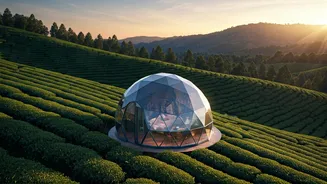
First, what exactly are these structures? Geodesic domes are futuristic-looking spheres made of interconnected triangular panels. Originally popularised by architect Buckminster Fuller for their structural strength and efficiency, they have found a new
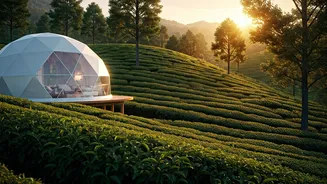
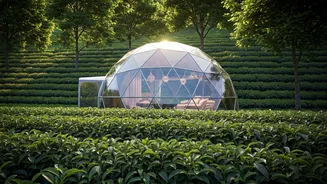
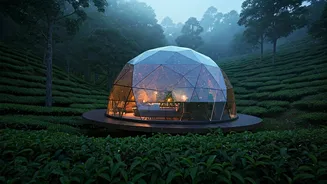
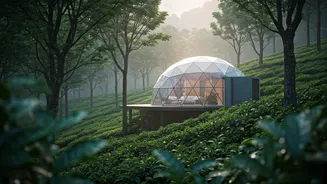
life in luxury tourism. Their key advantage is the ability to incorporate vast, panoramic windows. Unlike a traditional tent or cabin, a geodesic dome can offer a 180-degree, uninterrupted view of the landscape, making the inhabitant feel fully immersed in nature while being shielded from the elements. This design creates a unique indoor-outdoor experience, blurring the lines between a cosy, private suite and the sprawling wilderness outside.
Glamping, Not Camping
Let’s be clear: this is not your typical camping trip. The term ‘glamping’—a portmanteau of ‘glamorous’ and ‘camping’—perfectly describes the experience. These domes are essentially high-end hotel rooms dropped into stunning natural locations. Inside, guests can expect to find plush king-sized beds, climate control, designer furniture, en-suite bathrooms with hot water, and sometimes even private jacuzzis or plunge pools. The idea is to offer the adventure and proximity to nature associated with camping, but without sacrificing any of the comforts and luxuries of a boutique hotel. It’s a concept that appeals directly to modern travellers who seek unique experiences but value comfort and convenience.
A Perfect Match: Domes and Tea Fields
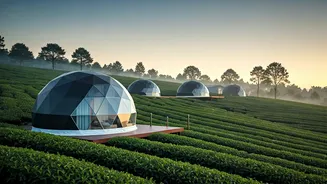
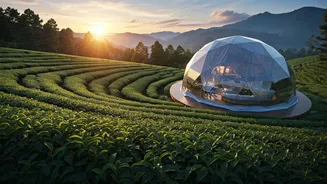
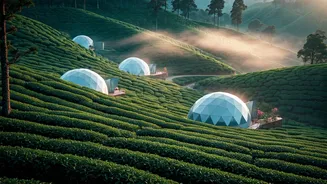
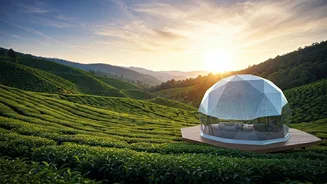
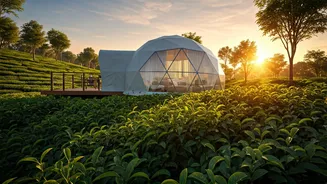
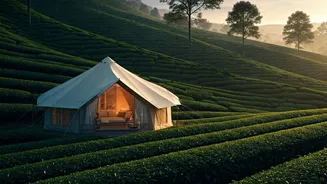
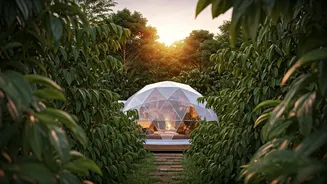
While glamping can be done anywhere, the pairing of geodesic domes with tea estates is a stroke of genius. The rolling, terraced hills of tea plantations in places like Munnar in Kerala or the estates around Darjeeling provide a breathtakingly beautiful and serene backdrop. The uniform greenery, often shrouded in a gentle morning mist, creates a sense of tranquility that is hard to find elsewhere. The domes, with their modern, minimalist aesthetic, create a striking visual contrast against the organic, undulating landscape. This juxtaposition is part of what makes the images so compelling. The experience is multi-sensory: the sight of endless green, the crisp mountain air, and the distinct, fresh aroma of tea leaves.
Engineered for the Instagram Age
The headline’s claim of “highest social hits” points to a crucial factor in this trend’s success: it is incredibly photogenic. The panoramic windows are not just for the guest’s enjoyment; they are a frame for the perfect picture. Social media is flooded with images of people enjoying a cup of tea in bed with a spectacular mountain vista, or watching the sunset from their private deck. The unique, geometric silhouette of the dome itself makes for a compelling photographic subject. In an era where travel choices are often influenced by their ‘shareability,’ tea field domes offer an unbeatable combination of stunning scenery, unique architecture, and a sense of luxury that translates perfectly into a viral Instagram post or Reel.
More Than Just a Pretty Picture
While the visuals are what draw people in, reputable glamping sites ensure the experience goes beyond the photo opportunity. A stay often includes guided tea plantation walks, where guests can learn about the history and process of tea cultivation. Many sites offer tea-tasting sessions, allowing visitors to sample the local varieties. Other activities might include hiking to nearby viewpoints, bird watching, or simply stargazing at night, far from the light pollution of the city. These activities ground the experience, turning it from a purely aesthetic one into a genuine opportunity to connect with the local culture and environment. It becomes a holistic retreat rather than just a place to stay.