





The 30-Minute Dal Dash
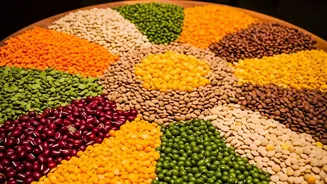
When time is short, turn to split and husked pulses. These are your quickest options, cooking down to a soft, comforting consistency in under half an hour. Your best friends here are split red lentils (masoor dal) and split yellow lentils (moong dal).
Because their protective skins are removed, they cook incredibly fast. For masoor dal, a simple stovetop simmer will have it ready in about 20-25 minutes. Moong dal is even quicker, often done in 15-20 minutes. Neither requires pre-soaking, making them perfect for a last-minute meal. A pressure cooker will make the process even faster, but it’s not essential for these varieties. Just rinse, boil, and temper with your favourite spices for a nourishing meal that’s ready when you are.
When You Have About an Hour
With a bit more time, you can expand your options to include heartier pulses like split pigeon peas (toor/arhar dal) and whole red lentils (sabut masoor). Toor dal is a staple across India, and while it doesn't strictly need soaking, giving it a 30-minute soak can reduce cooking time and improve its texture. On the stovetop, it will take about 40-50 minutes to become completely soft. A pressure cooker can cut this down to about 15-20 minutes of cooking time. Whole red lentils also fall into this category, taking around 30-40 minutes to simmer on the stovetop. These pulses hold their shape slightly better than their split counterparts, offering a more substantial bite, making them ideal for when you have a little more breathing room in the kitchen but still need dinner on the table without hours of waiting.
For When You Can Plan Ahead
Some of the most beloved pulse dishes, like Rajma Masala and Chole, require pulses that demand planning. Kidney beans (rajma), chickpeas (chana), and whole black gram (sabut urad) are dense and require soaking to ensure they cook evenly and become tender. An overnight soak is traditional and highly effective. If you forget, a 'quick soak' method of boiling them for a few minutes and then letting them stand in hot water for an hour can also work. Even after soaking, these pulses need significant cooking time. On a stovetop, expect rajma or chana to take 1.5 to 2 hours to soften completely. This is where a pressure cooker becomes an indispensable tool. What takes two hours on the stove can be achieved in about 30-40 minutes under pressure, making these weekend favourites accessible even on a weekday evening if you've done the soaking.
The Pressure Cooker: Your Ultimate Ally
A pressure cooker, whether a traditional stovetop model or an electric one like an Instant Pot, is a game-changer for cooking pulses. It can reduce cooking times by more than half, especially for tough beans and chickpeas. Forgetting to soak your rajma or chana is no longer a disaster; an Instant Pot can cook unsoaked kidney beans in about 45-50 minutes. Soaked chickpeas that would take over an hour on the stove can be perfectly tender in 15-20 minutes in a pressure cooker. The high-pressure environment not only speeds up the process but also helps in breaking down the pulses for a creamier, more digestible result. It turns lengthy cooking projects into manageable tasks, unlocking the full variety of the pulse world for busy home cooks.