
A Sweet with Divine Origins
The story of the Mathura Peda is inseparable from the city's identity as the birthplace of Lord Krishna. The Braj region, encompassing Mathura and Vrindavan, is steeped in tales of Krishna's childhood, which are filled with references to milk, butter,
and other dairy products. This abundance of dairy from a thriving cattle-herding community created the perfect environment for milk-based sweets to become a cornerstone of the local cuisine. Legend holds that the peda was one of Krishna's favourite sweets, making it a natural choice for 'prasad' or a religious offering at temples. This divine association is the bedrock of its cultural significance; for millions of devotees, the peda is not just food but a form of spiritual grace.
What Makes a Mathura Peda Unique?
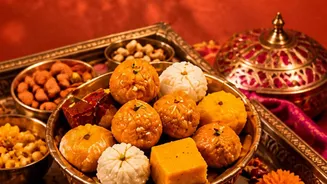
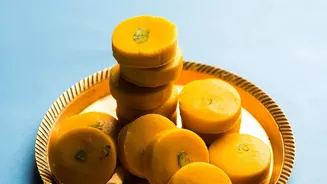
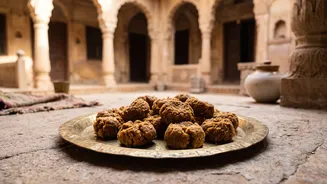
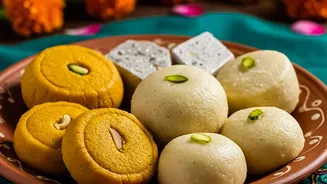
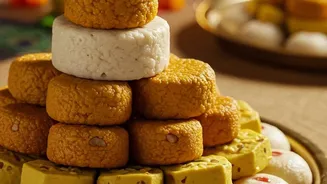
While pedas are made across India, the Mathura version has a distinct character that sets it apart. The process starts with khoya (also called mawa), which is milk that has been slowly simmered until only the milk solids remain. What makes the Mathura Peda special is the next step: the khoya is roasted, often in a heavy iron kadai, until the milk sugars begin to caramelise and turn a rich, tan brown. This roasting process gives the sweet its signature slightly grainy texture, a deep, caramelised flavour, and a much longer shelf life than its paler, softer cousins. After being mixed with sugar and aromatics like cardamom, the pedas are shaped and often rolled in powdered sugar, giving them a dusty exterior that protects the dense, flavourful sweet within.
From Temple Offering to a City's Livelihood
The transformation of the peda from a simple temple offering into a city-defining industry was driven by pilgrimage. For centuries, devotees have flocked to Mathura's sacred sites. When they returned home, they carried back boxes of these special pedas as 'prasad' for friends and family. This practice turned every pilgrim into an ambassador for Mathura's signature sweet, spreading its fame across the country. Recognising the demand, local sweet makers, or 'halwais', began to set up shops, many of which are now run by the third or fourth generation of the same family. Names like Brijwasi, which started in the 1950s, and the even older Gosai Pede Wale, which traces its lineage to the 19th century, became institutions.
The Sweet Shops That Built a Reputation
The streets around the Shri Krishna Janmabhoomi temple and Holi Gate are lined with sweet shops, each contributing to the city's reputation. These establishments are more than just commercial enterprises; they are keepers of a culinary heritage. The district administration itself keeps a list of notable peda shops, a testament to their importance in the local economy and culture. The growth of the railway network further amplified the peda's reach, making it easier for travellers and pilgrims to carry the taste of Mathura back to their hometowns. The phrase 'Mathura ka Peda' became a brand in itself, entering folklore and folk songs, synonymous with quality and authenticity. This ecosystem of sweet shops, built on generations of expertise, cemented Mathura's status as the undisputed peda capital.