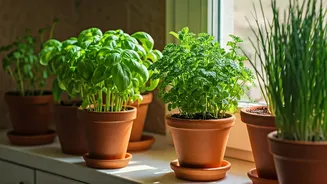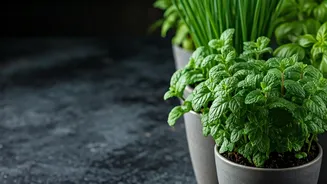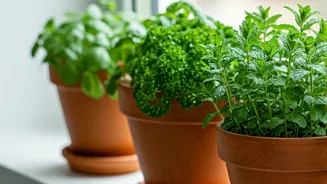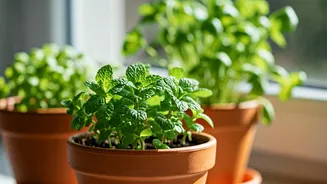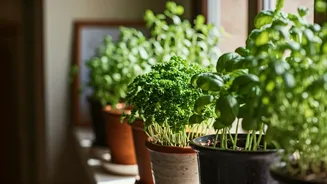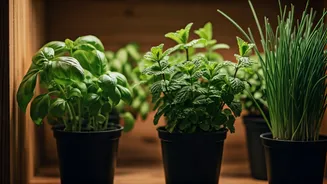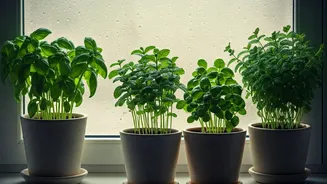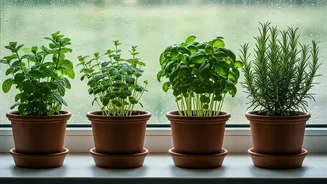





Understanding 'Low-Light' for Herbs
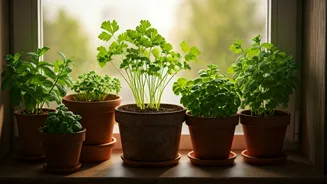
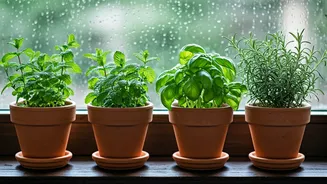
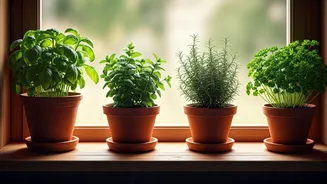
Before you start planting, it's important to understand what "low-light" means for herbs. While some plants can survive in near darkness, culinary herbs still need some light to perform photosynthesis and produce the flavourful oils we love. A low-light windowsill
is typically one that faces north or is otherwise obstructed, receiving no direct, intense sunbeams but still getting several hours of indirect ambient light. These herbs won't grow as fast or as bushy as their sun-drenched counterparts, but they will provide a worthwhile harvest. The key is choosing herbs that are naturally more tolerant of shade. Also, be mindful of watering; plants in lower light use less water, and soil can stay wet for longer, so always check if the top inch of soil is dry before watering again to avoid root rot.
1. Mint (Mentha)
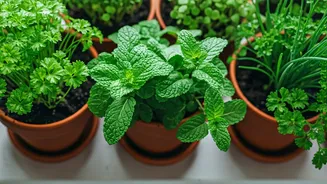
Mint is the champion of low-light herb gardens and an excellent starting point for beginners. It is famously vigorous and forgiving, often thriving in the shadier, cooler spots of an outdoor garden where other plants struggle. This adaptability makes it perfect for an indoor windowsill. Its broad leaves are efficient at capturing what light is available, and its desire to spread is easily contained within a pot. For the best results, use a well-draining potting mix and keep the soil consistently moist but not waterlogged. There are countless varieties to choose from, like peppermint and spearmint, each offering its unique aroma for teas, cocktails, and desserts. Harvest regularly by snipping stems just above a set of leaves to encourage bushier, more compact growth.
2. Parsley (Petroselinum crispum)
Whether you prefer the robust flavour of the flat-leaf variety or the decorative appeal of curly parsley, this herb is a reliable performer in partial shade. While it appreciates good light, parsley can remain productive on a windowsill that receives just a few hours of gentle morning sun or bright, indirect light for the rest of the day. The leaves might be slightly smaller than those grown outdoors, but the classic, fresh flavour will be present. One key to success with indoor parsley is giving its taproot enough room to grow, so choose a pot that is at least six to eight inches deep. Harvest the outer, more mature stems first, cutting them close to the base. This allows the younger, inner leaves to continue developing, ensuring a continuous supply for your sauces, salads, and garnishes.
3. Chives (Allium schoenoprasum)
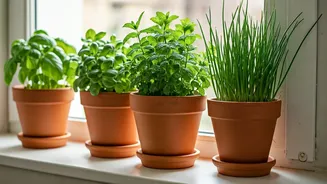
A member of the onion and garlic family, chives are famously easygoing and one of the most adaptable herbs for indoor growing. Their slender, grass-like leaves can provide a mild oniony kick to dishes even when grown in less-than-ideal light conditions. While they perform best with more sun, they are known to tolerate four to six hours of light or a bright, north-facing window quite well. One of the biggest advantages of chives is how simple they are to harvest. Simply snip the green tops with scissors, leaving at least two inches of the plant behind to regrow. They are not heavy feeders and are relatively pest-free, making them an incredibly low-maintenance choice for adding a burst of fresh flavour to eggs, potatoes, and soups.
4. Lemon Balm (Melissa officinalis)
If you're looking for a delightful citrusy aroma to complement the mintier and earthier herbs, lemon balm is an excellent choice. As a member of the mint family, it shares a similar tolerance for shadier conditions and can be quite vigorous. In its natural habitat, it often grows where it can receive morning sun and some protection from intense afternoon heat, which makes it a good candidate for an east-facing window or a spot with bright, diffused light. Plants grown in some shade can even produce larger, more succulent leaves. The leaves are wonderful for making calming herbal teas or adding a subtle lemon note to fish and poultry dishes. Like mint, lemon balm can spread, so regular harvesting will keep it bushy, compact, and contained within its pot.