






Map Your Festive Journey
Before you even think about booking a ticket, decide what you want to see. India’s festive calendar is rich and varied, offering different experiences across the country. For the dazzling lights and cultural grandeur of Durga Puja, a trip through West
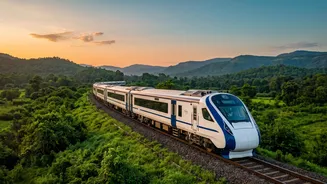
Bengal, with Kolkata as its epicentre, is a must. If you’re chasing the triumph of good over evil during Dussehra, consider a route through Mysore for its famous royal procession or North India for the Ramlila plays. For Diwali, the festival of lights, cities like Jaipur, Varanasi, and Ayodhya offer breathtaking spectacles. Once you've picked your festival, map a logical route. Use a rail map to connect cities in a sequence that avoids backtracking, saving you time and money. For instance, a popular North Indian circuit could be Delhi-Agra-Jaipur, which is well-connected by high-speed Shatabdi and Vande Bharat trains.
Mastering the Art of Booking
Booking train tickets in India, especially during festival season, is a competitive sport. The primary platform is the Indian Railway Catering and Tourism Corporation (IRCTC) website or its official app. The golden rule is to book well in advance. The general booking window opens 120 days before the date of travel for most trains. Set a calendar reminder for the exact date your booking opens, as popular routes get sold out within minutes of the 8:00 AM opening time. To save precious seconds during the booking rush, use the 'Master List' feature on the IRCTC website. This allows you to pre-fill passenger details like name, age, and ID proof, which you can then apply instantly when booking. Also, ensure you have a fast payment method ready, like UPI or a pre-loaded IRCTC wallet.
The Tatkal Lifeline
If you missed the 120-day window, don't despair. The 'Tatkal' quota is a last-minute ticket facility for travellers with urgent plans. These tickets become available one day before the train's departure from its originating station. The booking window is extremely brief and competitive: it opens at 10:00 AM for AC classes and 11:00 AM for non-AC (Sleeper) classes. Success requires speed and preparation. Be logged into your IRCTC account at least 10-15 minutes before the window opens, have your journey details and passenger 'Master List' ready, and use a fast payment method. Note that Tatkal tickets are more expensive and generally non-refundable if confirmed. A small percentage of seats on most trains are reserved under this quota.
Packing Smart for the Rails
Packing for an Indian train journey requires a balance between comfort and practicality. Luggage rules are based on the class of travel. For example, in AC First Class, you can carry up to 70 kg for free, while in AC 3-Tier and Sleeper Class, the free allowance is 40 kg. While these limits are generous, it is always wise to travel light to make it easier to manage your bags on crowded platforms and in the compartment. Pack essentials like a travel pillow, a light blanket (though bedding is provided in AC classes), earplugs, and a power bank. It's also a good idea to carry a small bag for your valuables and keep it with you at all times. All luggage should be securely packed and clearly labelled with your name and address.
Onboard Experience and Safety
Long-distance train journeys are a core part of the Indian travel experience. For food, most long-distance trains have a pantry car, and you can also pre-book meals online through IRCTC's e-catering service. Alternatively, you can buy food from vendors at major stations. For safety, always secure your luggage using a chain and lock, usually under the lower berth. Be cautious of your belongings, especially at night and at crowded stations. Avoid accepting food from strangers and only purchase tickets from authorised sources like the IRCTC website or official counters to avoid touts. Building some flexibility into your itinerary is also crucial; a buffer day can prevent a single delayed train from disrupting your entire multi-city plan.