





Keeladi: The Epicentre of the Buzz
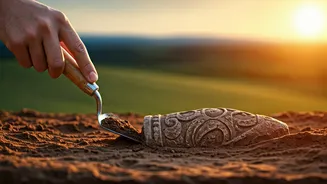
Much of the current excitement radiates from Keeladi, a site on the banks of the Vaigai river near Madurai. Excavations here have unearthed evidence of a sophisticated, literate, and thriving urban civilisation dating back to at least the 6th century
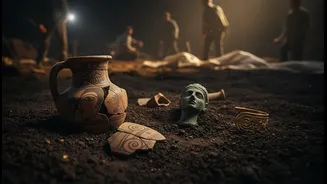
BCE. This is a game-changer, pushing back the timeline of urbanisation in Tamil Nadu by several centuries, proving it was contemporary with the Ganges valley's urban boom. Finds include brick structures, terracotta ring wells, and thousands of artefacts like gold ornaments, copper objects, and beads. Perhaps most significantly, pottery shards inscribed with Tamil-Brahmi script suggest a high level of literacy during the Sangam period. While political debates sometimes surround the interpretation of its timeline, the physical evidence points to a rich, complex society.
Sivakalai and the Dawn of the Iron Age
While Keeladi reveals urban life, the site of Sivakalai in Thoothukudi district is challenging global history. Radiometric dating of iron artefacts and charcoal samples found in burial urns has yielded astonishingly early dates, stretching as far back as 3345 BCE. This suggests that Tamil Nadu may have been home to one of the world's earliest Iron Age cultures, potentially predating the previously assumed origin in Anatolia (modern-day Turkey) by a millennium. These findings, which include iron objects like knives, chisels, and swords, indicate that the people of the Thamirabarani river valley were not just using iron but actively producing it far earlier than understood. Discoveries at other sites like Mayiladumparai further support the evidence of a widespread, ancient iron-using culture in the region, potentially contemporaneous with the Indus Valley Civilisation.
A Constellation of Connected Sites
The story doesn't end with Keeladi and Sivakalai. The Tamil Nadu State Department of Archaeology (TNSDA) is overseeing excavations at a host of other locations, creating a rich tapestry of the past. At Vembakottai, the discovery of torpedo jar fragments, typically associated with Roman and West Asian trade, proves ancient Tamil merchants had robust overseas connections. The site has also yielded thousands of artefacts, including terracotta seals, carnelian intaglios, and items suggesting it was an industrial hub for shell bangles. In Porpanaikottai, a massive Sangam-era fort is being unearthed, complete with brick structures, water channels, and evidence of a bead-making workshop. More recently, in July 2026, the first-ever Sangam-era brick stepwell was discovered in Karivalamvanthanallur, showcasing advanced water management systems.
Bringing History to the People
What makes this archaeological renaissance particularly interesting is the concerted effort to make these discoveries accessible to the public. The government is investing heavily in state-of-the-art, on-site museums. The Keeladi museum, built in a traditional Chettinad style, already showcases thousands of artefacts and uses virtual reality to immerse visitors in the excavation experience. An even larger Porunai Museum is being developed in Tirunelveli to display finds from Adichanallur and Sivagalai. Additionally, new institutions like the Noyyal Museum in Erode and the Naavaai (Maritime) Museum in Ramanathapuram are planned to highlight specific aspects of Tamil heritage, from ancient industry to maritime trade. This focus on public engagement is turning these dig sites into major cultural and educational destinations.