





When the winter chill sets in, finding the motivation for outdoor exercise can be tough. But staying active doesn't require a gym. The humble step-up is a powerful, low-impact exercise you can do right at home to stay fit and strong.
Why Choose Step-Ups This Winter?
The step-up is a deceptively
simple movement that mimics climbing stairs. It's a fantastic functional exercise because it strengthens the muscles you use every day. As a unilateral exercise, it trains one leg at a time, which is brilliant for improving balance, coordination, and correcting strength imbalances between your left and right side. The primary muscles worked are the major movers of the lower body: the quadriceps (front of thighs), hamstrings (back of thighs), and glutes (your buttocks). Your core muscles also get a workout as they fire up to keep you stable. This combination of strength, balance, and low-impact cardio makes it an efficient and joint-friendly way to maintain your fitness indoors when it's too cold to go outside.
Your First Step-Up: Perfecting the Form
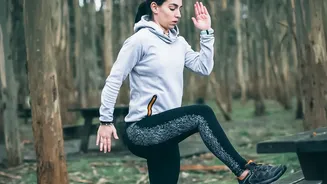
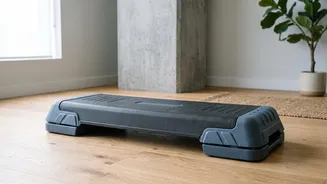
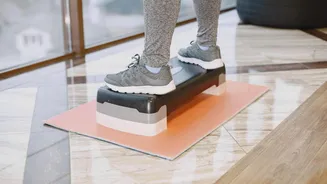
Proper form is crucial to get the benefits and avoid injury. All you need is a sturdy, stable surface like a low bench, a staircase step, or even a stack of heavy books that won't slide. Start with a low height, around shin or knee level. 1. Stand tall facing the step, with your chest up and shoulders back. 2. Place your entire right foot firmly onto the step. Make sure your whole foot, including the heel, is on the surface. 3. Engage your core and push through your right heel to lift your body up until your right leg is straight. Avoid pushing off with your back foot; let the front leg do all the work. 4. Bring your left foot up to lightly tap the step beside your right foot. 5. Slowly and with control, step back down with your left foot first, followed by your right, returning to the starting position. Complete all repetitions on one side before switching to the other. This ensures you properly fatigue the muscle.
Common Mistakes to Avoid
Even simple exercises can be done incorrectly. Watch out for these common errors to stay safe: Pushing off the back foot: This is the most common mistake. It takes the work away from your lead leg. Focus on driving up only through the foot on the step. Using a step that is too high: If you have to lean excessively forward or use momentum to get up, the step is too high. This puts unnecessary strain on your back and knees. Choose a lower platform where you can maintain control. Letting your knee cave inward: As you step up, your knee should track in a straight line over your foot. If it collapses inward, it could be a sign of weak glute muscles and puts stress on the knee joint. Rounding your back: Keep your torso upright and your core tight throughout the movement to protect your spine. Dropping down too fast: The lowering (or eccentric) phase is just as important as the step-up. Control your descent to build strength and stability.
How to Customise Your Workout
Once you have mastered the basic bodyweight step_up, you can adjust the difficulty to match your fitness level. To make it easier: Simply use a lower step. The lower the surface, the less demanding the movement will be. To make it harder: The two main ways to progress are by increasing the step height or adding weight. You can hold light dumbbells in each hand, keeping your arms by your sides. Start with a very light weight to ensure your form remains perfect. Alternatively, a slightly higher step will increase the range of motion and demand more from your glutes and hamstrings. Another variation is the lateral step_up, where you stand beside the step and step up sideways, which further challenges your hip muscles.
A Simple Beginner's Routine
Consistency is key to seeing results. Here is a simple routine you can perform two to three times a week on non_consecutive days to allow for muscle recovery. Warm_up (3–5 minutes): Start with some light movement like marching in place, leg swings, and gentle bodyweight squats to prepare your muscles. Step_Ups: Perform 3 sets of 10–12 repetitions on each leg. Focus on slow, controlled movements. Rest: Take a 60–second rest between each set. As you get stronger, you can increase the number of repetitions or sets, or begin to add small amounts of weight. Listening to your body is the most important part of any new fitness plan.