




The Challenge with Today's Batteries
Lithium-ion batteries power almost every electric vehicle on the road, including the e-bikes rapidly gaining popularity across India. While revolutionary, they have their downsides. Their production relies heavily on mining materials like lithium, cobalt,
and graphite. These mining operations can have a significant environmental impact and are often concentrated in a few countries, creating supply chain risks. For e-bike riders, the battery's weight and capacity are constant trade-offs. A bigger battery means more range but also a heavier, more cumbersome bike. This is the core challenge: making batteries that are powerful, lightweight, and truly sustainable from start to finish.
Nature's Unexpected Power Component
Imagine a battery made with components sourced from a forest. Researchers are now making this a reality by using lignin, an organic polymer found in the cell walls of trees and plants. It's the substance that gives wood its rigidity. Lignin is incredibly abundant; it's a major byproduct of the paper and pulp industry, with millions of tonnes produced as waste each year. Instead of being discarded, this natural material can be processed into a high-tech carbon powder. This powder is a promising replacement for the graphite traditionally used in battery anodes, the part of the battery that stores lithium ions when charging.
How a Tree Can Boost Your Battery
So, how does a tree derivative boost a battery's performance? The key lies in structure. When lignin is converted into a material called hard carbon, it creates a unique, porous internal architecture. This structure is excellent at storing ions, which is the fundamental job of a battery anode. A more efficient structure means the battery can potentially store more energy in the same amount of space—this is what's known as energy density. Some research has shown that organic materials can help build batteries with higher energy density than some current technologies. Furthermore, other plant-based materials like cellulose are being used as binders, the 'glue' that holds electrode materials together, improving battery stability and lifespan.
More Kilometres, Less Weight for E-Bikes
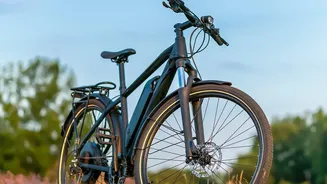
For an e-bike rider in India, higher energy density translates into real-world benefits. A higher density means you can have a battery that provides a longer range without adding extra weight. Alternatively, you could have a battery with the same range as today's models, but in a much lighter and smaller package. This would make e-bikes more agile, easier to carry, and more efficient. Beyond just density, some lignin-based materials also promise incredibly fast charging times—in some lab settings, as fast as 60 seconds—and a longer overall lifespan with more charge cycles than conventional batteries. Lowering the cost is another major goal, as replacing expensive, mined graphite with an abundant byproduct like lignin could make e-bikes more affordable.
Is This Technology Here Yet?
While you may not find a lignin-powered e-bike in showrooms tomorrow, the technology is moving quickly from the lab to production. Companies like the Swedish battery maker Northvolt are in partnership with biomaterials companies like Stora Enso to develop and scale up batteries using lignin-based anodes. Stora Enso is already producing this hard carbon material, called Lignode. Initial versions of these more sustainable batteries, such as sodium-ion cells using lignin, are showing energy densities comparable to the popular LFP batteries used in many electric vehicles today, with a clear path toward improvement. These first-generation products are likely to be used in energy storage systems before becoming widespread in vehicles, but the path for consumer use is being paved.