
Understanding Solar Storms
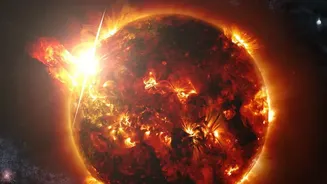
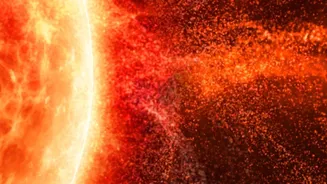
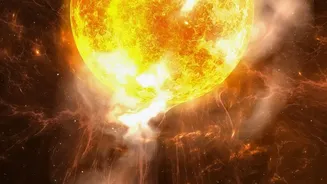
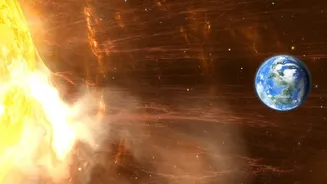
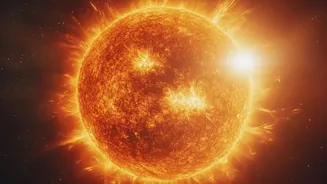
Our Sun is not a placid, unchanging ball of fire. It's a dynamic star with a powerful magnetic field that sometimes becomes twisted and strained. When these magnetic field lines suddenly snap and realign, a tremendous amount of energy can be released
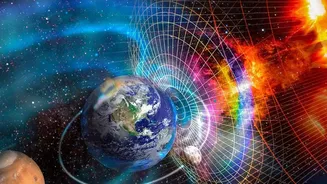
in what is called a Coronal Mass Ejection, or CME. A CME is a massive bubble of superheated gas, called plasma, and magnetic fields that gets flung from the Sun's corona into space at incredible speeds. If Earth happens to be in the path of a CME, this billion-tonne cloud of solar material can reach us in one to three days, interacting with our planet's own magnetic field and atmosphere. These events are the primary cause of major space weather storms.
The Risk to Our Digital World
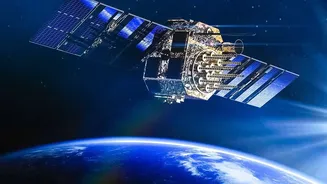
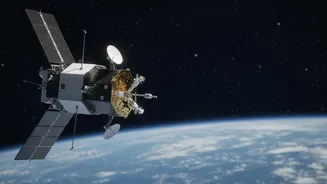
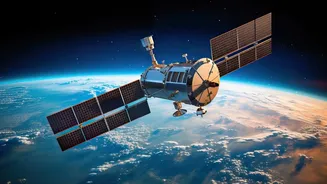
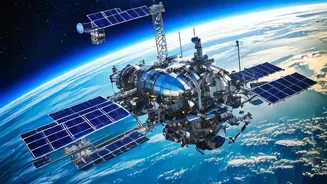
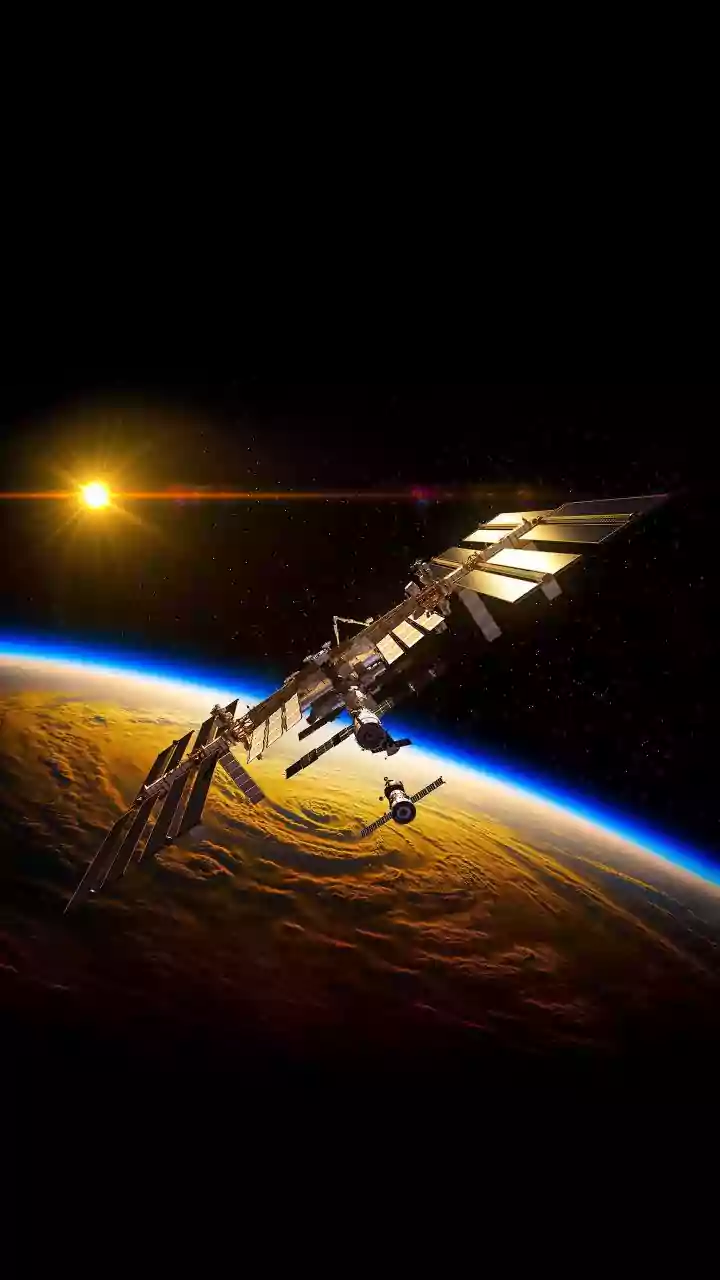
Our modern way of life is deeply vulnerable to the effects of a strong CME. The interaction between the solar plasma and Earth's magnetic field can induce powerful electrical currents on the ground. These geomagnetically induced currents can flow into long conductors like power lines, overwhelming electrical grids and potentially causing widespread, long-lasting blackouts. The 1989 blackout in Quebec, which left six million people without power, was caused by such a storm. Beyond the power grid, the satellites orbiting our planet are on the front lines. The high-energy particles from a CME can damage sensitive electronics, degrade solar panels, and even cause enough atmospheric drag to pull satellites out of orbit. This puts our communication networks, GPS navigation, and television broadcasts at risk.
The Power of Prediction
Given the high stakes, predicting when a dangerous CME will occur and how it will impact Earth is a critical scientific endeavor. This is where sophisticated modeling comes in. Scientists use data from a fleet of solar observatories, both on the ground and in space, to build complex computer simulations of the Sun's magnetic field and atmosphere. These models are designed to understand the conditions that lead to CMEs and to forecast their trajectory and intensity once they erupt. New machine-learning algorithms and AI models are being developed that can analyze vast amounts of solar data to spot patterns that might precede a major eruption. The goal is to move from simply observing space weather to actively forecasting it, much like we do for weather on Earth.
India’s Eye on the Sun
India is playing a crucial role in this global effort with its Aditya-L1 mission. Positioned 1.5 million kilometers from Earth at the L1 Lagrange point, ISRO's solar observatory has an uninterrupted view of the Sun. Its instruments provide vital data on the Sun's activity, which feeds into these predictive models. Recent studies involving Aditya-L1 data have already provided breakthrough insights into the structure of CMEs and how they interact with Earth's magnetic shield. By observing the Sun's corona and tracking solar eruptions from this vantage point, Aditya-L1 helps scientists in India and around the world to improve their forecasts and provide earlier warnings of potentially hazardous space weather events headed our way.
Preparing for the Inevitable
While a catastrophic solar storm is a low-probability event, its high-impact potential means preparation is essential. The projections from these new models are not just scientific curiosities; they are crucial tools for risk management. Power companies can use space weather forecasts to take preemptive measures to protect their grids from damaging electrical surges. Satellite operators can place their spacecraft into a protective 'safe mode' to shield them from the worst of the radiation. Improved forecasting gives governments and critical infrastructure operators the lead time they need to mitigate the potential damage. India, with its rapidly growing renewable energy sector, is particularly focused on grid stability, making these space weather forecasts increasingly important for national infrastructure planning.