



A New Frontier: 'Hycean' Worlds
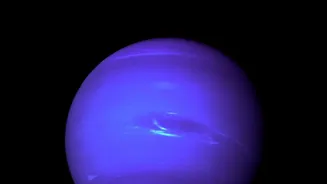
For decades, the search for life has focused on finding rocky, Earth-like planets. But recent discoveries have turned our attention to a completely different type of world: sub-Neptunes. These are planets larger than Earth but smaller than Neptune, with
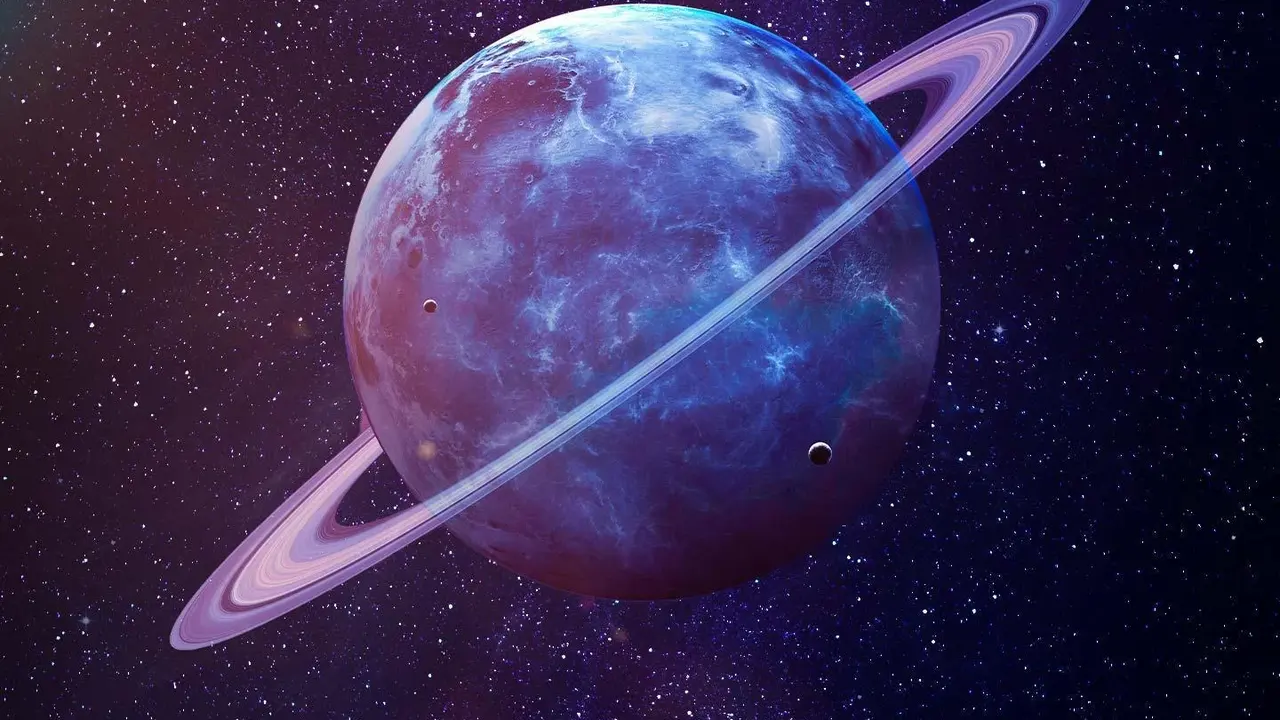
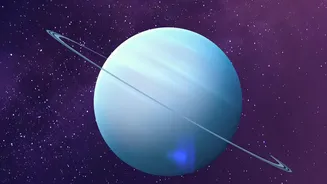
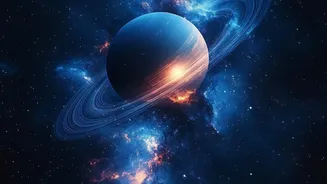
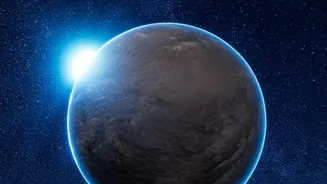
no direct equivalent in our own solar system. One such planet, K2-18 b, located 120 light-years away, has become a prime target. Scientists theorise it could be a 'Hycean' world—a planet with a deep, global ocean underneath a thick, hydrogen-rich atmosphere. This concept, first proposed in 2021, opens up a new category of potentially habitable planets that are more common in the galaxy than Earth-like ones. What makes these worlds so compelling is that their large, puffy atmospheres are easier to study from afar, giving us our best chance yet to peek into the chemistry of a distant world.
Methane: A Tantalising Clue
The excitement reached a fever pitch when the James Webb Space Telescope (JWST) detected carbon-bearing molecules, including methane and carbon dioxide, in the atmosphere of K2-18 b. On Earth, the vast majority of atmospheric methane is produced by living organisms, from microbes in wetlands to cows' digestive systems. Because of this, methane has long been considered a key 'biosignature'—a chemical fingerprint that could point to the presence of life. Finding it on a world that could potentially have a liquid water ocean is a tantalising prospect. The JWST's instruments were so precise that they not only found methane but also noted a lack of ammonia, which further supports the theory of a water ocean.
The Caution of Science
Before we jump to conclusions about alien microbes, scientists are exercising extreme caution. Methane can also be produced by non-biological, or abiotic, processes. Volcanoes, reactions in the planet's mantle, or even interactions with starlight can create methane without any need for life. The central challenge for astrobiologists is to untangle these possibilities from light-years away. To build a strong case for life, they need more than just one molecule. They look for a specific chemical imbalance—a cocktail of gases that shouldn't exist together without a living process constantly replenishing them. For example, finding abundant methane alongside oxygen would be a powerful sign, as these gases would normally destroy each other. On K2-18 b, the initial Webb data also hinted at the presence of dimethyl sulfide (DMS), a gas that on Earth is only produced by life, primarily marine phytoplankton. This detection is very tentative and needs more confirmation, but it illustrates the level of detail scientists are looking for.
A Milestone in Capability
Regardless of whether K2-18 b hosts life, the methane discovery is a landmark achievement for a different reason: it proves we can finally do this kind of science. For years, detecting specific gases on small, distant exoplanets was beyond our reach. The James Webb Space Telescope has changed the game entirely. Its powerful infrared instruments can analyse the starlight filtering through a planet's atmosphere during a 'transit'—when the planet passes in front of its star. Different molecules absorb specific wavelengths of light, leaving a unique barcode in the spectrum that tells scientists what the atmosphere is made of. The successful detection of methane on K2-18 b and other planets like WASP-107b is a stunning proof of concept. It demonstrates that we now have the technological capability to detect potential biosignatures on worlds that are fundamentally different from our own.